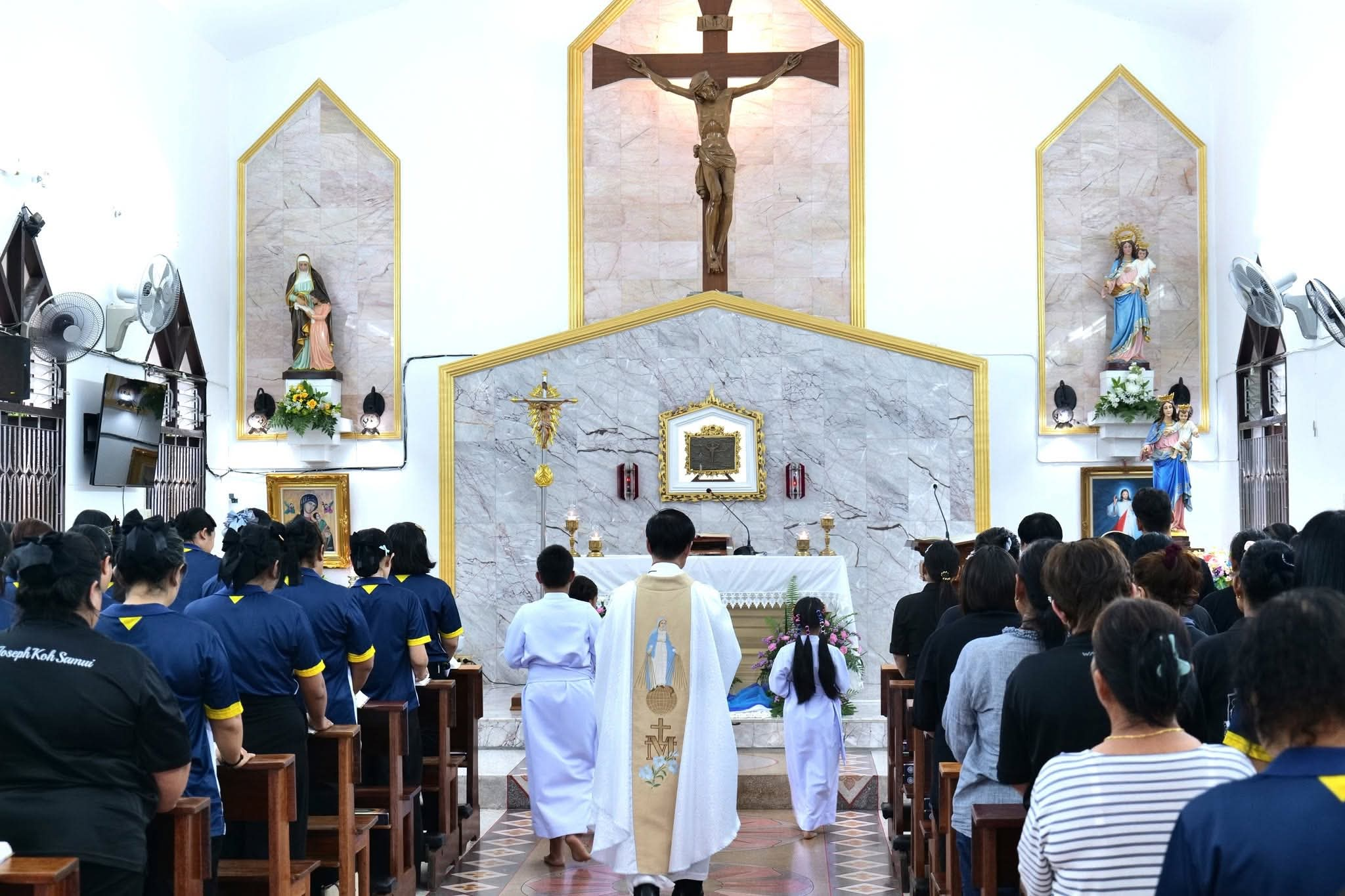
Across Catholic communities in Thailand, October became a month of renewed devotion to the Holy Rosary.
From remote mountain villages in the north to the tropical shores of the south, Catholics gathered in homes, schools and chapels to honor the Blessed Virgin Mary, continuing a tradition that local clergy say has helped draw people back to the faith.
The devotion has deep roots in Catholic history. Early Christian monks used knotted cords to count prayers, while the Rosary later developed into the form familiar to Catholics today.
Pope St. Pius V established the Feast of Our Lady of the Rosary in 1571 to commemorate the Battle of Lepanto, which Catholics attributed to the intercession of the Virgin Mary. By the late 19th century, Pope Leo XIII had dedicated October to the Holy Rosary through a series of encyclicals.
In Thailand, the monthlong observance is marked by communal prayer. Parishes organize gatherings in homes that bring together entire villages, including Catholics who rarely attend weekly Mass. Pastoral workers often describe October as a time when many return to the sacraments and renew their participation in parish life.
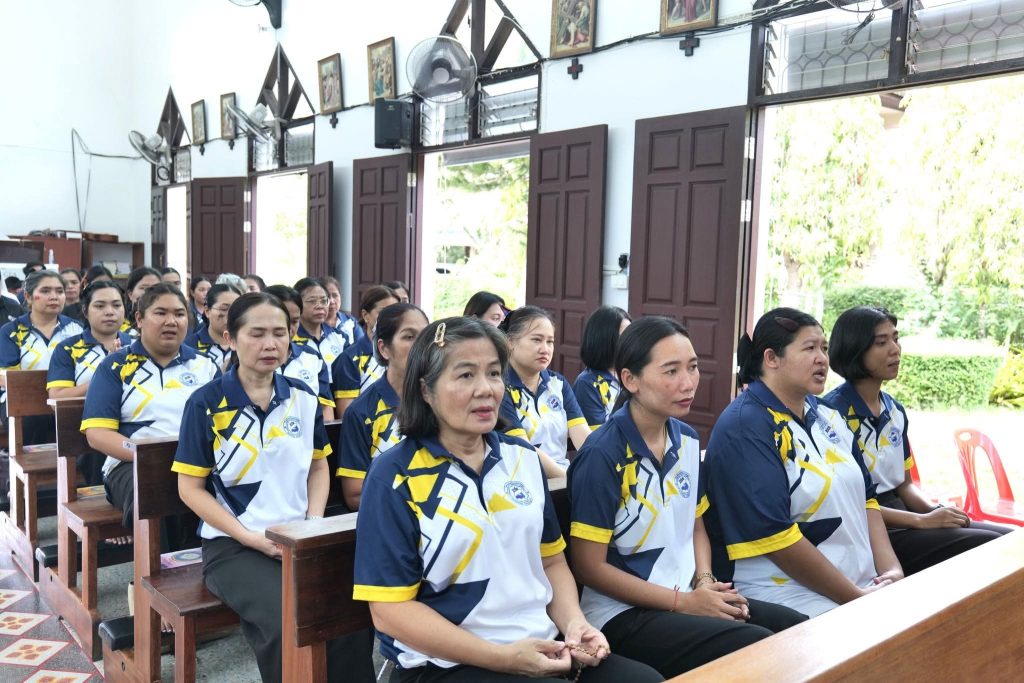
For Fr. Michael Meechai Udomdej, C.Ss.R., the importance of the Rosary became clear during his pastoral assignment in Ban Din Khao in Mae Chaem District, Chiang Mai.
The parish, located more than an hour’s drive from the provincial center, covered 45 villages with more than 6,000 Catholics, most of them from Karen communities.
With only two priests sometimes responsible for more than 60 scattered villages, Fr. Meechai sought a way to strengthen pastoral care through lay participation.
“From my personal experience of living and working in the mountains, I truly believe that establishing the Legion of Mary in those villages was one of the best solutions,” said Fr. Meechai.
“I wanted the Legion to help share the burden of pastoral ministry with the Church,” the priest added.
Shortly before the COVID-19 pandemic, Fr. Meechai began the first phase of the initiative, establishing 24 praesidia, or local branches, in villages with existing parish churches.
When the pandemic struck and mountain villages imposed strict lockdowns, the lay groups continued visiting families and maintaining communal prayer schedules in the absence of priests.
The initiative also addressed a gap in religious formation. While many villagers wore rosaries around their necks as a sign of Catholic identity, few knew how to pray the Rosary fully.
Through regular visits by Legionaries and local catechists, the annual October devotion also became an opportunity for faith formation, helping communities reflect on the mysteries of Christ’s life through regular prayer.
Perseverance Amid Southern Storms
After his ministry in northern Chiang Mai, Fr. Meechai was reassigned to St. Ann Church on Koh Samui, an island in the Gulf of Thailand known for its rainforests and coastal resorts.
Although the Catholic community there was much smaller, the parish continued the tradition of home Rosary prayers throughout October. The observance began with an opening celebration organized with St. Joseph School, run by the Sisters of Saint Paul de Chartres.
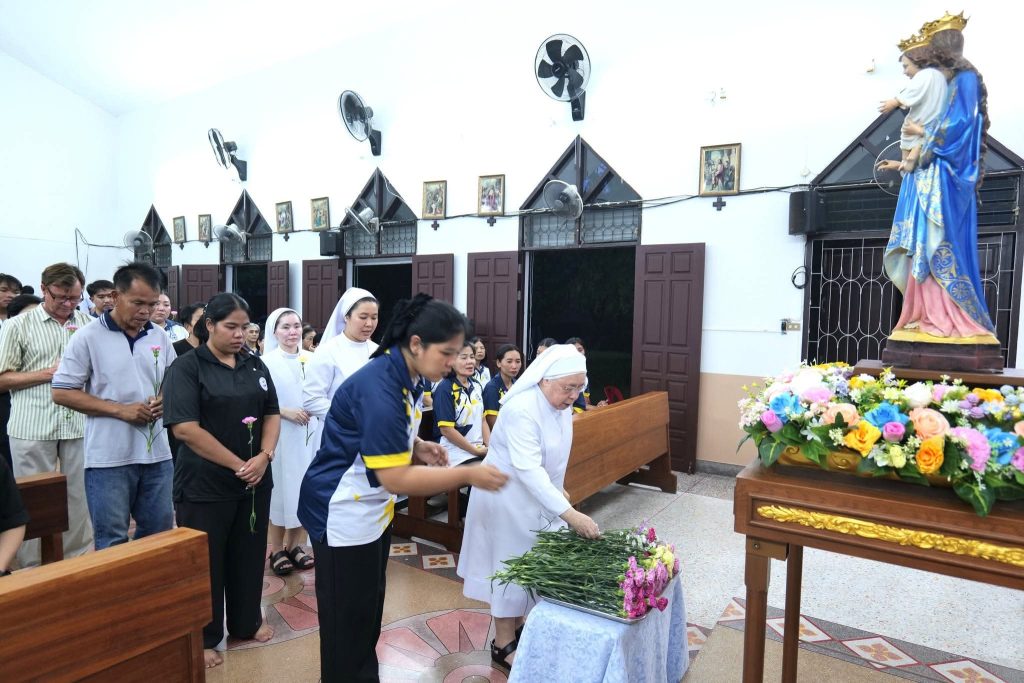
The parish scheduled its final October celebration for Friday, Oct. 30, coordinating with school staff and teachers to encourage participation from the local community.
The event, however, coincided with the southern rainy season.
Days of continuous heavy rain had saturated the soil across Koh Samui and raised concerns about possible landslides. A brief break in the weather allowed preparations to continue on the afternoon of Oct. 30, but rain returned during the evening Mass.
The parish adjusted its plans.
Instead of holding the traditional outdoor procession with a statue of Our Lady around the church grounds, the faithful remained inside the sanctuary and concluded the month by offering bouquets of flowers at the altar of the Blessed Mother.
From the Karen villages of Chiang Mai to the shores of Koh Samui, the October devotion showed how lay-led prayer continues to sustain Catholic communities across different parts of Thailand.