
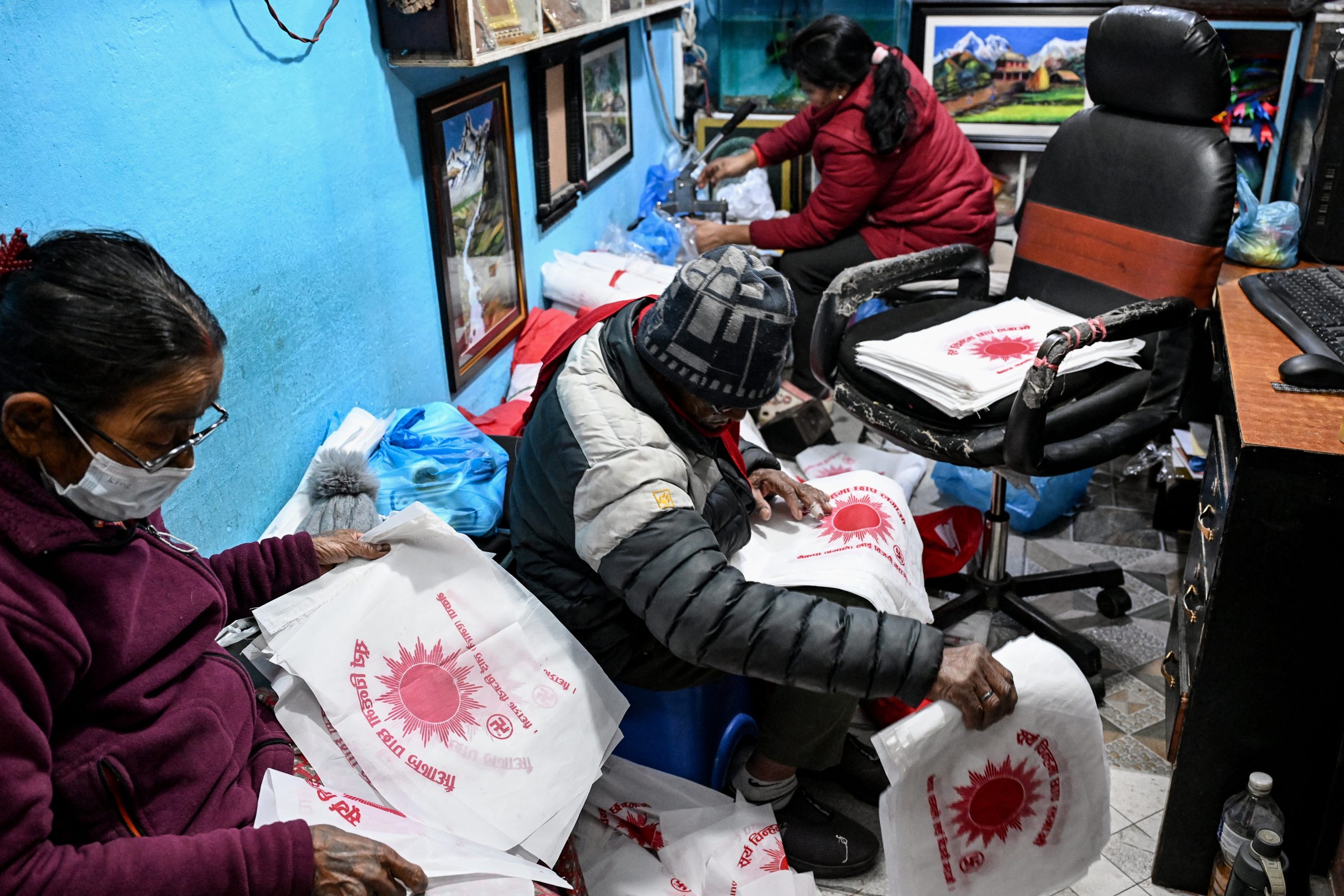
Nepal will hold parliamentary elections on March 5, a vote widely seen as a test of whether youth-led political movements that emerged from violent street protests last year can convert demands for reform into electoral gains.
The elections come five months after mass demonstrations plunged the country into a political crisis, forcing the resignation of Prime Minister Sharma Oli and the collapse of his government. The protests, driven largely by Generation Z activists, included violent incidents such as the attack and burning of the Parliament building.
“Currently, the situation appears to be stable; we are in a waiting phase while the transitional government prepares for the elections,” said Fr. Silas Bogati, Apostolic Administrator of the Vicariate of Nepal, in an interview with Fides News Agency.
As campaigning intensifies, Bogati said the political field reflects both continuity and change, with routine party and candidate campaigns unfolding alongside widespread speculation.
“What is new is the emergence of parties that are an expression of the student movements, and the presence of new candidates on the political stage who, in the wake of the youth protests, are focusing on good governance and the fight against corruption,” he said.
He said the prominence of young voters and candidates marks a departure from previous electoral cycles, with young Nepalese asserting greater self-confidence and seeking influence over the country’s political, social, and economic life, driven by hopes for a new Nepal and a sense of responsibility.
“This phenomenon is a good thing; the only important thing is that they choose non-violence as the path to realizing their ideals,” he added. “The elections will be the benchmark for the actual strength of the emerging movements led by young people.”
Following Oli’s resignation, President Ramchandra Paudel appointed former Supreme Court president Sushila Karki as interim prime minister on Sept. 12, 2025. Since taking office, Karki has overseen the political transition, ended the violence, and announced elections to be held after her term expires.
The post-protest landscape has produced an unprecedentedly fragmented race. A record 120 parties are contesting the elections, including at least 25 formed in the wake of last year’s unrest.
The long-dominant Congress Party has fractured but has sought to refresh its slate by drawing in younger candidates, while the Maoist Center and the United Socialists have merged into a single bloc.
Sudan Gurung, a student leader and coordinator of the 2025 protests, is running under the National Independence Party, founded in 2022.
Amid persistent social tensions, the transitional government has deployed 340,000 police officers and soldiers “to ensure free, fair, and safe elections.” Security forces will monitor about 10,800 polling stations across 165 constituencies, partly to deter post-election unrest if results are perceived as preserving the pre-protest political order.
“As Catholics in Nepal (a small minority of 8,000 believers in a country of 32 million), we support good governance and promote values such as integrity, peace, and fraternity,” Bogati said. “We pray for peaceful elections and that the political process will serve the common good of the nation.”









