
Catholics in Myanmar are observing Lent in the shadow of war, as communities shaped by decades of conflict turn prayer, fasting, and charity into acts of resilience and hope.
For many Catholics in the Southeast Asian nation, the traditional Lenten practices of prayer, fasting, and almsgiving have taken on deeper urgency as communities face violence, displacement, and the uncertainty of a prolonged conflict.
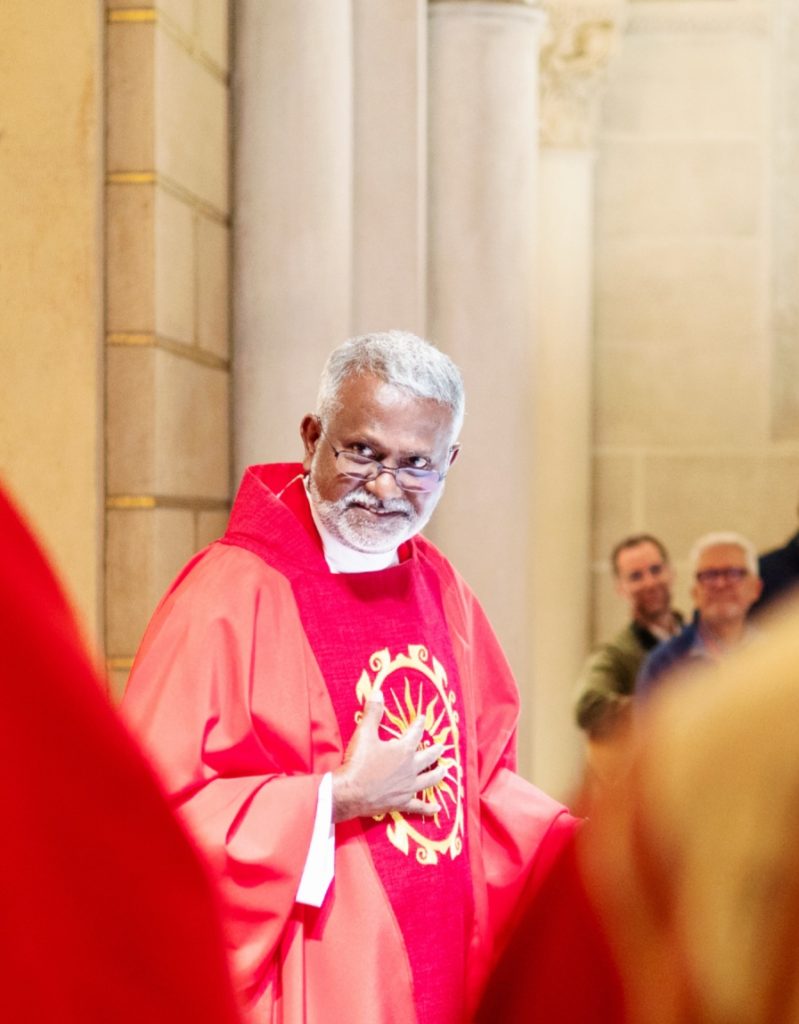
“The journey of Lent in Myanmar has been taking place in the shadow of war for the past seven decades. We continue to carry the Cross amid conflict,” said Fr. Girish Santiago, SJ, Jesuit superior in Myanmar.
“For us, this Lenten season is not just a ritual of giving up comforts,” Fr. Girish said in his March message. “It is a lived spiritual journey that parallels the suffering all around us.”
He described how the traditional pillars of Lent are being lived out in Myanmar in ways shaped by the country’s ongoing crisis.
“Sacrifice with solidarity means that giving up personal comforts is linked with tangible support for people who have already lost homes, livelihoods, family members, and security,” he said.
“Prayer with hope becomes a way of carrying both personal and collective pain before God, asking for inner peace and national reconciliation.”
“Charity with witness means acts of compassion are seen as walking with Christ, who stood with the poor, the outcast, and the suffering. They become a testimony of faith in a context where violence tests hope.”
Myanmar has endured decades of armed conflict between the military and various ethnic groups, a situation that worsened after the military seized power in February 2021.
Since then, fighting has spread across large parts of the country, forcing millions to flee their homes and leaving communities living in constant fear of airstrikes and clashes.
The suffering has deeply affected rural areas, where churches and parish communities often serve as places of refuge and support.
In Nan Hlaing, a rural parish in Kachin State, Fr. Paul Tu Ja, SJ, parish priest of St. Michael Parish, described how daily life remains overshadowed by the threat of military operations.
“The war in the countryside continues,” he said, noting that residents often read subtle signs to anticipate potential attacks.
“If soldiers are still roaming around by motorbikes and socializing in various shops, it could mean an attack is delayed,” he explained. “But if the roads are quiet and fewer soldiers are passing by, then people fear that an attack may take place very soon.”
Fr. Paul recounted a recent airstrike that occurred not far from his parish.
“A very recent airstrike near Nan Hlaing parish happened in Myo Thit on Feb. 23, about a 30-minute drive away,” he said.
“The gold mining site there, operated by a Chinese company and taxed by the Kachin Independence Army, was targeted. However, the bomb slightly missed its intended target and struck a nearby Buddhist monastery.”
Despite the constant uncertainty, local communities continue to hold on to their faith.
“March 7 marked two years of ongoing war in this area,” Fr. Paul said. “And yet we do not know when it will be over and when people may finally come home.”
Myanmar is widely known as a deeply religious country where both Buddhist and Christian traditions speak powerfully about suffering, purification, and hope. In times of hardship, faith communities often become vital sources of resilience and solidarity.
For Fr. Girish, Lent offers a spiritual framework that encourages believers not to lose hope even amid prolonged suffering.
“It is a call to hope rooted in the Christian belief that suffering is not the final word,” he said. “In the midst of real-world pain, Lent becomes more than a liturgical season. It becomes a journey shared with those who bear the heaviest burdens.”
He also emphasized that the Lenten journey can inspire believers to respond to violence with compassion and a commitment to peace.
“This season invites us to let go of attachment, grow in compassion toward all beings, and remain mindful amid suffering,” he said. “Violence cannot heal violence. Only compassion can.”
As Myanmar’s Christians continue their Lenten journey, many see it not simply as a time of spiritual discipline, but as a reminder that even in the darkest moments, faith can sustain hope and inspire efforts toward reconciliation and peace.