A senior Church official in the central Philippines urged authorities and communities to confront the roots of armed conflict after a deadly encounter in Toboso town, warning that violence cannot produce lasting peace.
Bishop Gerardo Alminaza of San Carlos issued the appeal after a deadly gunfight between government forces and the communist-led New People’s Army left 19 dead, a flare-up that peace advocates say reflects the persistence of the country’s decades-old insurgency.
The fighting also displaced at least 653 residents in Salamanca village, Toboso town, who fled their homes following an encounter between soldiers and the communist rebels.
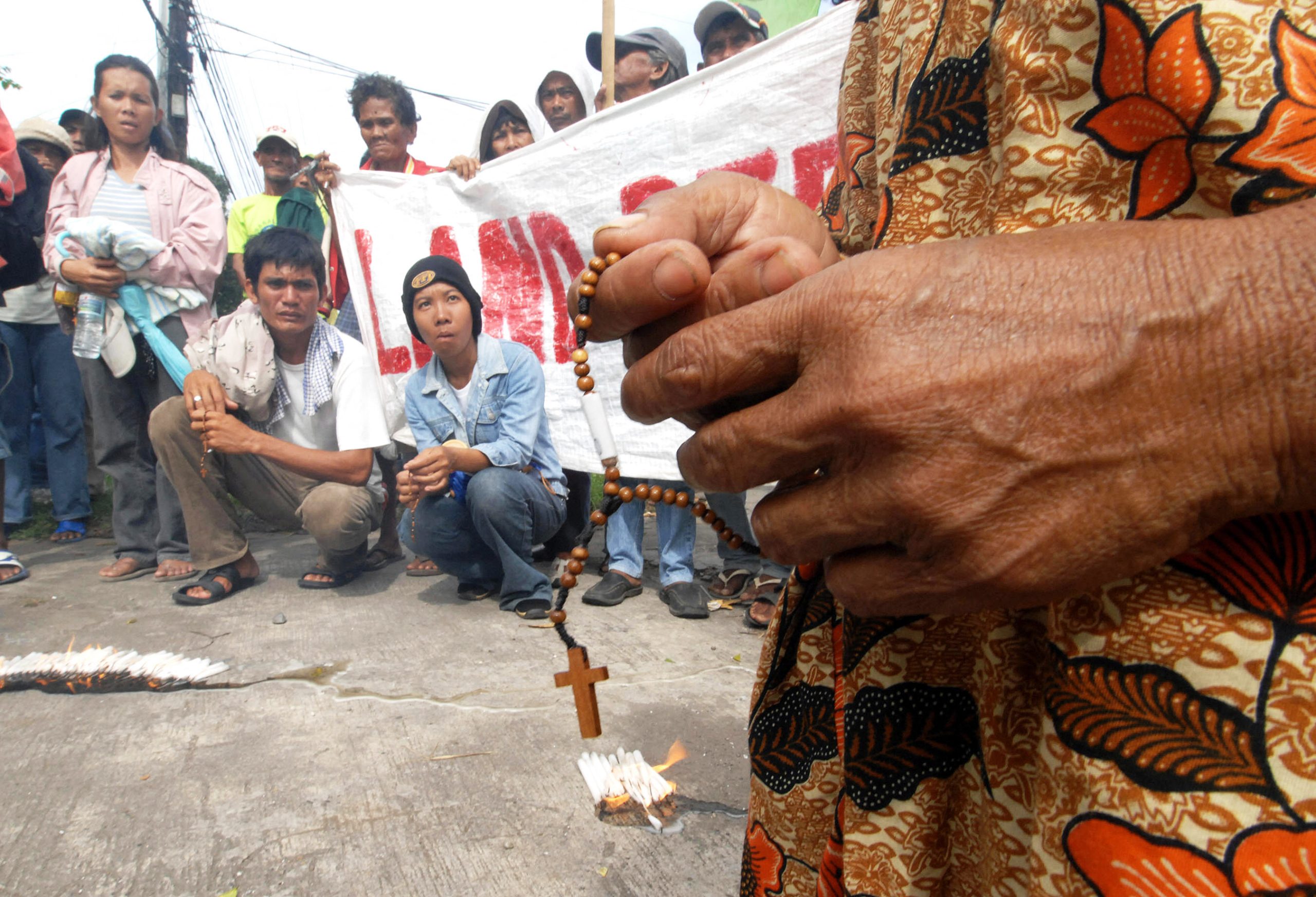
The clashes in Toboso highlight the persistence of one of the world’s longest-running communist insurgencies, while drawing renewed attention to deeper conditions—poverty, displacement, and unresolved grievances—that continue to fuel cycles of violence in the Philippines.
“With hearts weighed down by sorrow,” Alminaza said, the Church received news of the clash between government forces and members of the communist armed group, where “lives were taken, and many families have been plunged into grief.”
He said the Church mourns all those killed “regardless of political affiliation,” stressing that “for every life lost is a child of God, known and loved by Him,” and that each death wounds not only families but “the whole Body of Christ.”
Rejecting any normalization of recurring violence, the bishop said, “We cannot accept this as normal,” adding that “we cannot allow ourselves to grow indifferent to the taking of human life.”
Alminaza pointed to structural conditions driving the conflict, saying violence “does not arise in a vacuum” but “takes root where wounds have long been left unattended—where poverty persists, where injustice is endured, where trust between people and institutions has been broken, and where hope in peaceful change has slowly faded.”
He said the Church must listen beyond the immediate violence, “not only to the sound of gunfire, but to the deeper cries of pain, frustration, and longing that lie beneath it.”
Reaffirming Church teaching, Alminaza said “violence can never lead us to a peace that endures,” urging instead “the path of a just peace, a peace rooted in justice, in dignity, and in right relationship with one another.”
He called for confronting the roots of conflict, choosing dialogue over armed confrontation, defending human dignity, ensuring fairness in access to land and livelihood, and rebuilding trust within communities.
Addressing those in armed struggle, the bishop said, “We recognize the grievances and conditions that have led many to take up arms,” but appealed “that the pursuit of justice may move away from violence and toward paths of dialogue that uphold life and human dignity.”
He also urged government and security forces to “seek peace not only through strength, but through justice, compassion, and unwavering respect for human rights.”
Alminaza called on local leaders to address the structural causes of unrest and urged communities not to give in to fear, saying, “Do not let fear overcome you. Do not lose hope. Continue to be instruments of peace in your homes, your barangays, and your parishes.”
Assuring affected families of the Church’s presence, he said, “The Church does not stand apart from your suffering. We walk with you,” and pledged to “continue to accompany the grieving, to stand beside the victims, and to speak for justice.”
The prelate offered a call for prayer for the dead, the wounded, and displaced families, and for the grace “to become true peacemakers in our time.”