Human rights lawyer Antonio “Tony” La Viña said wars in the Middle East and a deadly military operation in the central Philippines fail the standards of a “just war,” calling them unjust and harmful to civilians.
La Viña, on April 23, wrote in his reflections that both situations raise the same question: “When, if ever, is war just?” He said the answer is clear: “The wars in the Middle East and the Philippines share one verdict. They do not meet the conditions of just war. They fail the tests of last resort, civilian protection, and proportionality.”
“These are unjust wars, and the price is being paid in human lives,” he added.
La Viña pointed to the escalation following the Feb. 28 strikes by the United States and Israel on Iran, noting that “thousands have been killed in the weeks since” while “millions more have been displaced from their homes and communities.”
He said modern warfare rarely meets the strict conditions required to justify armed force, echoing the view that war is “not a solution but a catastrophe with no winners.”
Negros killings disputed
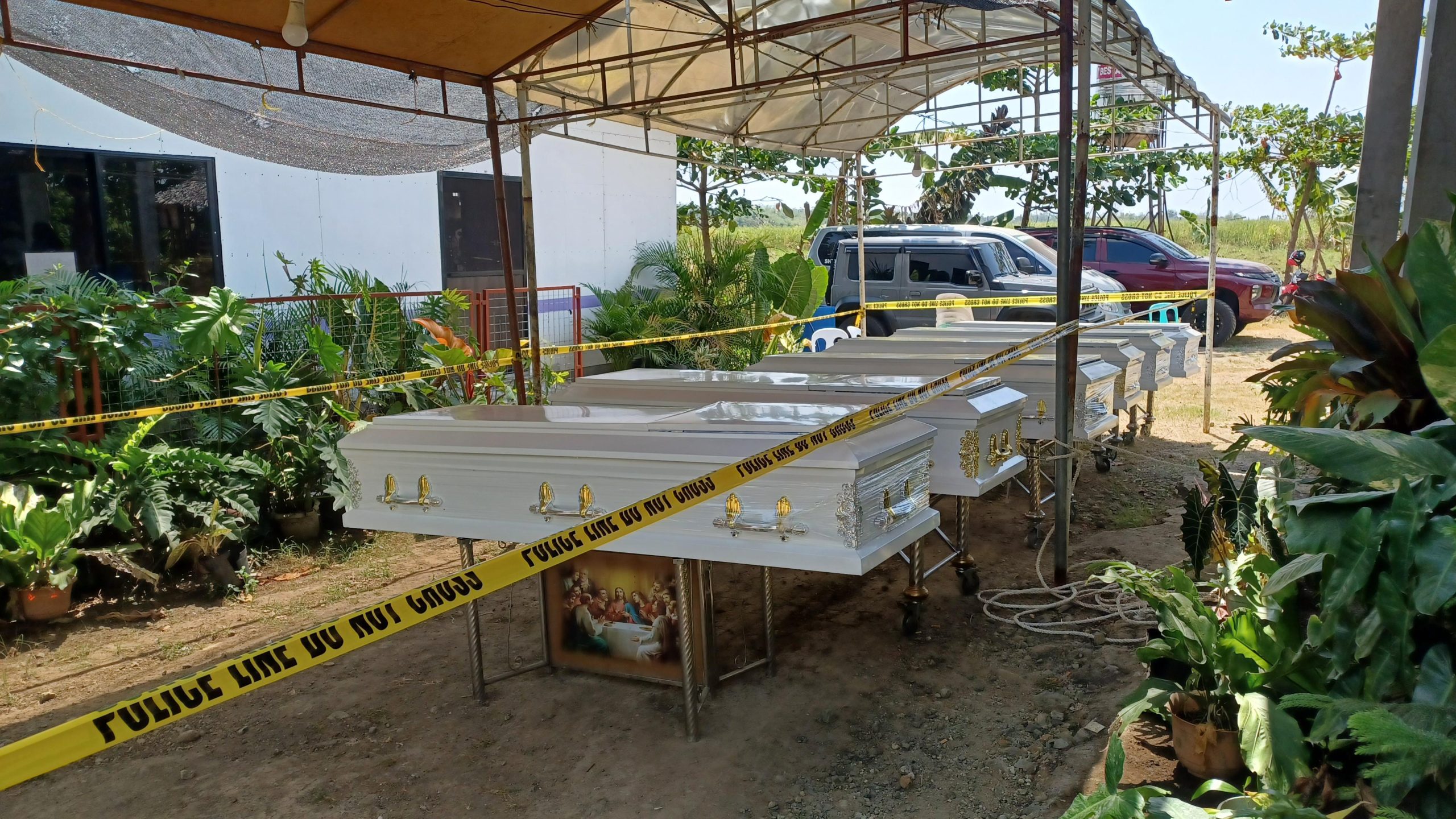
La Viña applied the same standard to the April 19 military operation in Salamanca village, Toboso town in Negros Occidental province, where 19 people were killed in what authorities described as an encounter with the New People’s Army, a communist guerrilla group.
The operation, which began before dawn and lasted nearly 12 hours, displaced at least 653 residents from surrounding communities, many of whom sought shelter in schools as fighting spread.
Among those killed was RJ Nichole Ledesma, a community journalist with Paghimutad-Negros who had been documenting the situation of farmers and other marginalized communities.
Independent accounts and human rights groups said Ledesma was not at the initial clash site but was killed in a separate community during pursuit operations.
La Viña underscored this, writing that he “was not at the initial clash site” and “was killed in a separate community during pursuit operations.”
He also cited the killing of a University of the Philippines Diliman student leader who was in the area for community immersion, noting that “she went to learn firsthand about militarization and land dispossession in the area.”
“Both were doing what a free and just society must protect,” he said.
La Viña rejected the view that the operation represented legitimate counterinsurgency. “Their killings were not accidents. They were consequences of systematic red-tagging and unchecked state violence,” he wrote.
“Militarization has not brought peace to Negros, or to Mindanao. It has deepened poverty and silenced dissent,” he added. “That is not counterinsurgency. It is terror. And it must be named as such, clearly and without qualification.”
The Philippine Army rejected claims that those killed were civilians.
In a statement issued April 23, Army spokesperson Col. Louie G. Dema-ala said such claims “deserve closer scrutiny rather than outright acceptance,” adding that “while any loss of life is deeply concerning and warrants proper investigation,” questions remain about the circumstances of the encounter.
He asked why those killed were at the site of the clash, armed and allegedly engaged in fighting with soldiers, saying this “is not a trivial detail that can simply be ignored or dismissed.”
Dema-ala said troops “showed steadfast commitment to their mission and dedication to duty,” and maintained that their “adherence to International Humanitarian Law and utmost respect for human rights stand as a testament to the professionalism and honor that define the Philippine Army soldier.”
He said allegations of abuse “should be examined through proper legal and institutional processes—not trial by social media.”
Media group demands justice
The Altermidya Network said Ledesma was not a combatant and was in the area for community work.
“RJ was killed in a supposed military encounter… But he was in the area doing community work and immersion reporting on the effects of renewable energy projects on vulnerable farmer communities,” the group said in an April 22 statement.
Citing Human Rights Advocates Negros, the group said Ledesma “was not in the initial clash site in Sitio Sinugmawan” but “was instead attacked in a separate peasant community in Sitio Plariding during an ensuing military pursuit operation.”
Altermidya said the media outfit he led had long faced red-tagging and vilification, adding that such actions “aimed to hide from the public the worsening human rights violations in their communities.”
“We give the highest honor to our colleague RJ, who, until his last breath, served marginalized communities by immersing and reporting on their stories,” the group said. “Together with his family and colleagues, we demand justice for RJ Ledesma.”
Long-running conflict
Negros Occidental has long been a flashpoint of armed conflict rooted in land inequality and agrarian unrest dating back to the colonial-era hacienda system.
The island has recorded some of the highest levels of armed clashes in the Philippines in recent years, with the decades-old communist insurgency claiming more than 40,000 lives nationwide since 1969.
Rights groups say the killings follow a pattern seen in previous incidents, including the 2018 Sagay massacre and the 2019 Oplan Sauron operations, where activists, farmers, and community leaders were killed amid counterinsurgency campaigns. Many cases remain unresolved, raising concerns about persistent impunity.
Advocacy groups have also warned that red-tagging, the labeling of individuals as communist-linked, has repeatedly placed journalists and activists at risk.
‘Collective failure’
Church leaders pointed to deeper social conditions behind the violence.
In a separate reflection, Bishop Gerardo Alminaza of San Carlos said the incident should not be reduced to casualty figures, stressing that “nineteen lives were lost in a single armed encounter, human beings, not statistics.”
He said the conflict “did not begin with guns” but in “landlessness in a land of vast haciendas” and “entrenched poverty in communities surrounded by wealth.”
Warning of a recurring pattern, Alminaza said “violence answers violence,” displacing communities and deepening grievances. “This is not victory. This is collective failure.”
La Viña made a similar point, saying that military force does not resolve root causes. “Violence only feeds the next cycle of grief and retaliation.”
Call for a ‘just peace’
In a pastoral letter, Alminaza called for a shift away from armed responses toward what he described as a “just peace.”
“For generations, societies have tried to justify violence under certain conditions. Today, the scale and persistence of suffering demand a more urgent question: what would it mean to build a just peace?” he said.
“A just peace is not merely the absence of gunfire. It is the presence of justice in land, labor, and livelihood, participation in governance, truth-telling and accountability, the healing of historical wounds, and the restoration of human dignity,” he added.
Bishop Alminaza said the Toboso encounter “must not end in a body count” but instead prompt efforts to address root causes and ensure accountability. “It demands more courage than war, because it requires transformation, not domination.”
La Viña said the conflicts are unjust and that the cost is measured in human lives, with victims including journalists, students, farmers, and families whose identities must not be reduced to statistics.
“Moral clarity demands that we say what these wars are. They are failures of leadership and failures of imagination. Peace is not weakness. It is the only path that has ever worked,” he added.