In the rural heartlands of Malaysia, where roads turn to dust, and villages cluster around rubber estates and kampungs, missionaries have long walked among ordinary people. They celebrate Mass under zinc roofs, organise Christian communities in remote estates, visit homes, and build simple chapels. They listen more than they preach and often live with very little.
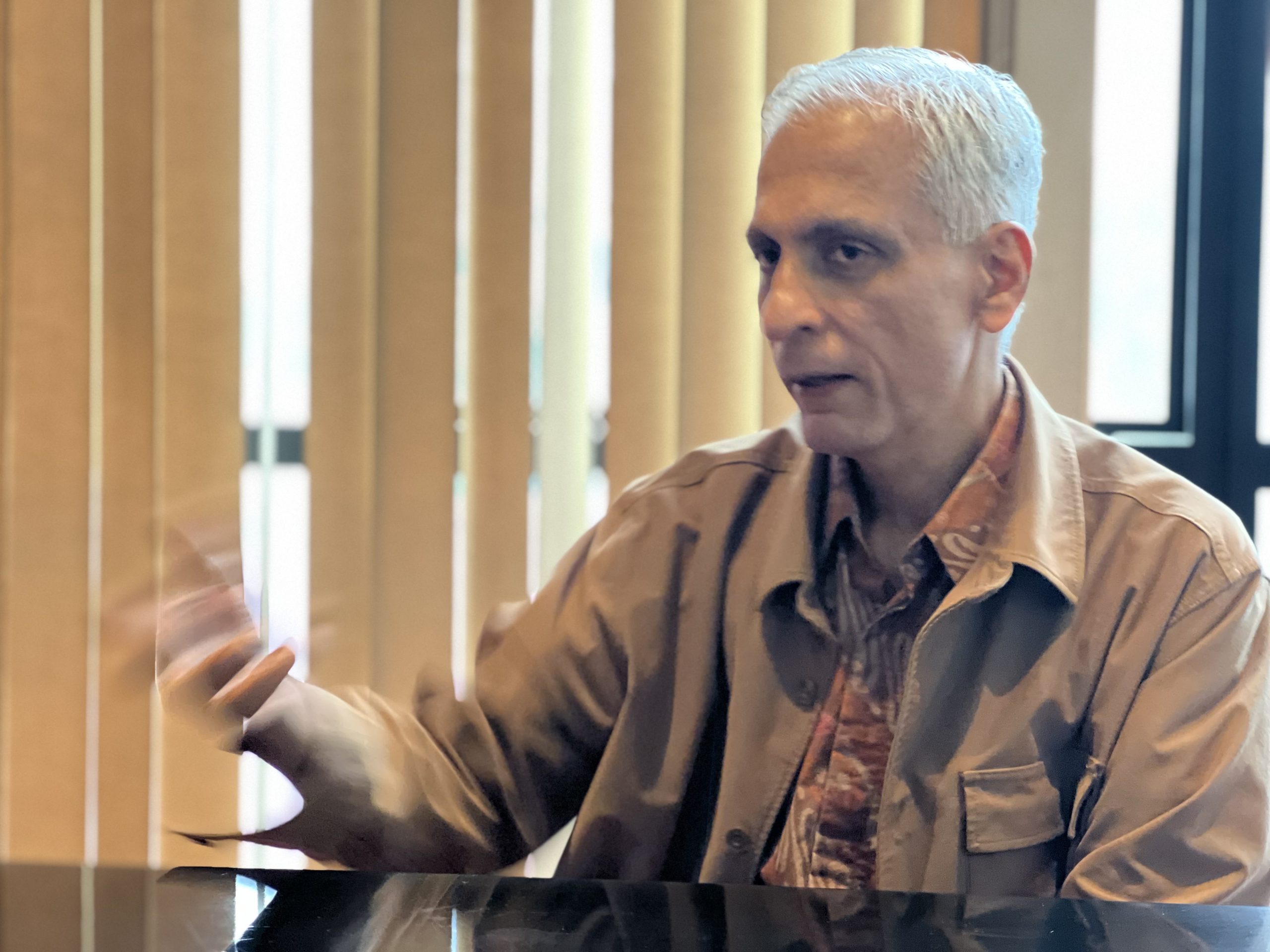
That same missionary spirit would one day take root in the life of Dr. Charles Bertille, who recently completed a seven-year academic journey culminating in a doctorate in Theology with distinction from St. Vincent School of Theology in Manila. With the steadfast support of his wife, Beatrice, he has devoted more than 33 years to full-time ministry, including 18 years serving in missionary work across Asia.
Charles did not grow up imagining a life in mission across Asia. His beginnings were simple. Faith first came through his family: a mother who taught them catechism, family Rosaries at home, and parents who shaped his values. Like many Catholics, his faith was first inherited before it became personal.
As a teenager in Tampin, Negeri Sembilan, something restless began growing within him. He no longer wanted to “borrow” faith through rituals and routines. He wanted to know whether God was truly real, personal, and worth giving his life to. That search led him into the rural outstations of Malaysia alongside the late Fr Peter Bretaudeau MEP and the Infant Jesus Sisters. He watched them travel through plantations and FELDA settlements, gathering families for Mass. What stirred him was not only their endurance, but their presence.
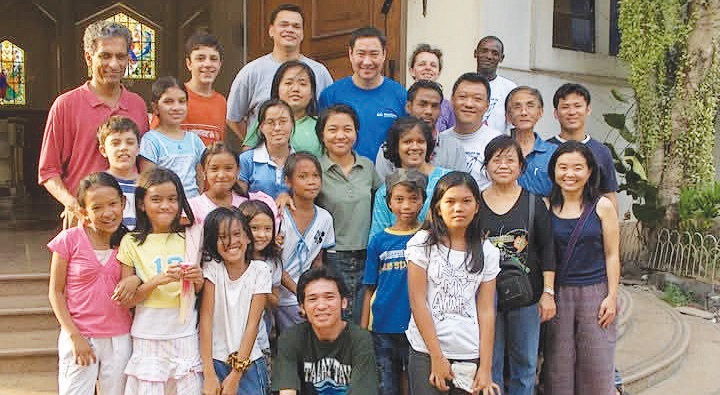
Photo via: Herald Malaysia
Fr Peter did not rush rituals. Before Mass, he would sit with people, listen, and speak with them about their struggles, marriages, children, debts, and fears. The Gospel entered lived reality. “Mass was connected to life,” Charles recalled, witnessing faith being lived and animated. He joined visits to outstations, helping form communities where laypeople sustained the faith between priestly visits, echoing St John Chrysostom: “The Church is not a place, but a way of life.”
He began to see that the mission was not about prestige or titles.
That conviction deepened through Fondacio, then known as the Christian Community of Formation (CCF). Through formation, prayer, and sharing with other young adults, Charles encountered Christ personally and discovered what he would later call “the inner life” of faith: not merely serving God externally but belonging completely to Him.
One day, while in the parish, a familiar voice pierced his heart: “I don’t need your money. I need you.” The call of John 21 echoed within him: “Do you love me… more than these others do?”
This call demanded a response.
When mission becomes a vocation
Charles had dreams like any young man. Coming from a modest background, success mattered. A career in banking and the corporate sector offered stability and the possibility of helping his family financially. Ministry, on the other hand, offered uncertainty. With little support from the local Church, he travelled to France for formation, relying on small donations from colleagues, janitors, elderly women, and friends. There were “dark nights” when he did not know how he would eat or pay rent. “These experiences built my trust in God and helped me let go of the fear of not having enough,” he recalls.
Back in Malaysia, he became actively involved in the Archdiocesan Office for Human Development (AOHD), formation work, ASAYO, youth ministry, and regional Church initiatives connected to Asian Youth Day. At a time when youth ministry structures in the Malaysian Church were still emerging, Charles helped organise the country’s first National Young Leaders Forum, along with various formation programmes and training initiatives that continue serving young people today.
During his formation in France, he met his wife, Beatrice, whose liveliness and care captured his heart. After Charles returned to Malaysia, they remained connected through handwritten letters across continents for four years before she moved to Malaysia to begin their shared mission. They married in 1992 at the Church of St Anthony, Pudu.
Since then, Beatrice has been his helpmate, “bone of my bone,” as Charles describes her.
“Without her shared commitment, I would not have been able to live out this vocation,” Charles says gratefully. Together, they raised three children who grew up experiencing mission life firsthand, and today they are also grandparents to two grandchildren.
Crossing borders
The doors opened unexpectedly in Myanmar. What began as helping the Infant Jesus Sisters prepare for mission slowly opened unexpected doors with the bishops there. Soon, Charles was invited by the Catholic Bishops’ Conference of Myanmar to serve as the national adviser and help establish Karuna Myanmar Social Services (KMSS), by strengthening pastoral structures, leadership formation, and social mission initiatives under extremely difficult conditions of military rule, poor infrastructure, and ongoing conflicts. He served there for 6 years from 2000 to 2006.
During one of those travels on dusty, bumpy roads with military checkpoints, he heard the words of Ruth to Naomi: “Wherever you go, I will go; your people shall be my people, and your God will be my God.” He began to realise that Christ was calling him in a new way – a call within a call to walk with the poor.
The decision to move as a family was not easy. Beatrice initially was reluctant. They had children, and no certainty of schooling or assurances given the situation.
Then, during prayer while Charles was away, she experienced what she later described as a profound encounter or her “annunciation” with God – and her ‘yes’. She became certain this was their shared path.
For three years, the family lived a missionary life together in Myanmar. Their children adapted to new cultures and schools. Charles travelled constantly, helping dioceses organise ministries, train leaders, develop formation programmes, and rebuild systems weakened by years of hardship and isolation.
There were moments of exhaustion and uncertainty. Times when the local Church could not raise the needed support or finances. Times when the future felt fragile. Yet again and again, they discovered that God goes ahead of them.
On Pentecost Sunday this year, the Karuna Myanmar Social Services (KMSS) celebrated their Silver Jubilee, where Charles was invited as a guest of honour. What began with two staff in an old wooden building and uncertain finances, today KMSS employs 1,182 staff across 17 dioceses and plays a significant role in the country.
After Myanmar, there was an unexpected invitation to develop the mission in the Philippines. Charles helped to co-found the Institute of Formation for Fondacio Asia (IFFA), which continues to form young Asian leaders for pastoral and social mission work today. He also played a key role in setting up the regional and mission coordination structures, including fundraising, and expanding Fondacio Asia’s presence across 15 countries and 45 dioceses throughout the region — all while pursuing theological studies, serving communities, and raising a family.
His service would eventually bring him into closer collaboration with the wider Church in the region. From 2019 to 2023, Charles served as Executive Secretary of the Catholic Bishops’ Conference of Malaysia, Singapore, and Brunei (CBCMSB), helping coordinate key regional initiatives, including the Synod process, the development of the National Seminary Charter, the establishment of Caritas Malaysia, and efforts to strengthen communication and archival systems within the bishops’ conference.
Even in administrative leadership, he remained convinced that Church structures must ultimately serve the people of God and strengthen the Church’s missionary and synodal life.
Theology of the margins
But beyond all the titles, programmes, and achievements, his life tells a simpler story — the indispensable role of the laity. Again and again, whether in the villages of Myanmar, the youth communities of Malaysia, or the Indigenous longhouses of Borneo Malaysia, he saw ordinary people carrying the life of the Church forward.
This conviction shaped his academic work. His Master’s and doctoral research (PhD) focused on the theology of the laity and synodality in the Asian Church, especially Malaysia. Yet theology was never merely academic. He travelled widely, listening to bishops, priests, religious, migrants, indigenous communities, and ordinary Catholics across Sabah, Sarawak, and Peninsular Malaysia.
What moved him most was the wisdom already alive among the people. In longhouses and Basic Ecclesial Communities, he encountered ways of listening, discerning, and walking together that the wider Church still needs to learn.
For him, some of the deepest theology is found not in books, but in lived faith and struggles.
“Synodality is not a new programme but a conversion of how we live as Church, together,” he emphasises.
In Malaysia’s multi-ethnic context, he believes this listening Church is urgently needed: one that moves beyond symbolic consultation toward authentic participation, where the voices of Indigenous peoples, migrants, youth, and lay communities shape the Church’s journey.
“Be opened!”
After more than three decades of mission work across Asia, Dr Charles Bertille continues to offer his gifts wherever needed, without making demands.
He still sees hope in the same Spirit that first stirred his heart as a young man in the Malaysian margins: alive among young people, small Christian communities, ecological movements, indigenous communities, and the “little flock” of believers who continue serving faithfully at the margins.
His life stands as a witness to a generation increasingly paralysed by fear: fear of uncertainty, of commitment, of not having enough, and of missing out on a more comfortable life.
“Faith comes from hearing,” he reminds the Malaysian Church, echoing Romans 10:17 and the Shema Israel. “Ephphatha — be opened!” (Mark 7:34), a call he extends to the Malaysian Church today: to remain attentive to the voice of the Spirit in unexpected places, and to continue building a more participatory and synodal Church rooted in the lived experience of its people.
This article was originally published by Herald Malaysia.