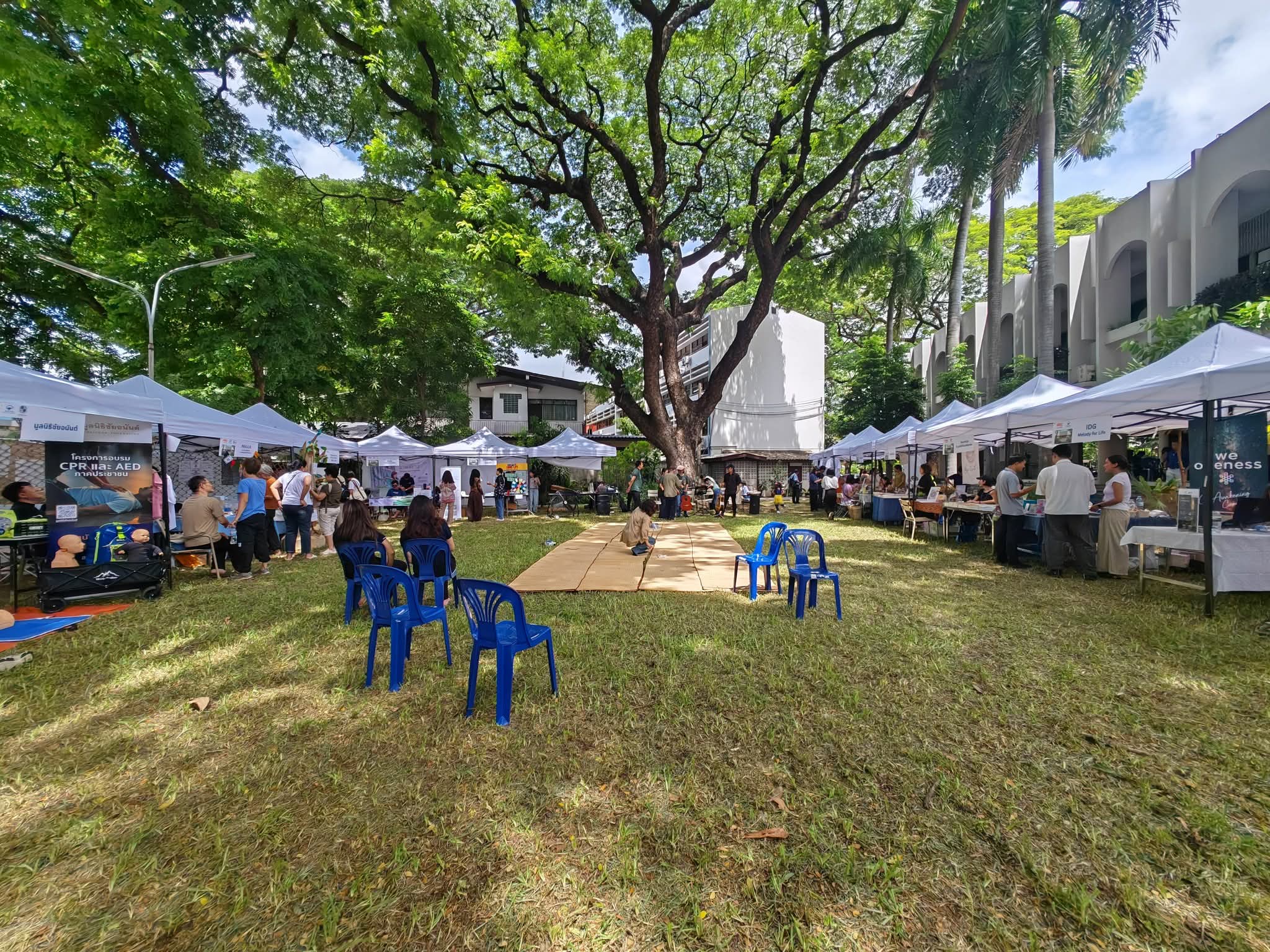
Merely a stone’s throw from the relentless traffic and urban clamor of Victory Monument lies an unexpected sanctuary. Xavier Hall, the long-standing home of the Jesuits in central Bangkok, serves as a breezy, verdant oasis of modern architecture and open-air tranquility.
Yet, on June 6, this quiet compound became a vibrant crucible of ideas as the Spiritual and Leadership Development Center (SLDC) hosted its highly anticipated annual major seminar: “SOUL’Lution: The Way Out of Crisis with a Great Heart.”
The day-long event seamlessly blended profound interior reflection with communal action. Beyond the lecture hall, the Xavier Hall grounds came alive with more than 30 interactive booths from partner networks.
Attendees drifted through workshops, educational showcases, and marketplace stalls offering ethically sourced products, creating a holistic space where spiritual development met practical, everyday solidarity.
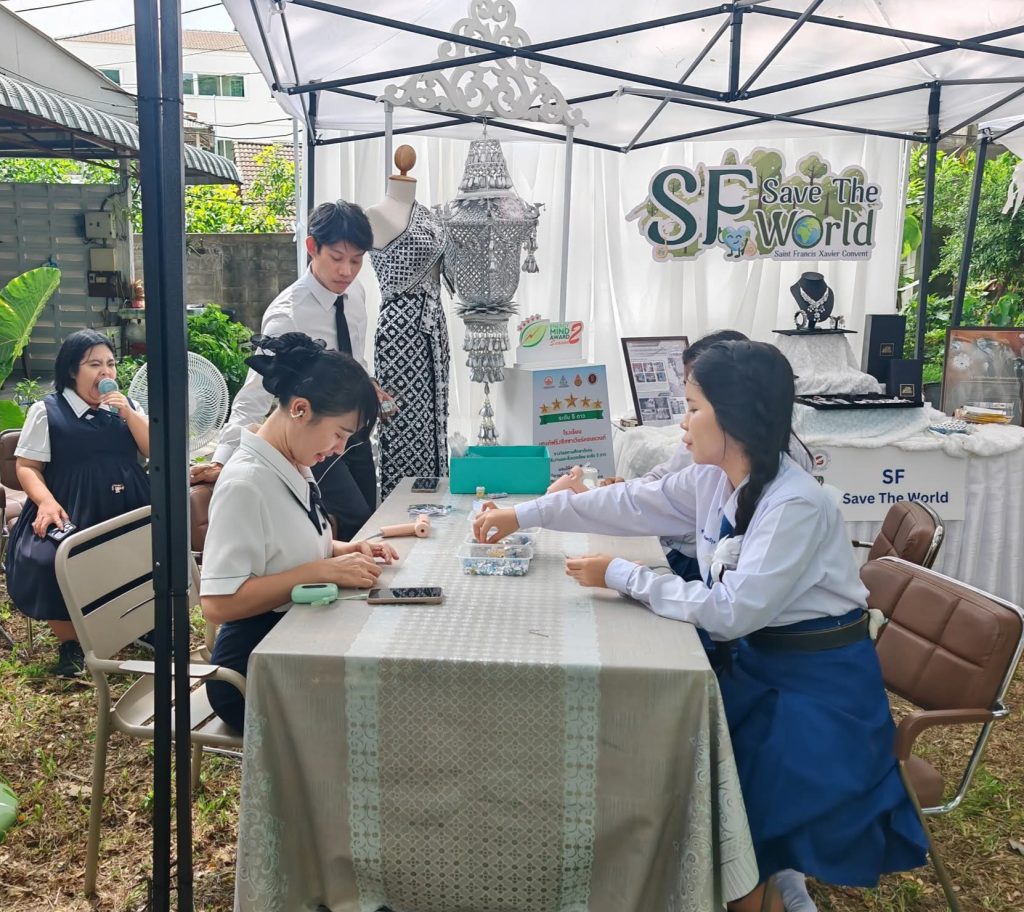
Photo credit: Catholic Social Communication Thailand
Sanctuary for transformational growth
Owned and operated by the Society of Jesus, the SLDC has increasingly recognized that modern crises—whether economic, ecological, or deeply personal—cannot be resolved by technical strategy alone. The center specializes in a wide array of specialized formation courses designed to bridge human and spiritual dimensions.
The “SOUL’Lution” seminar acted as an anchor for these themes, gathering renowned thought leaders from academia, medicine, and environmental science to affirm that an authentic interior life is the ultimate source of light and resilience when navigating systemic societal storms.
Moving beyond ritual
Opening the intellectual discourse, Prof. Dr. Suwanna Satha-Anand, a distinguished university philosopher, challenged the audience to ground their spiritual pursuits in tangible reality.
True resilience, she argued, requires individuals to actively give their own lives meaning, set deliberate moral targets, and empower themselves from within rather than waiting for external circumstances to shift.
Critically, Dr. Suwanna issued a call to elevate contemporary spiritual practices: ”We must broaden our self-perception, moving intentionally beyond mere external rituals and transitioning into deeper ethical considerations.”
True spirituality, she suggested, is validated not by the performance of religious rites, but by the ethical responsibility one assumes for the neighbor and the community.
View from the frontier
Bringing a lifetime of humanitarian experience from the geographic margins of the country, Dr. Worawit Tantiwathansup shared profound insights gained as the director of Umphang Hospital in Tak province.
Situated along the remote, complex Thailand-Myanmar border, Dr. Worawit has spent decades managing acute public health crises, poverty, and structural displacement.
“View problems as normal occurrences and believe steadfastly that ‘this too shall pass,’” Dr. Worawit advised, though he added a realistic caveat: “Whether it passes successfully depends entirely on us.”
He urged participants to maintain strict internal vigilance, particularly regarding the creeping modern epidemic of depression, by constantly observing their own emotional baselines amid prolonged strain.
Marine ecologist’s counter-intuitive philosophy
In a sharp, highly engaging, and fiercely honest presentation, Assoc. Prof. Dr. Thon Thamrongsawasawat, one of Thailand’s premier marine ecologists, offered a masterclass in self-confidence, mental preparation, and radical self-honesty.
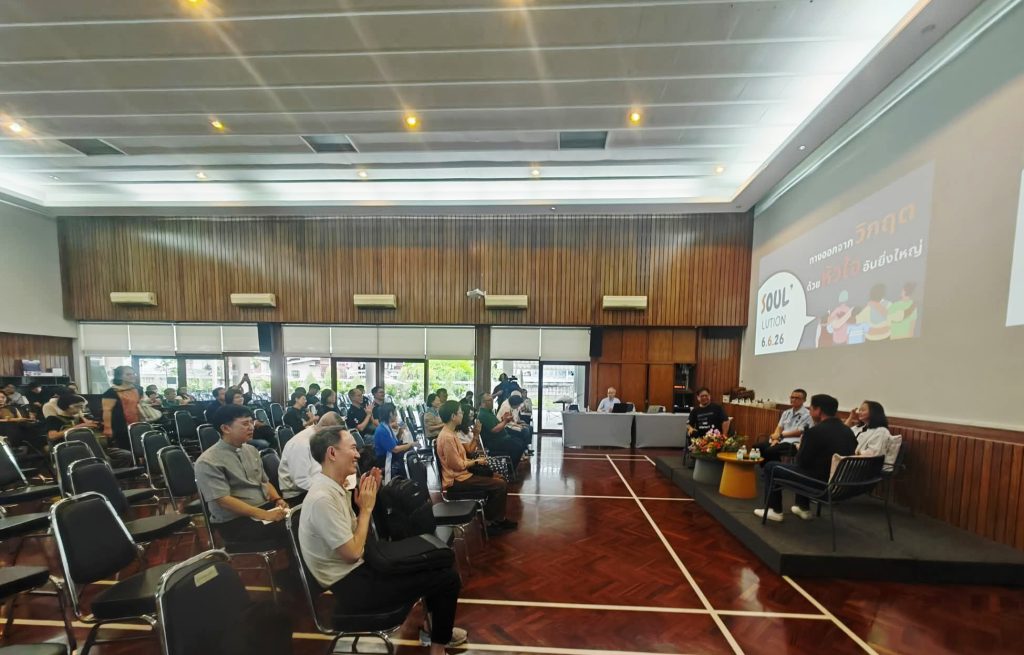
Photo credit: Catholic Social Communication Thailand
Reflecting candidly on the event via his personal social media, Dr. Thon admitted with trademark that his hyper-logical, uncompromising approach to life initially rattled conventional notions of “spiritual healing.”
Dr. Thon revealed that his impenetrable resilience was forged in a deeply personal nightmare.
Years ago, his infant son, Tharrat, was born with short bowel syndrome—a critical condition that kept the child confined to a hospital bed for the first three consecutive years of his life.
”If a child were ready to die every single day, continuously, enduring countless blood infections and suffering seizures five or six times a night… and yet he didn’t die, you become stronger. All subsequent problems in life become completely insignificant compared to the nightmare of that time.”
This profound trial taught him to practice what he calls “negative thinking”—intellectually stimulating worst-case scenarios well in advance. By mentally preparing for catastrophe, the actual onset of a crisis loses its power to paralyze.
Footsteps conclusion
Ultimately, the “SOUL’Lution” seminar at Xavier Hall demonstrated that the way out of crisis does not require an escape from the world, but a deeper, more courageous engagement with it.
By blending Prof. Dr. Suwanna’s call for ethical expansion, Dr. Worawit’s righteous frontier resilience, and Dr. Thon’s scarred, battle-tested self-honesty, the SLDC successfully mapped out a path forward.
The seminar left its diverse participants with a shared realization: when an individual cultivates a “great heart,” fortified by community and clear spiritual vision, the chaotic noises of the outer world gradually lose their power to disrupt the peace within.