Catholic schools across Thailand observed the annual Wai Khru ceremony this June, blending traditional Thai rites honoring teachers with Christian worship in predominantly Buddhist communities.
While the Wai Khru ceremony is observed annually in schools across Thailand as a gesture of respect for teachers, Catholic institutions have adapted the tradition as an expression of inculturation, incorporating Christian prayers and symbols while preserving a practice deeply rooted in Thai culture.
The approach has also provided opportunities for dialogue and mutual understanding in communities where Buddhists and Christians live and learn alongside one another.
Sacred Covenant of Knowledge
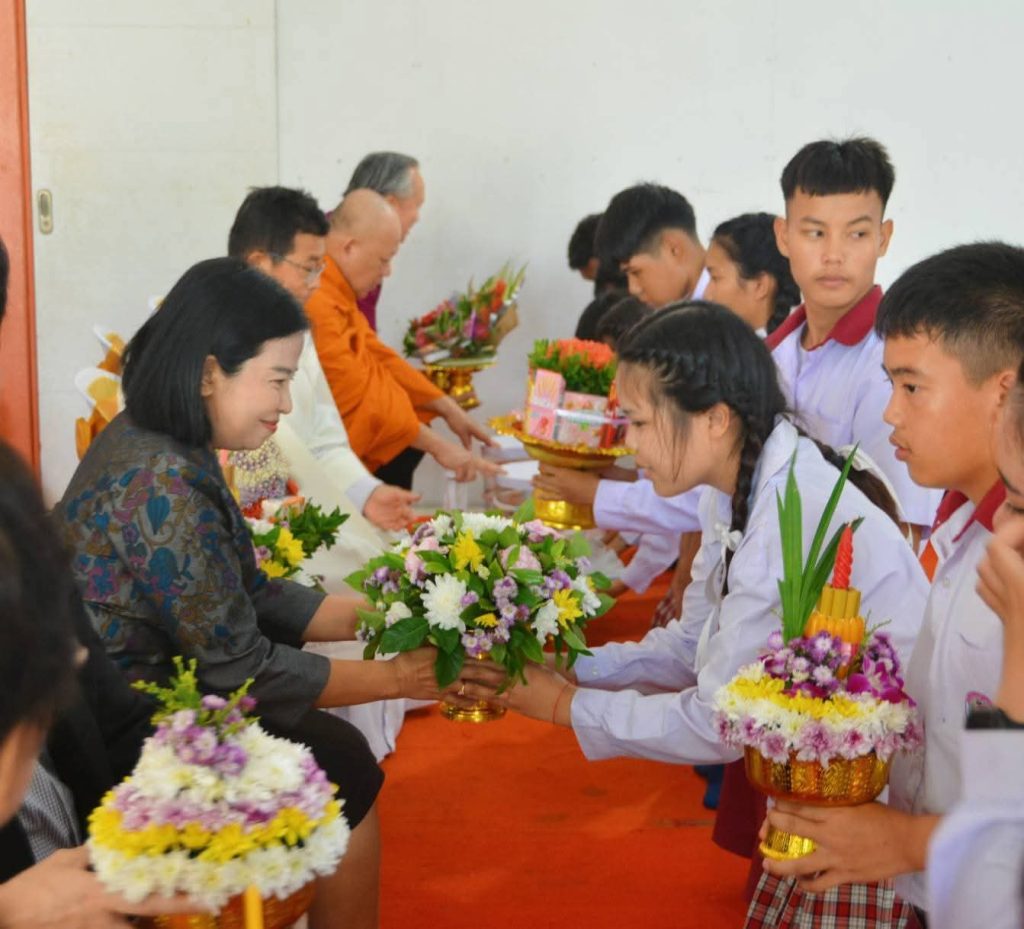
Rooted in the Sanskrit concept of the guru, a khru in Thai society is revered not merely as an academic instructor but as a moral guide and a beacon leading youth toward self-reliance.
Held annually at the start of the academic year on a Thursday, traditionally regarded as “Teacher’s Day” in Thailand, the Wai Khru ritual formalizes this bond.
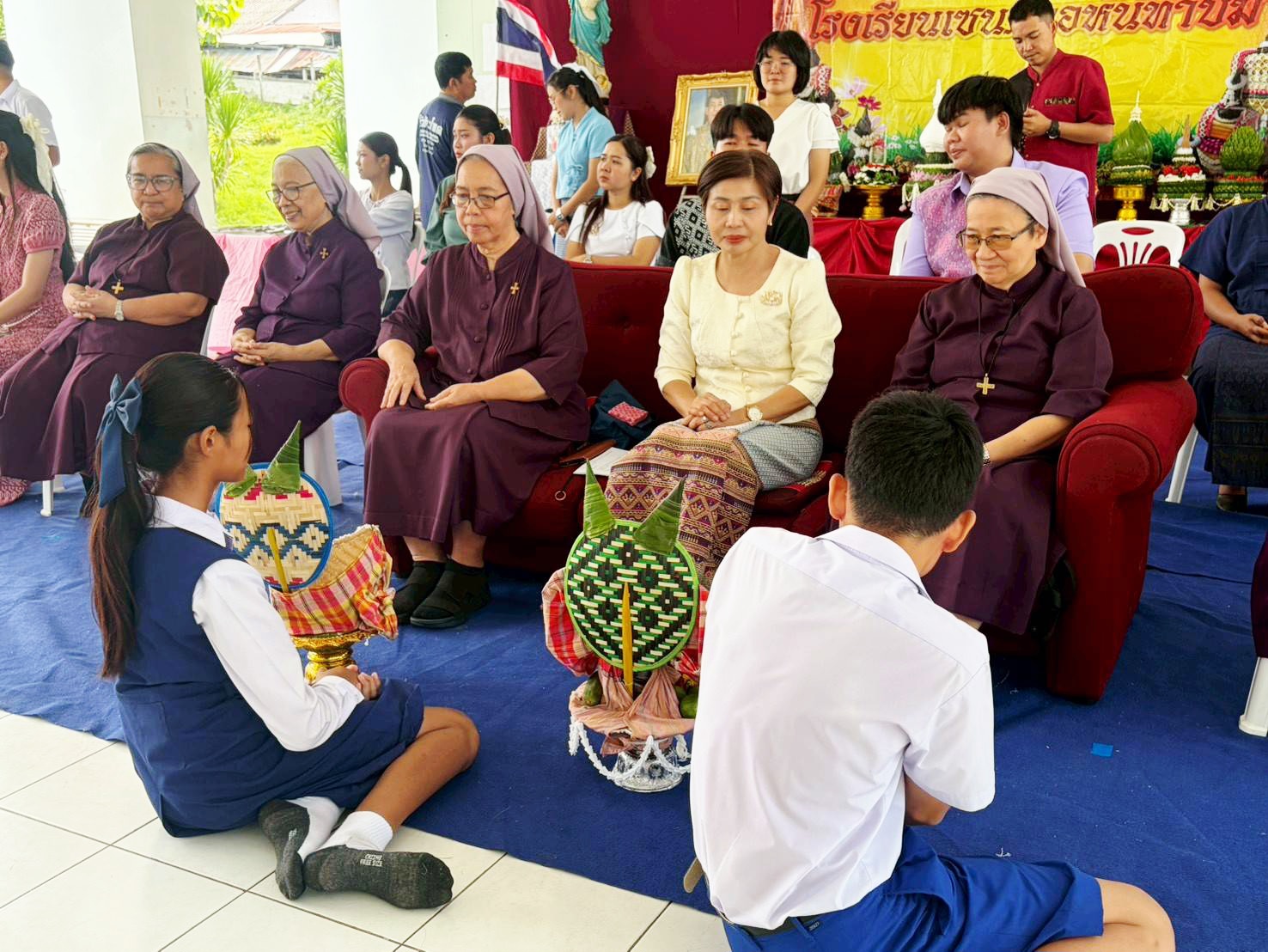
During the ceremony, students perform the wai, prostrating themselves fully to express gratitude and formally ask to be accepted as disciples.
Central to the ceremony are student-prepared floral trays arranged with symbolic plants: dok khem (Ixora), representing sharp wit; dok ma-kheua (eggplant blossoms), signifying humility; and ya phraek (Bermuda grass), symbolizing perseverance in learning.
Inculturation in the Catholic Classroom
Reflecting the Second Vatican Council’s principles of inculturation, the Catholic Education Council of Thailand (CECT), which oversees hundreds of institutions nationwide, including Mater Dei, St. Joseph Convent School, and Assumption College, weaves these traditional practices into Catholic liturgy.
Rather than displacing local traditions, this approach fosters an inclusive environment in schools where most students are Buddhist.
This integration is reflected through several liturgical adaptations.
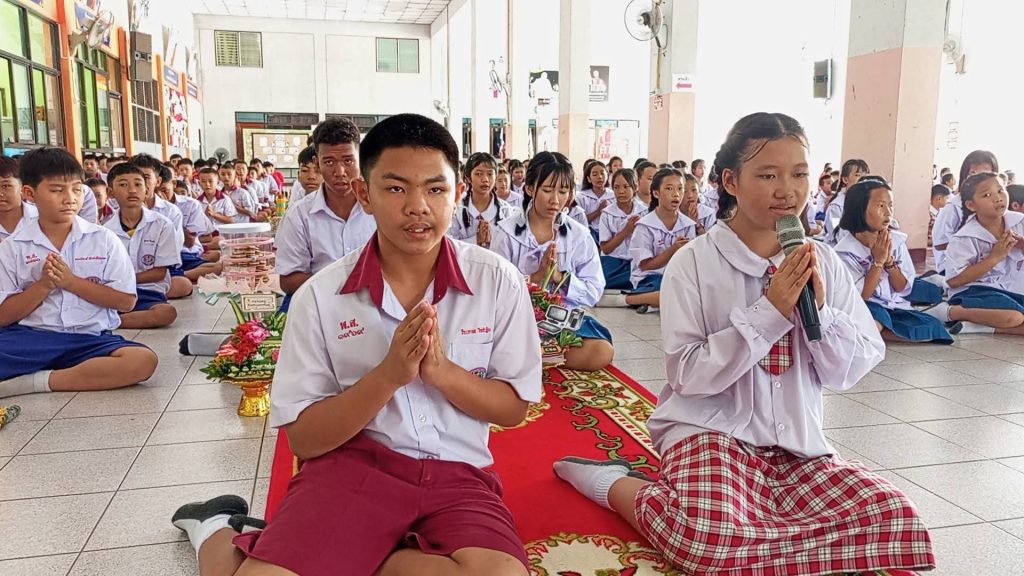
Traditional Buddhist opening prayers are often combined with a paraliturgical blessing. In several Catholic schools, the traditional Wai Khru chant (Pa-je-ra), which historically extols Buddhist virtues, is accompanied by Christian hymns of thanksgiving for the gift of wisdom.
Alongside the traditional phan presented to faculty members, floral offerings are frequently placed before statues of the Virgin Mary, Jesus Christ, or the school’s patron saints.
In some parochial schools, chaplains invoke divine grace and bless students, faculty members, and ceremonial trays with holy water.
Living Witness of Unity in Singburi
The integration of these traditions was recently evident at Holy Infant Jesus School in Singburi, about 150 kilometers north of Bangkok.
Presiding over the celebration, Father Rangsiphol Pleanphan of the Nakhon Sawan Diocese commended the school’s leadership under Principal Surayuth for cultivating an environment where young people visibly express love and respect for their teachers.
Demonstrating the spirit of interfaith solidarity, the event was attended by Phra Ajarn Montri, abbot of Wat Thepmongkol, and a respected community leader known for his advocacy on behalf of ethnic minority children.
The gathering served as a reminder that the pursuit of truth can transcend cultural and religious boundaries.
Ripple of Gratitude in Northeast Thailand
The ceremony also drew a strong response at St. John’s School Thabom in northeast Thailand, where the day became a celebration of gratitude and community.
Sister Deanna Maria Combong, RA, the school superior, said the occasion drew many alumni who returned to their alma mater to seek out former teachers and express their gratitude.
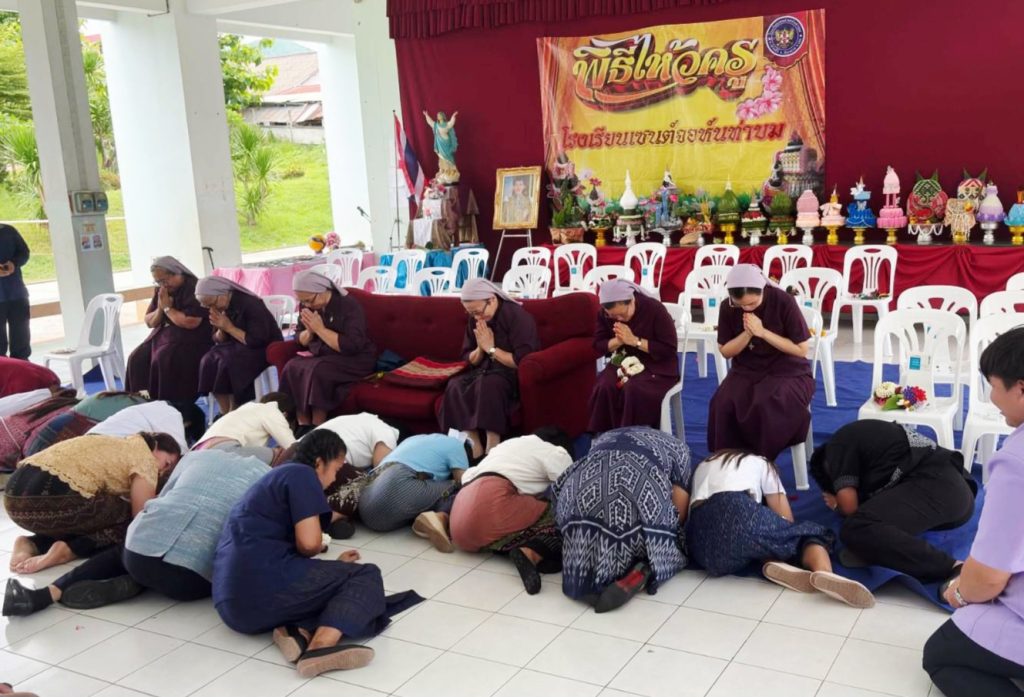
The celebration reached an unexpected and moving moment during the assembly when it was announced that faculty members wished to express their own appreciation to the Religious Assumption Sisters.
In a reversal of the traditional hierarchy, the teachers knelt before the Sisters, performing the formal kraap by prostrating themselves fully on the floor as a gesture of respect and shared commitment to the school’s mission.