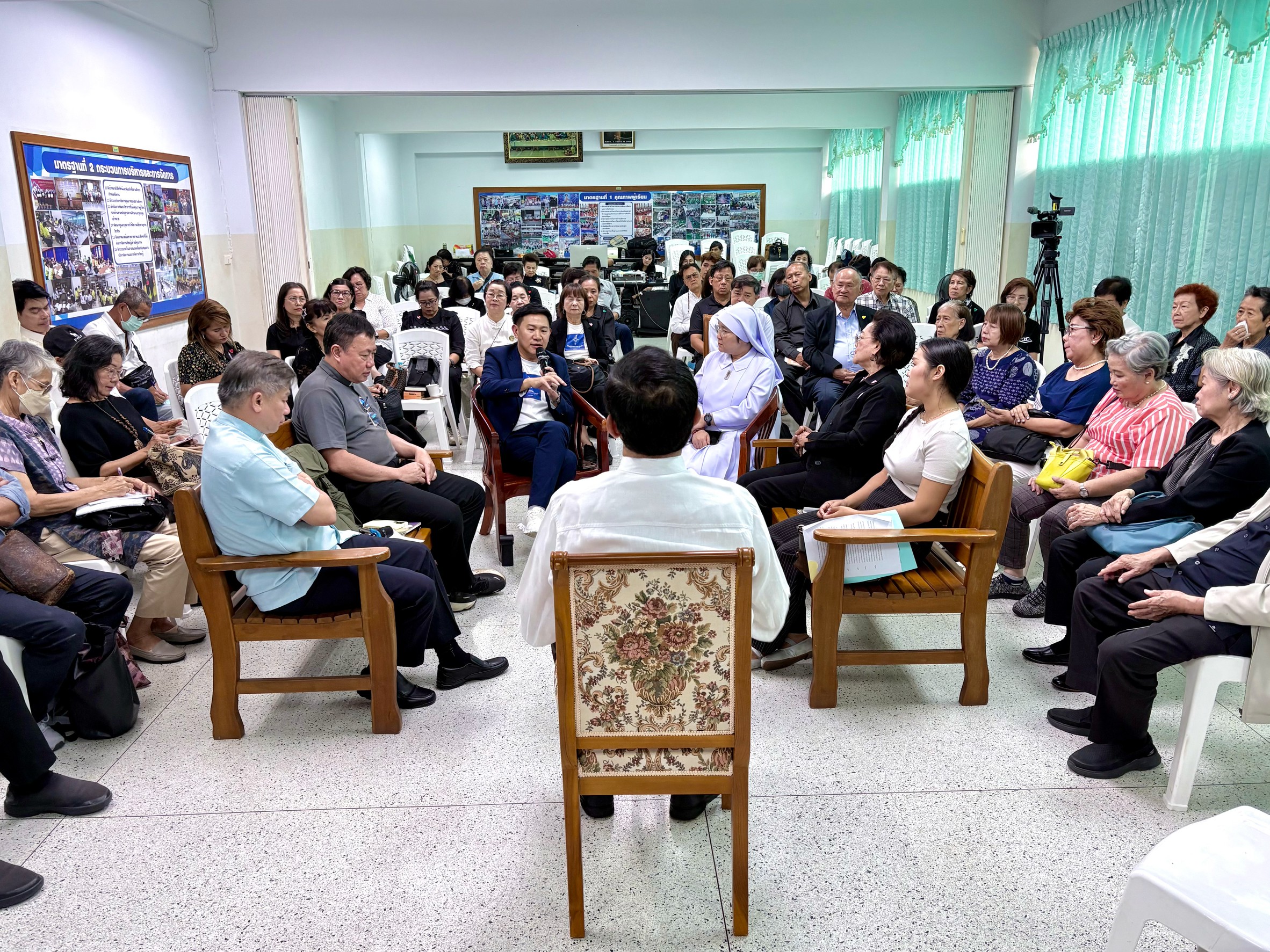
Representatives of six major Catholic organizations in Thailand gathered in Bangkok on June 20 to explore how the Church’s synodal vision and devotion to the Sacred Heart can be translated into concrete action for the poor, migrants, families, and other vulnerable sectors.
The event brought together approximately 100 participants in person, with many more joining nationwide through a livestream organized by Catholic Social Communication Thailand (CSCT).
More than simply introducing recent papal documents, the gathering sought to demonstrate how the Church’s synodal vision can foster deeper communion, active participation, and missionary outreach, particularly among the poor and marginalized.
Fr. Suwat Luangsaard, deputy secretary-general of the Catholic Bishops’ Conference of Thailand, said the event “was not merely a presentation of the documents Dilexit Nos and Dilexi Te” but “a reflection process employed by the Church to demonstrate unity and participation in the Church’s work.”
“Participants learned methods of conversation in the Spirit and cultivated mutual listening—an essential characteristic of a Church that truly walks together,” he added.
The seminar explored Pope Francis’ encyclical Dilexit Nos (“He Loved Us”), which presents the Sacred Heart of Jesus as the source of personal conversion, social reconciliation, and authentic Christian mission.
At the same time, participants reflected on Pope Leo XIV’s apostolic exhortation Dilexi Te (“I Have Loved You”), which emphasizes the inseparable connection between faith in Christ and solidarity with the poor.
Through presentations, panel discussions, and synodal dialogue, participants examined how these teachings can move Church renewal beyond institutional structures toward a more profound encounter with Christ that naturally overflows into the service of others.
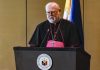
Opening the seminar, Archbishop Anthony Veeradet Chaiseri, Vice President of the CBCT, outlined the Church’s vision of synodality.
“The Church is like a living tree that continues to grow and journey forward,” he explained. “At its center is the Eucharist, which unites the People of God.”
Drawing on Pope Francis’ vision, the archbishop emphasized three key pillars of synodality—unity, participation, and mission—while stressing that every baptized person is called to be a missionary disciple.
He noted that authentic discernment begins with listening without prejudice, prayerful consultation, and a willingness to seek the guidance of the Holy Spirit. One of the greatest obstacles to walking together, he added, is attachment to one’s own ego.
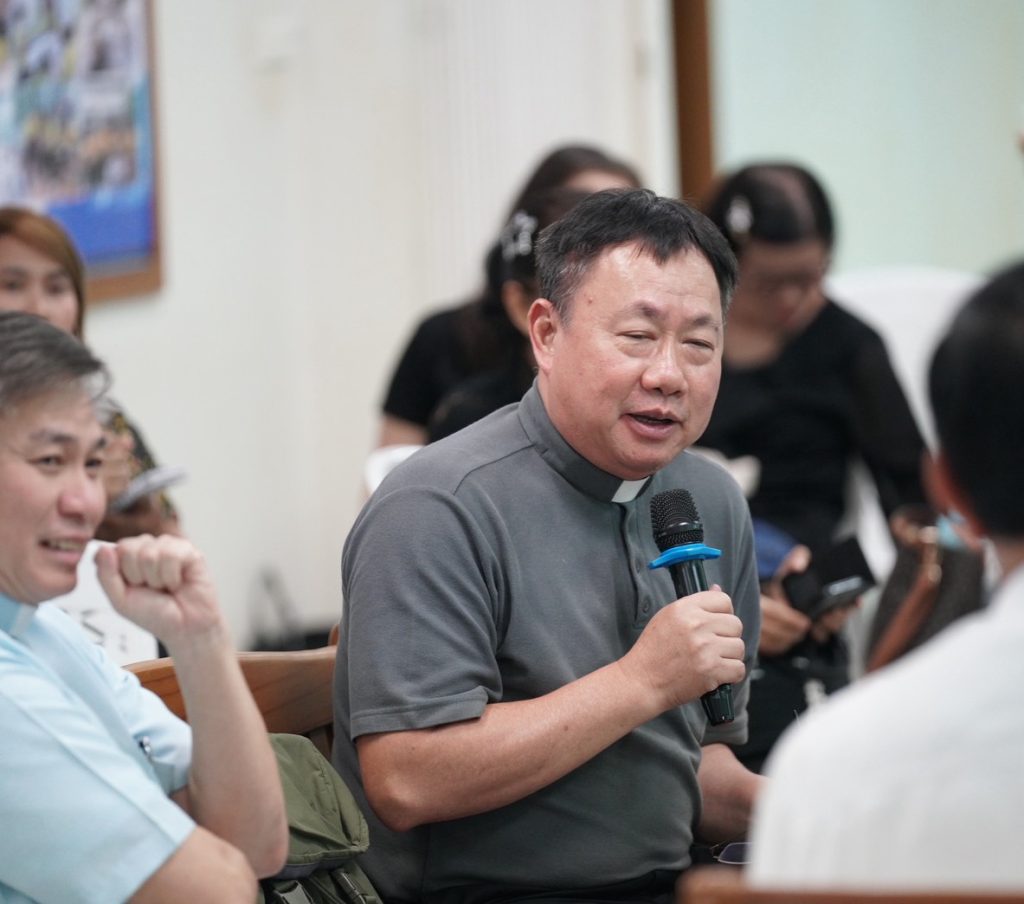
Fr. Joseph Pruet Tipthong, C.Ss.R., pastor of Holy Redeemer Church in Bangkok, reflected on Dilexit Nos and the enduring relevance of the Sacred Heart of Jesus in an age marked by superficiality and technological dependence.
“Humanity needs to rediscover the heart,” he said, explaining that technology can never replace genuine love and human encounter.
The Redemptorist priest emphasized that Christ’s love is not merely an idea or doctrine, but a lived reality expressed through closeness, compassion, and solidarity with those who suffer.
He encouraged participants to become “missionaries of love” who heal divisions and bring Christ’s tenderness into society.
Sister Marie Louise Pornruekngam, SPC, focused on Dilexi Te and the Church’s preferential love for the poor.
She stressed that poverty extends beyond material deprivation and includes the loss of dignity, exclusion, loneliness, and spiritual suffering.
The poor, she said, should not be seen merely as recipients of assistance but as active participants in the life and mission of the Church.
“The essence of the Gospel is that love for God cannot be separated from love for the poor,” she said.
Participants reflected on practical responses to contemporary social challenges, including care for migrants and refugees, support for disadvantaged children, assistance to the sick, and efforts to combat human trafficking.
They also discussed cultivating a culture of respect and empathy through everyday gestures that affirm the dignity of every person.
The afternoon session featured a synodal roundtable discussion moderated by Fr. Joseph Anucha Chaiyadej, Executive Director of CSCT, with representatives from Church leadership, religious communities, family ministry, youth, women’s organizations, and the business sector.
George Varakorn Techamontrikul, President of the Catholic Business Executives and Professionals (CBEP), described the seminar as a valuable model for helping Catholics understand how synodality can be lived in daily life.
Varakorn praised the collaboration among the six Catholic organizations, calling it a significant sign of the Church’s commitment to proclaiming the Gospel together.
The gathering concluded with a “Conversation in the Spirit,” the hallmark process of the Synod, allowing participants to listen deeply, share experiences, and discern practical ways of bringing Christ’s love into their families, workplaces, communities, and ministries.