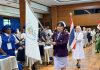

At the first Assembly of the Diocesan Synod of Toledo, held in June 2026, participants received a document entitled Ver, Spanish for “To See.” The choice of that verb revealed something more than a stage in a working process. Before drafting conclusions, the Archdiocese needed to look at its own life without haste or prepared answers: to recognize what is beginning, listen to what causes concern, acknowledge its wounds, and give thanks for the quiet faithfulness of so many people. The Spirit had not been invoked to confirm decisions already made, but to teach the Church how to see.
That gesture captures the meaning of the journey begun in Toledo. In a society accustomed to measuring activity through events, results, and public impact, we rarely appreciate what happens when people gather around the Word, speak freely, and listen to one another without turning every difference into a dispute. Numbers may show the reach of an invitation, but they cannot record the moment when someone discovers that his or her experience also belongs to the Church’s discernment.
The 26th Diocesan Synod runs from 2025 to 2028. Its first year, now completed, was devoted to spiritual renewal and to understanding the reality of the Archdiocese. The second will focus on handing on the faith and reaching out in mission. The third will gather what has been learned, discern pastoral directions, and undertake concrete commitments. The journey follows a Gospel logic: to see truthfully, proclaim joyfully, and respond through action.
At its origin lies an insight rooted in the Gospel, offered by the Archbishop of Toledo, Francisco Cerro Chaves. His invitation to “return to our first love” has given the Synod a clear direction. Returning to our first love means recovering the encounter with Christ that comes before programmes, sustains communion, and restores the true purpose of mission. Archbishop Cerro has not confined his role to signing a decree of convocation. He has accompanied the journey through his letters, meetings, presence at celebrations, and persistent invitation to involve the whole Archdiocese.
Walking beside him is Auxiliary Bishop Francisco César García Magán, who read the decree of convocation in the cathedral and has taken part in the principal moments of the process. The organisation itself expresses this shared responsibility. The Diocesan Delegation, led by Enrique del Álamo, together with deputy delegates Francisco Aparicio, José Pablo Ernst, David Sánchez, and Ángel Manuel Salazar, coordinates the theological, pastoral, liturgical, juridical, communications, and finance commissions. Priests accompany their communities; consecrated life contributes its experience of prayer and service; the lay faithful bring what they live in family life, work, culture, education, and social engagement.
The Synod has taken shape in parishes, movements, religious communities, seminaries, care homes, university settings, and other areas of pastoral presence. The synodal groups form their living network. There, people listen to the Word, enter into conversation, discern, and prepare contributions that are later received by the commissions and the Assembly. The process has rules and formal channels, but its energy comes from these gatherings, where the Church ceases to be something observed from outside and becomes a responsibility embraced together.
Synodality belongs to the biblical grammar of faith. Israel was a people summoned and set on the road. Moses learned to share with the elders a burden he could not carry alone. Jesus called each disciple by name, yet formed them into a community, sent them out two by two, and taught them to pray, “Our Father.” On the road to Emmaus, the risen Christ walked at the pace of two discouraged men, listened to their story, opened the Scriptures, and broke bread with them. Those disciples then returned to Jerusalem to rejoin the others.
The early Church soon had to face differences that touched the heart of its mission. At the assembly in Jerusalem, there was testimony, discussion, prayer, and discernment until the community could declare: “It has seemed good to the Holy Spirit and to us” (Acts 15:28). The ecclesial “we” contained in that sentence remains one of Christianity’s most demanding words. It neither erases the ministry of those called to preside and decide nor turns faith into a collection of opinions. It affirms that the will of God is sought in communion and that dialogue has belonged to the life of the Church from the beginning.
Confraternities and brotherhoods understand this education in “we.” Their life is sustained through chapter meetings, shared responsibilities, elections, agreements, common memory, worship, and charity. Before a procession enters the streets, many people have had to listen, organise, give way, serve, and undertake a mission together. When they live their vocation authentically, these brotherhoods show that tradition remains alive because it passes from one pair of hands to another and because no one can be a brother in isolation.
This journey intends to include, and to keep including, everyone. The perspective of the poor is indispensable because their preferential option for them also concerns the place from which the Church listens and discerns. Those facing insecure employment, the possible loss of their home, loneliness, migration, or dependence on others for their most basic needs perceive realities that may remain hidden from more protected positions. The poor are active members of the Church’s life, and their experience helps the Church read the Gospel with a truth no other viewpoint can replace.
At Ocaña I Prison, synodal listening takes on a particular meaning. There, words such as guilt, freedom, responsibility, forgiveness, and hope cease to be abstract concepts. People deprived of their liberty retain their full dignity and have something to contribute to the discernment of the Christian community. The Gospel places their voice where indifference is impossible: “I was in prison and you came to visit me” (Matthew 25:36).
Toledo’s journey is part of the synodal movement of the whole Church. Francis said that “a synodal Church is a Church which listens” and described synodality as the path God expects of the Church in the third millennium. Leo XIV has continued in this direction, speaking of “a process of deep listening” through which the voice of God can be recognised in the ecclesial community. As the universal process moves towards the Ecclesial Assembly of 2028, the Archdiocese is turning that horizon into pastoral practice, concrete conversation, and shared responsibility.
Toledo’s memory gives this journey particular resonance. The ancient councils, including the Third Council of Toledo, held in 589, belonged to very different historical circumstances, yet they left the image of a Church gathered to face the great questions of its time. In 1991, the constitutions of the 25th Diocesan Synod, convened by Cardinal Marcelo González Martín, were promulgated. More than three decades later, Toledo is gathering again because a Christian tradition proves its vitality when it helps people respond to the present.
The second year must carry the synodal conversation towards mission: how to hand on the faith, accompany young people, support families, inhabit contemporary culture and speak about Jesus Christ in a way that is both understandable and credible. The third year will require decisions. The Assembly will vote on its proposals, and the Archbishop will exercise his responsibility to discern and promulgate them in communion. The final document will matter, but its fruitfulness will depend on whether the experience transforms relationships, strengthens co-responsibility, and makes the Church’s presence more accessible.
Toledo can offer other dioceses an experience, not a formula. An archbishop convokes and accompanies; an auxiliary bishop shares the journey; priests, consecrated people and lay faithful agree to sit at the same table; commissions turn listening into material for discernment; brotherhoods contribute their experience of fraternity; the poor and those in prison widen the Church’s vision; the Spirit shapes a “we” where parallel ecclesial lives may once have existed.
At dusk, the bells of Toledo never produce a single note. Each retains its own timbre, weight, and history, yet all take part in one call that travels across the city. The Synod must learn to resonate in the same way. When 2028 arrives, and its final page is signed, its true fruit will be visible if the different voices of the Archdiocese continue to gather, listen, and walk together. Then it will become clear why this Synod cannot be contained in numbers: its true measure will be the breadth of a “we” capable of including everyone and carrying the Gospel further.
Fernando Redondo Benito (1980) is a Spanish social communicator, writer, and theatre scholar. He serves as Mayordomo de Finados and Senior Brother of the Ancient, Illustrious and Royal Brotherhood of the Holy Charity, founded in Toledo, Spain, in the Year of Our Lord 1085, and regarded as one of the oldest charitable institutions in Christendom.
With a background in Religious Studies and Missiology, he is a member of the International Association of Catholic Missiologists (IACM). His pastoral commitment extends to Prison Ministry and the Pastoral Care of Workers, both within the Archdiocese of Toledo and through initiatives across Spain.
He is the volunteer coordinator of “Luz entre muros” (“Light within the Walls”), a cultural, artistic, and pastoral project developed at Ocaña I Penitentiary Centre. Through art, music, the spoken word, and the Gospel, the project seeks to foster encounter, dignity, and personal renewal.
He has written numerous articles on the mission of the Church, charity, and popular religiosity, as well as several works of poetry. Recognised as a leading voice on popular religiosity, he has also gained a wide readership for his reflections on the Gospel, human peripheries, the world of work, and the presence of the Church in everyday life.