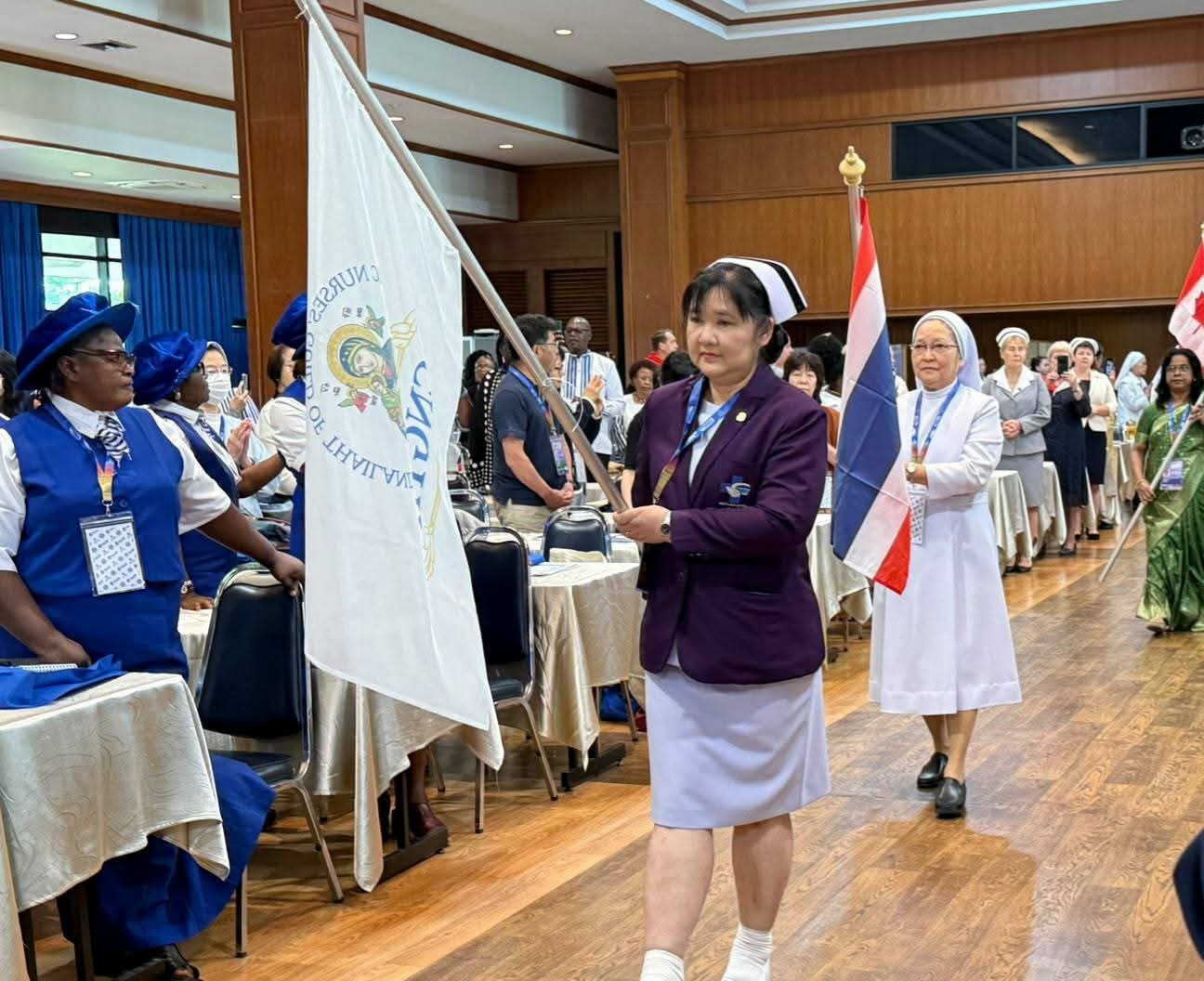
Hundreds of Catholic nurses and health professionals from around the world gathered in Thailand for a congress focused on protecting human dignity and promoting peace through compassionate health care.
The 22nd World Congress of the International Catholic Committee of Nurses and Medico-Social Assistants (CICIAMS) is being held Nov. 9-13 at the Baan Phu Waan Pastoral Center in Samphran, on the western outskirts of Bangkok.
The gathering, held every four years, carries the theme “Human Dignity and Peace: Time for Global Transformation” and brings together Catholic nurses, health professionals and Church leaders to discuss the role of health care in promoting human dignity, peace and international cooperation.
The Catholic Nurses Guild of Thailand is hosting the congress, organized under the leadership of CICIAMS President Dr. Khosi Mthethwa, Secretary-General Diana Ruzicka and ecclesiastical assistant Father Kenneth Gerard Sleyman, MM.
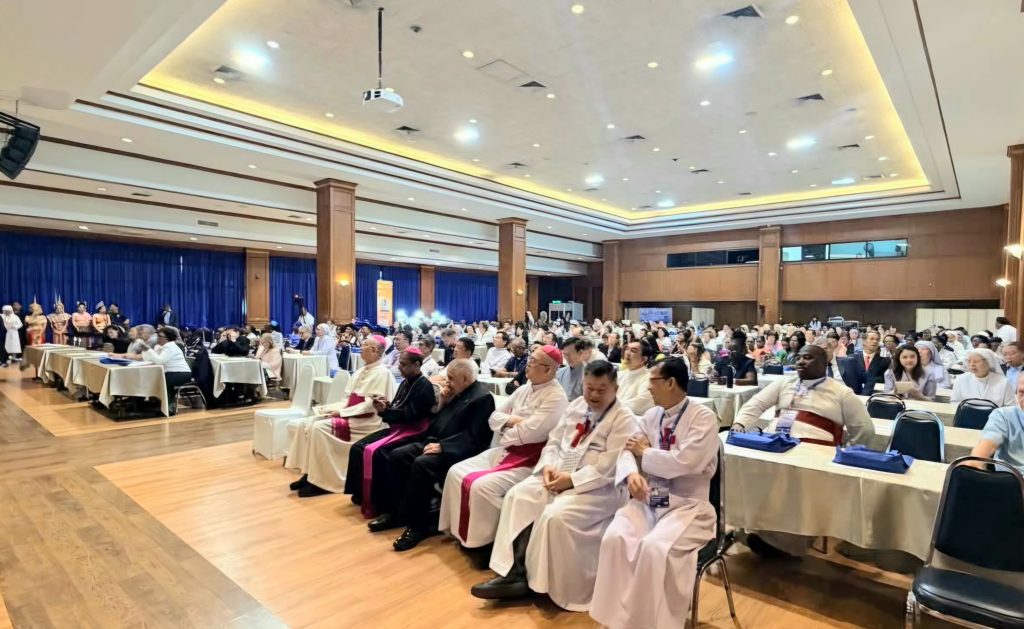
Photo credit: Fr. Anucha Chaiyadej
At the official opening ceremony Nov. 11, Sister Magdalena Supaporn Daodee, SPC, chair of the local organizing committee, said preparations for the gathering began three years ago.
“We are meeting for three days, but we have been preparing for three years with love, dedication, teamwork, and prayer,” she said.
Sister Daodee said the congress provides an opportunity for Catholic nurses to share experiences and strengthen their commitment to caring for the sick, particularly those living in poverty and vulnerable circumstances.
“As Catholic nurses, we are called to uphold human dignity, to build peace through compassionate service, and to embrace synodality by walking together,” she said.
Archbishop Peter B. Wells, apostolic nuncio to Thailand, told participants that nursing is a vocation rooted in the Christian responsibility to care for people experiencing suffering.
Speaking after the opening Mass, he emphasized the role of health professionals in promoting peace through their daily work.
“In a world marked by conflict and division, healthcare professionals contribute to peace not only through clinical expertise, but through compassionate presence, the protection of life at every stage, and care for the vulnerable,” Archbishop Wells said.
“Every act of healing can become a powerful instrument of reconciliation,” he added.
Msgr. Robert J. Vitillo, a member of the Vatican’s Dicastery for Promoting Integral Human Development and chief officer for innovation and programs at Catholic Charities USA, addressed the relationship between professional competence and compassion in nursing.
In his keynote address, Vitillo said nurses play a distinct role in health care because they accompany patients through some of life’s most difficult experiences.
“Physicians diagnose and prescribe, therapists rehabilitate, administrators organize systems, but nurses accompany persons and provide both love and expert care through some of the most profound moments of life,” he said.
Drawing on the Christian belief that every person is created in the image of God, or imago Dei, Vitillo said caring for people who are sick is an expression of service to Christ.
He referred to the Gospel of Matthew, particularly Jesus’ teaching about caring for those who are ill, and cited Pope Benedict XVI’s encyclical Deus Caritas Est in discussing the relationship between professional ability and Christian charity.
Vitillo stressed that compassion must be accompanied by the knowledge and skills necessary to provide effective medical care.
“A nurse may have excellent clinical skills, yet her patients may feel unseen. Conversely, a caregiver may be deeply compassionate but ineffective without necessary professional training,” he said.
He also drew on St. John Paul II’s apostolic letter Salvifici Doloris, which addresses the Christian meaning of human suffering, and Pope Francis’ call for health professionals to serve as “guardians and preservers of life.”
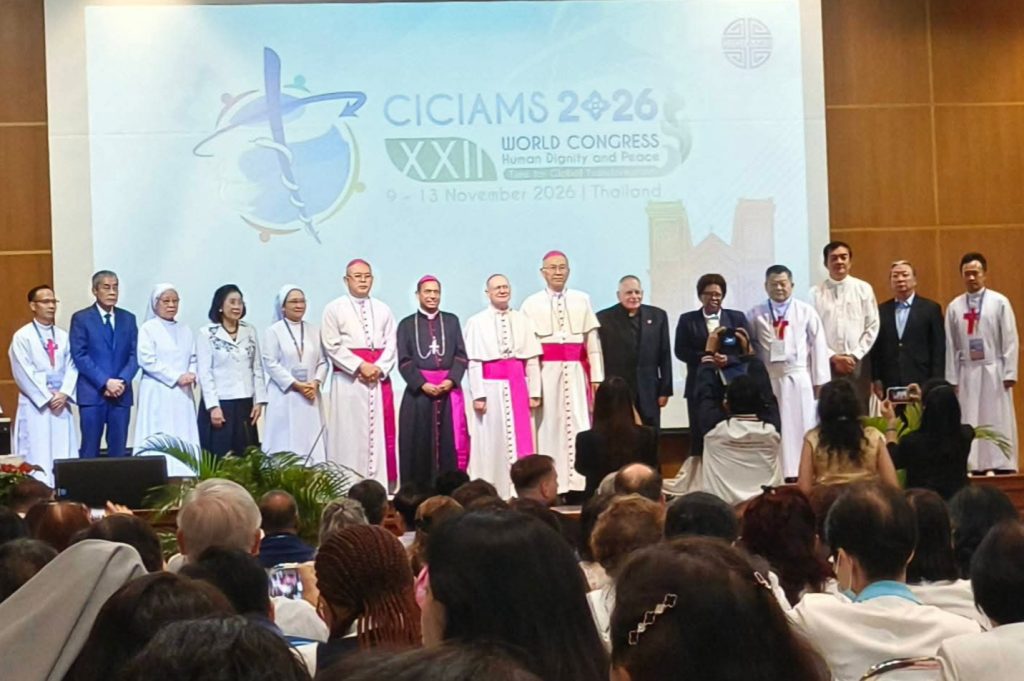
Photo credit: Catholic Medical Professionals of Thailand
Vitillo said nurses must combine clinical competence with attentiveness to the dignity and needs of patients.
“Catholic nursing,” he said, “is the art of healing with skilled hands, compassionate hearts, and a steadfast commitment to human dignity. In doing so, nurses become builders of peace, one patient at a time.”
CICIAMS Secretary-General Diana Ruzicka also called on nurses to draw inspiration from Scripture in responding to the needs of patients and communities.
Reflecting on the opening passages of the Gospel of John, she described nursing as a responsibility to bring hope and compassion to people experiencing suffering.
“One of the key roles of nurses is to be the light. We are to shine and reflect the light of Christ, like the moon reflects the sun,” Ruzicka said.
She recalled Pope Pius XI’s 1935 appeal to Catholic nurses to bring the “Christian Supernatural” to their work and cited examples of women whose faith shaped their service to others.
Among them were the biblical midwives Puah and Shiphrah, who resisted Pharaoh’s order to kill Hebrew male infants, and Stanislawa Leszczynska, a Polish midwife who assisted women giving birth at the Auschwitz concentration camp during World War II.
Ruzicka also cited Servant of God Sybil Kathigasu, a midwife who provided medical assistance to resistance fighters in Japanese-occupied Malaya during World War II. The original congress material said her cause for canonization opened in July 2024.
She identified three principles for Catholic nursing: drawing compassion from Christ, recognizing the Christian understanding of suffering and following the example of the Good Samaritan in accompanying people in need.
The congress includes plenary discussions, scientific presentations and workshops addressing the professional and spiritual responsibilities of Catholic nurses.
The gathering continues through Nov. 13, with participants examining how nursing practice, professional competence and compassionate care can contribute to the protection of human dignity and the promotion of peace.