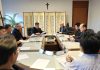

National synodal teams from across Asia met in Thailand to discuss how to bring synodality into daily Church life.
The Sept. 1-3 gathering at the Baan Phu Waan Pastoral Training Centre in Samphran, outside Bangkok, came as the global synodal process enters what the Vatican calls its decisive implementation phase.
The meeting, organized by the Federation of Asian Bishops’ Conferences (FABC) Commission for Synodality, brought together 65 delegates — bishops, priests, religious and lay leaders — representing 21 countries, according to Archbishop Francis Xavier Vira Arpondratana, chairman of the Catholic Bishops’ Conference of Thailand (CBCT).
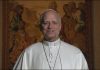
The gathering was led by Filipino Cardinal Pablo Virgilio “Ambo” David, chairman of the FABC Commission for Synodality.
Early this year, the Vatican’s General Secretariat of the Synod said in its Jan. 28 letter that 2026 “falls at a decisive moment of the implementation phase,” calling on local Churches to embrace the Final Document in its overall vision. The Samphran meeting was Asia’s continental response.
Four Movements Toward 2027
The assembly was structured around what organizers described as the Four Movements, focusing reflections on fruits celebrated, challenges acknowledged, support sought and the future prepared for.
With evaluation assemblies scheduled for 2027 — in the first half at the level of dioceses and eparchies, and in the second half at the level of episcopal conferences — delegates were urged to establish structured listening and consultation mechanisms back home.
Fr. Clarence Devadass, executive secretary of the FABC Commission for Synodality, provided the methodological framework, challenging national teams to become “laboratories of synodality” that move beyond routine parish management toward true lay ownership and transparent pastoral planning.
‘The Heart of the Gathering’
According to Archbishop Vira, who attended on behalf of Thailand together with the secretary of the Episcopal Commission for Evangelization, Fr. Peter Piyachart Makornkhan, the heart of the gathering came during the opening session after the opening Mass on the first day, when Cardinal David offered his reflection.
The cardinal anchored his talk in the theme of the recent FABC Plenary Assembly XII in Jakarta — “You will see greater things” (Jn 1:50) — and proposed three movements of conversion.
First, he called for a conversion of seeing: from prejudice to learning to see as Jesus sees, recognizing the genuine seeker behind labels and creating a Church where people can say, “I have been seen.”
Second, a conversion of walking: from walking ahead of people to walking with them. Citing the road to Emmaus, he stressed listening as a spiritual discipline that requires humility and co-responsibility.
Third, a conversion from doing to seeing: from being preoccupied with what great things we must do for God to learning to see the greater things God is already doing. “Perhaps our task is not always to bring God somewhere. Perhaps sometimes our task is to discover that God has arrived there ahead of us,” Cardinal David said.
In Asia’s religiously plural societies, he said, this means becoming bridges — creating spaces where bishops and people, clergy and laity, women, youth, the poor and people of other faiths are genuinely heard.
Archbishop Vira told LiCAS News he was deeply impressed by this reflection. The cardinal’s guide question for delegates was: “Where might the Lord already be doing ‘greater things’ that I have not yet learned to see?”
Full details of the keynote have been reported by Radio Veritas Asia.
What the Church in Thailand Has Done
Archbishop Vira shared with LiCAS News the Thai Church’s implementation efforts so far: all synodal documents have been translated into Thai, a national synodal team has been set up, and every diocese now has a synodal committee.
The CBCT will share what was learned in Samphran at its meeting this month and has asked the FABC team to prepare a clear report for bishops, priests, and diocesan pastoral councils. Plans include promoting “Conversation in the Spirit” among priests, religious and laity.
“Synodality is the spiritual direction, but Basic Ecclesial Community has been implemented, and it will be ongoing far into the future,” Archbishop Vira said.
For the Church in Thailand, as well as others in Asia, Archbishop Vira concluded, the path forward requires becoming a “bridge” — a community that surrenders control, listens before teaching and steps alongside its people to witness the greater things already unfolding.