We are entering the era of 1.5°C and above.
The UN Environment Programme (UNEP) recently released Limiting Overshoot Spotlight Report, a study affirming that under current policies, the world is unable to limit global warming to 1.5°C, the cornerstone of the Paris Agreement. The report’s message is that “overshoot is not an argument for resignation, but rather for urgency to action” and lays out available choices and pathways for both mitigation and adaptation.
UN Secretary-General António Guterres knows there is no easy turnaround that could, and morally should, happen at COP31, the climate conference in November 2026 in Antalya, Türkiye. The 57-country “coalition of the willing” established during the Santa Marta Conference (First Conference on Transitioning Away from Fossil Fuels) in Santa Marta, Colombia, in April 2026 is not a political fulcrum on which to turn matters. Guterres is trying to highlight the urgency needed yet wants to be positive.
But there is near silence about the elephant in the room, which is the overuse of fossil fuels by all major economies.
Recent extreme events
For people living in island and low-lying countries, there is nothing so shocking as the seasonal reality of increasingly unbearable extremes.
As we start the Season of Creation 2026, the Pacific islands are being devastated long-term, and there is no recovery for submerged atolls. The president of Palau recently spoke out, as well as Archbishop Peter Loy Chong of the Archdiocese of Suva in Fiji. Cardinal Pablo Virgilio David of the Diocese of Kalookan in Manila, Philippines, has been outspoken on many of the disasters in Luzon and the corruption.
In the Philippines, five provinces — Tarlac, Pampanga, Bulacan, Nueva Ecija and Zambales — and hundreds of villages were flooded from August until early September. The growth of a severe drought in Mindanao threatens the major harvest of the year. The battle over the waste incinerator in Manila and the proposed gold and copper mining project in Dupax del Norte, Nueva Vizcaya, show how politically there is little commitment, along with the gross failure of flood control systems and corruption. We are also part of the problem, though suffering most from the excesses of economic models of extractivism.
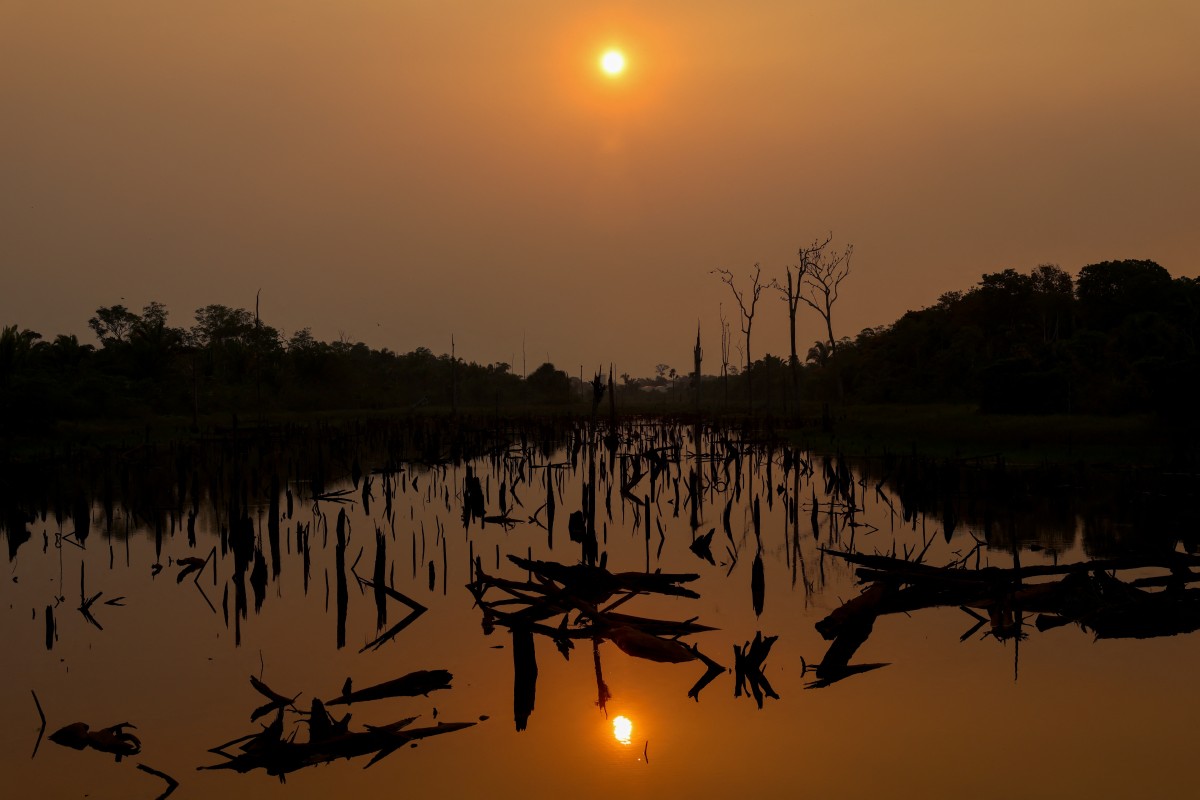
There was also intense smog from late August to early September coming from severe forest and peatland fires in Sumatra, Kalimantan and Sarawak and blanketing the Philippines along the line of the southwestern monsoon.
The margins cannot adapt anymore
What this means for millions of people, basically the poor, is that they cannot adapt anymore. They simply suffer the incrementally growing extremes and worsening water and food problems from which they see little relief, even if the younger generations migrate to the cities.
For most of these contexts of the poor, there is no effective relocation process, just vulnerability, drift and migration. Food and water security are growing crises, along with health. There is no basis for being optimistic and upbeat about change.
It’s a struggle, and cheap optimism is greenwashing, with promises never fulfilled for the poor. If families lose a harvest, there is no relief from government, just debt. The elderly have poor health conditions and suffer floods, heat and smog. There is no relief.
People are exhausted with “adaptation and resilience” that seem to be used as an optimistic excuse for the burden and suffering of the poor each season.
With 30 percent of the carbon produced, much of the heat is absorbed by the oceans, creating extreme weather patterns, not simply events. Much of the rest of the carbon is still in the atmosphere and may be taken in by vegetation and soil over 30 years, but there is no fast absorption and lockup by vegetation.
With these current droughts in particular, afforestation with fast-growing alien species will experience a high death rate, about 70% over five years. Meanwhile, Indonesia and Malaysia have drained their peatlands, which now easily burn and burn deep underground.
Glacial melt has gone on for decades, with melting permafrost releasing methane. Pakistan had a major disaster before COP27 but was simply ignored, as will the Aug. 26, 2026, glacial collapse and floods in Nepal just before COP31. The COP process ignores the national voices each year from the margins, and policy is decided by the powerful few.
Carbon capture technology as a response to the silent excesses of fossil fuel consumption is not an answer but a delay until political positions shift in the coming decade. There is no technology to solve this, only myth.
Stopping fossil fuel burning is the path of hope and reality that could start the curve in the decade ahead.
COP30 President André Corrêa do Lago was a source of great hope and integrity as he listened to Indigenous peoples during COP30 in Belem, Brazil, and helped create the pre-COP31 venue for Indigenous youth in Fiji in early October 2026 with UNICEF.
Indigenous youth need to join the COP each year to understand that this is the global context in which they must have a voice.
Fr. Pedro Walpole, S.J. works in sustainable environment and community land management in Southeast Asia, with mainly local communities, universities, international organizations, and governments. He practices a people-focused approach to capacity building and seeks to promote more lasting partnerships through research, consultation, and policy building to support local populations and governments. He is the Coordinator for the River Above Asia Oceania Ecclesial Network. Pedro also directs the Apu Palamguwan Cultural Education Center, an upland basic education program and technical training for indigenous children in northern Mindanao that has its own culture-based curriculum and promotes multi-language education and the use of the mother tongue. He continues to live with the Pulangiyēn, an upland indigenous community in Mindanao.