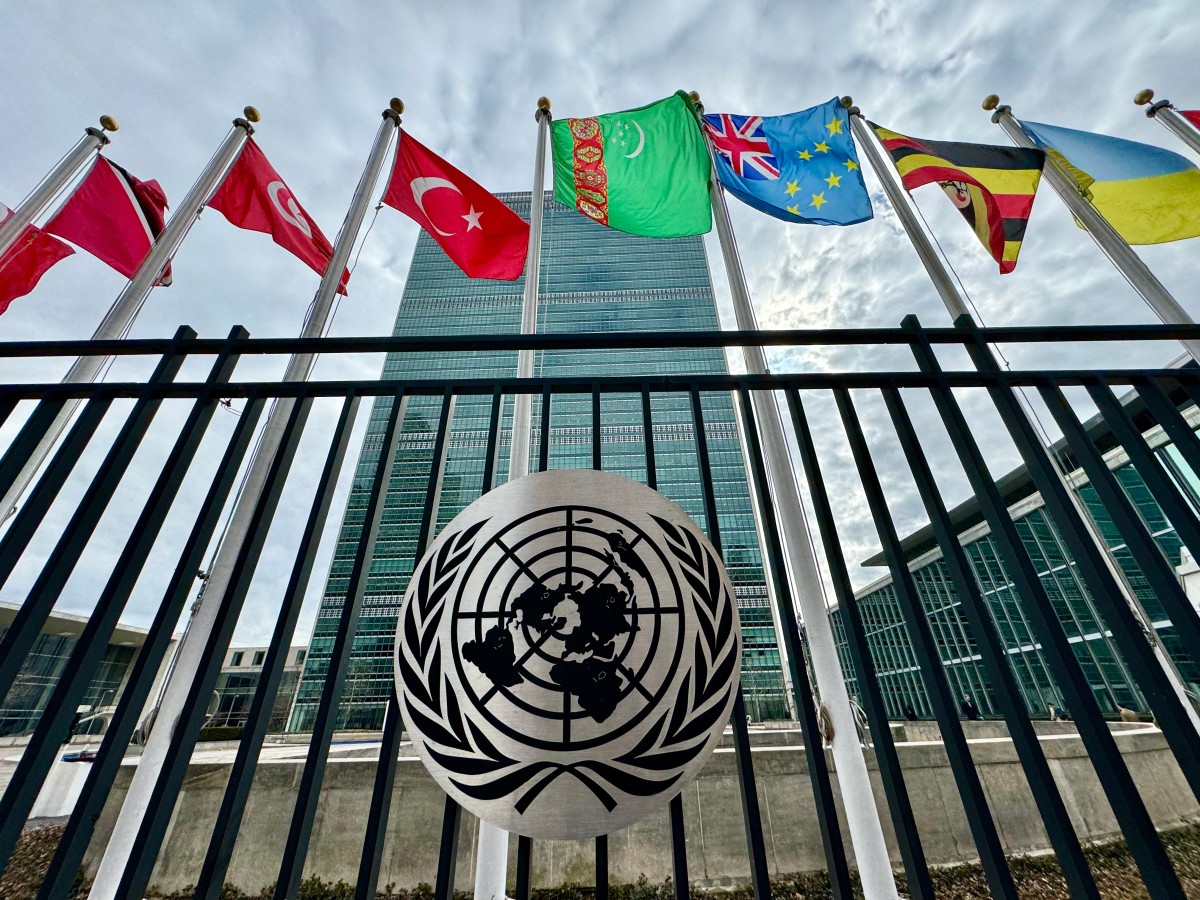
The new Permanent Observer of the Holy See to the United Nations, Archbishop Christophe Z. El Kassis, presented his letter of appointment to the UN Secretary-General António Guterres on 16 September.
A day later, on 17 September, Archbishop El Kassis gave his first address at the Global Conference on Promoting Interreligious and Intercultural Dialogue and Tolerance in Countering Hate Speech in New York.
Addressing the Chair, the Archbishop reiterated the Holy See’s position that each and every individual is made in the image and likeness of God and has an inalienable dignity that cannot be lessened by any expression or ideology of hatred.
He stressed that “from this foundational truth flows the moral imperative to reject every form of intolerance, discrimination, and hate speech that wounds the human family and undermines the conditions for peaceful coexistence.”
Any hate speech—directed at either individuals or communities because of their religion, race, nationality, or any other characteristic—goes against the commandment to love one’s neighbor. Moreover, it “poisons public discourse, inflames division, and too often prepares the ground for violence and persecution.”
Archbishop El Kassis turned to the words of Pope Leo XIV in his Encyclical Letter Magnifica Humanitas: “The first contribution we can make toward a more humane civilization is to be mindful of our words.” Words have great power. The first step in weaving “the fabric of social peace and foster a culture of dialogue, tolerance and respect for differences” is taken when we disarm our words.
Yet, the new Permanent Observer argued that words are not enought to build peace. Authentic tolerance does not equal indifference or relativism. Rather, it means actively acknowledging each individual’s dignity and their own freedom of conscience. Patience in achieving dialogue, mutual understanding, and rejecting stereotypes is essential to true tolerance.
“In this spirit the Holy See promotes interreligious and intercultural dialogue as an essential path toward overcoming prejudice and building a better world for all,” Archbishop El Kassis explained.
A fundamental right
“Freedom of expression is a fundamental right that must be protected,” the Archbishop stressed. However, this freedom comes with responsibilities.
Any words or speech that intentionally provoke violence or hatred cannot “claim the protection of liberty; rather it erodes the very conditions in which genuine freedom can flourish.”
As the Pope’s encyclical urges, we must “disarm communication of all prejudice and resentment, fanaticism and even hatred; let us free it from aggression. We do not need loud, forceful communication, but rather communication that is capable of listening and of gathering the voices of the weak who have no voice. Let us disarm words and we will help to disarm the world. Disarmed and disarming communication allows us to share a different view of the world and to act in a manner consistent with our human dignity.”
About Archbishop El Kassis
Born on 24 August 1968 in Beirut, Lebanon, Archbishop Christophe-Zakhia El-Kassis was ordained a priest of the Archeparchy of Beirut of the Maronites on 21 May 1994. Six years later, he joined the Diplomatic Service of the Holy See and has been worked at the Pontifical Representations in Indonesia, Sudan, and Türkiye.
In 2018, he was appointed Apostolic Nuncio to Pakistan and on 19 January 2019, he received the episcopal consecration from Cardinal Pietro Parolin in St. Peter’s Basilica.
On 25 July 2026, Pope Leo XIV appointed Archbishop El-Kassis as Permanent Observer of the Holy See to the United Nations in New York.
This article was originally published on Vatican News. All copyrights reserved to the Dicastery for Communication – Vatican News. Unauthorized republication by third parties is not permitted.