
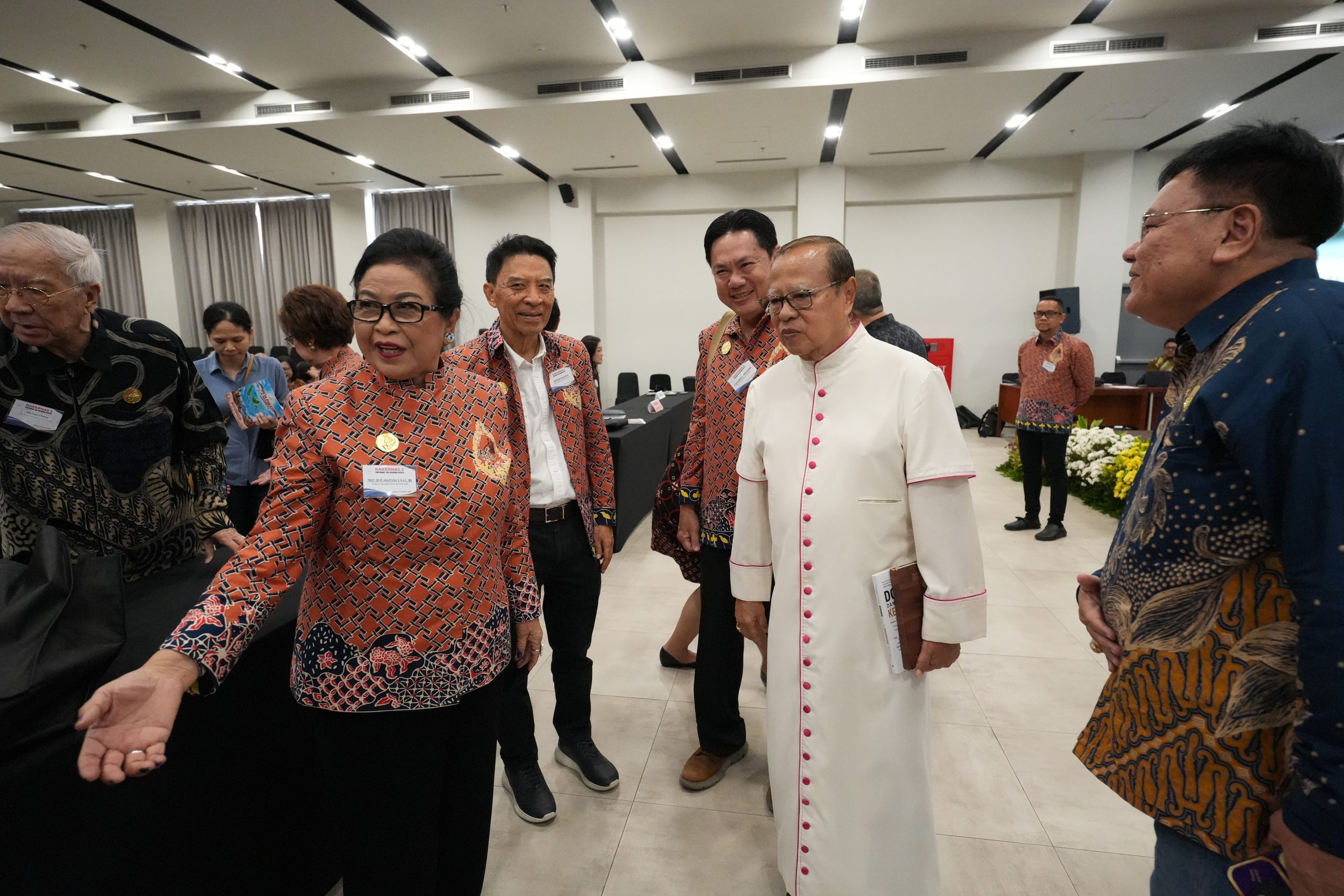
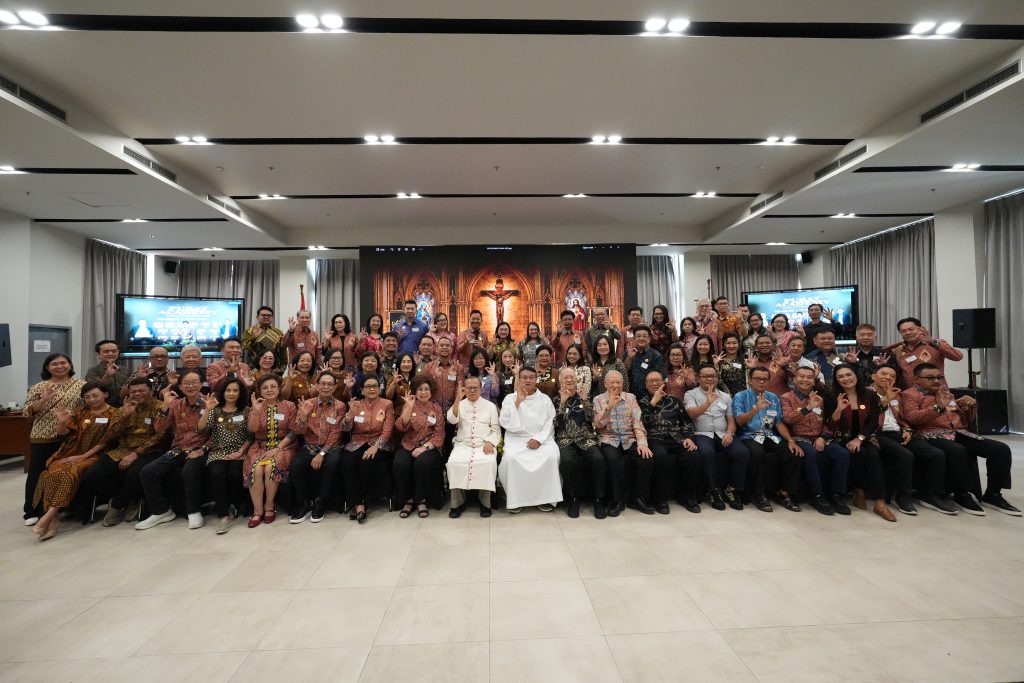
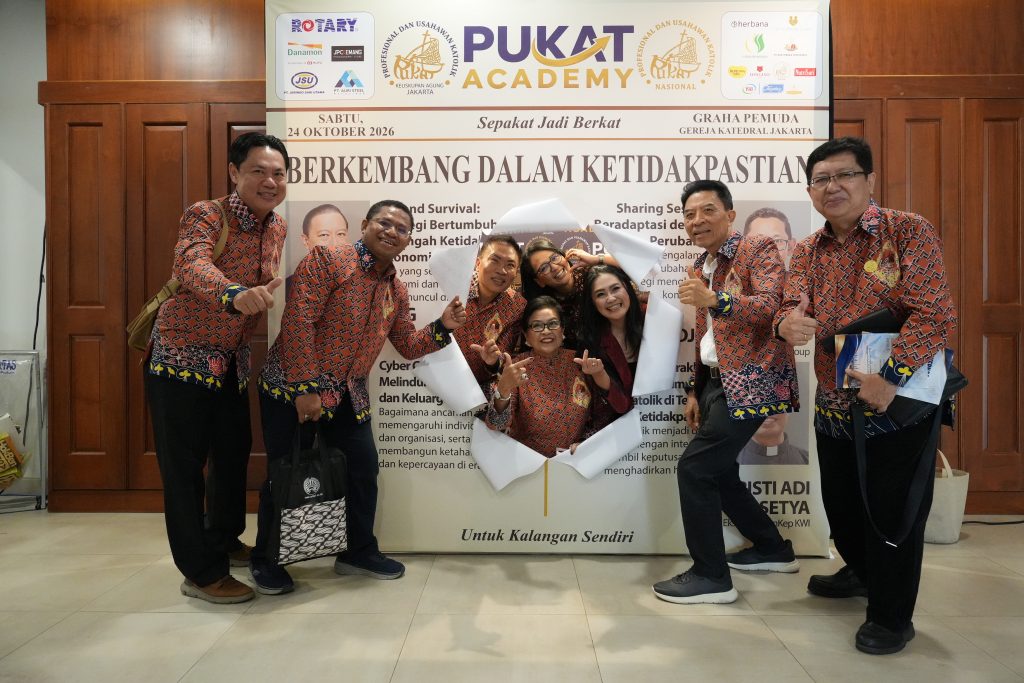
Global economic uncertainty, technological disruption and rising cybercrime threats took center stage at PUKAT Academy 2026, where Catholic professionals and business leaders were urged to respond to change with character, integrity, innovation and faith.
The Catholic Professionals and Entrepreneurs Community (PUKAT) of the Archdiocese of Jakarta held the academy under the theme “Thriving Amid Uncertainty” at Graha Pemuda, Jakarta Cathedral Parish, on Oct. 24.
It was the second PUKAT Academy, following the inaugural event held two years earlier in Semarang, Central Java, with PUKAT Semarang as host. For the 2026 edition, PUKAT of the Archdiocese of Jakarta served as host and program organizer.
The event featured former Trade Minister and Investment Coordinating Board Chairman Tom Lembong; Bluebird CEO Andre Djokosoetono; cybersecurity analyst Mr. Bert; and Father Frans Kristi Adi Prasetya, secretary of the Youth Commission of the Indonesian Bishops’ Conference.
Their sessions explored economic uncertainty, business transformation, digital security and the role of Catholic faith in shaping leadership grounded in integrity.
Character under pressure
In a session titled “Beyond Survival: Strategies for Growth Amid Economic Uncertainty,” Lembong focused not only on economics and business, but also on character, personal principles and self-awareness.
Rebecca, who attended the academy, later shared reflections from the session through her social media account. She said she had expected to learn mainly about economics, business and public policy, but was struck instead by discussions on character, life’s journey and understanding oneself.
One message she highlighted was: “Character is destiny.”
The session stressed that character is formed over time and becomes most visible when people face difficult circumstances.
Rebecca also recalled an analogy from Lembong comparing human beings to trees. Just as every tree has its own characteristics, individuals must understand who they are, recognize their strengths and develop a clear sense of identity.
According to the seminar program, Lembong’s session also covered national and global economic developments, business challenges over the next three to five years, emerging opportunities, and the importance of innovation and transformation.
Adapting without losing core values
Business transformation was the focus of the session featuring Bluebird Taxi Group CEO Andre Djokosoetono.
The rise of app-based transportation services has reshaped competition in the industry and changed consumer expectations, challenging companies built around traditional business models.
Drawing on Bluebird’s experience, the session examined how organizations can recognize change, overcome internal resistance and make difficult decisions during periods of transformation.
A key discussion centered on distinguishing between practices that need to change and values that must be preserved.
Technology, business processes and organizational mindsets may evolve, but the session stressed that a company’s fundamental values should remain intact.
Customer trust was also highlighted as an important asset for long-term business sustainability.
Cybercrime and digital trust
Digital security was another major focus of PUKAT Academy through a session titled “Cyber Crime & Digital Trust: Protecting Businesses, Organizations, and Families in the Digital Age,” featuring cybersecurity analyst Mr. Bert.
The discussion covered phishing, social engineering, the misuse of artificial intelligence, deepfakes and ransomware attacks.
Participants also discussed personal data protection, corporate information security and digital risks affecting families and micro, small and medium-sized enterprises.
The session stressed that cybersecurity is not only a technological concern but also involves awareness, personal responsibility, vigilance and the development of a security-conscious organizational culture.
Digital trust, participants were told, has become increasingly important to business continuity and relationships with customers and the wider community.
Faith as a compass
Father Frans Kristi Adi Prasetya told participants that faith can provide direction and hope amid uncertainty.
Drawing on the life of St. Ignatius of Loyola, he said setbacks and unexpected changes can become opportunities for personal transformation.
He distinguished Christian hope from optimism, saying hope rests on God’s faithfulness rather than favorable circumstances.
Father Kristi encouraged professionals and entrepreneurs to practice Ignatian discernment when making difficult decisions.
Profit, career advancement and reputation, he said, should not overshadow integrity, compassion and concern for others. Faith should also be reflected in ethical business practices, fair treatment of employees and service to society.
Referring to the Gospel story of the five loaves and two fish, he reminded participants that limited resources should not prevent them from doing good and that even small contributions can make a difference when generously shared.
The “first button”
During the closing Mass, Father Kristi used a childhood experience of incorrectly buttoning his shirt to illustrate the importance of fundamental values.
He recalled his mother teaching him that when the first button is fastened correctly, the remaining buttons naturally fall into place.
He connected the lesson to Jesus’ two greatest commandments: love God and love one’s neighbor.
For Catholic professionals and entrepreneurs, he said, these commandments serve as the “first button” guiding every decision.
When love of God and neighbor becomes the foundation of life, professional success and business growth can remain aligned with integrity, compassion and service to others.
PUKAT Academy 2026 brought together discussions on economics, business transformation, digital security and Catholic spirituality around a common concern: how professionals and entrepreneurs can respond to uncertainty without losing sight of the values that guide their decisions.
The sessions emphasized adaptability and innovation, but also the importance of character, trust, compassion and faith in shaping leadership and service.