Catholic communicators in Indonesia were urged to resist the pressure for virality and place human dignity, truth, and ethical responsibility at the center of their use of artificial intelligence and social media.
The call came during the Komsos and SIGNIS Sumatra Regional Meeting in Pematangsiantar, where participants examined the moral and ethical challenges of communication in the digital world.
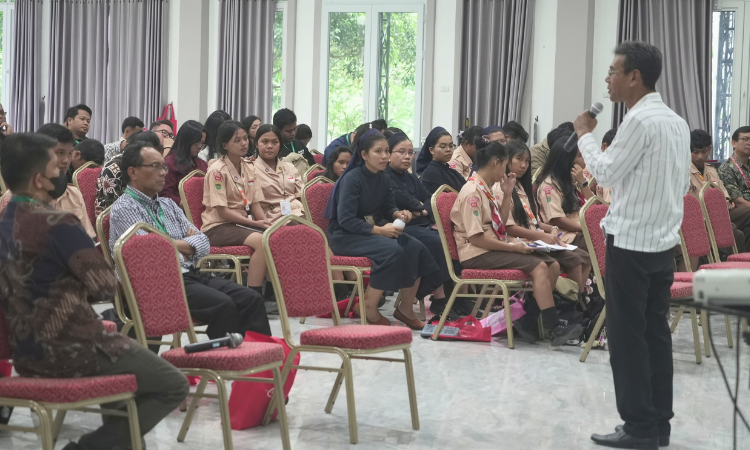
Fr. Ivo Manullang, OFMCap, a lecturer at the Faculty of Philosophy of St. Thomas Catholic University in Medan, led a Sept. 24 session on morality and ethics in digital spaces.
He invited participants to see social media not merely as a communication tool but as part of the environment in which people now live, carrying their identities, values, habits and responsibilities with them.
The seminar stressed that digital transformation cannot be addressed through technical skills alone. It said the Church must also understand the digital world as a place where people live, encounter one another and remain responsible for what they say and do.
Behind every account, comment, and piece of content is a person, the session emphasized, warning that online communication has consequences for others.
Participants were cautioned against treating virality as a measure of success, particularly when sensational or controversial content can attract attention more quickly than messages requiring reflection.
Instead of asking, “How can I make my content go viral?” communicators were encouraged to ask: “Is my content true? Is it good? Is it beautiful? Does it build up the human person?”
The seminar described those questions as a possible moral compass for Catholic communicators.
Manullang also stressed the importance of being reflective rather than reactive amid the rapid flow of information online.
The session noted that not every issue requires an answer, not every provocation needs a response and not every piece of information should be forwarded.
It also emphasized that comments, likes, posts, images, films and animations should reflect values learned from Christ, while truth should be communicated constructively and for the common good.
The discussion extended to privacy and family life after a participant shared the example of a marital conflict that was brought onto social media.
A post can be deleted, the session noted, but screenshots can allow digital traces to remain long after the emotions behind the original post have passed.
Participants were also encouraged to treat Church communication as a shared responsibility rather than a competition among individuals.
The seminar recommended that social media accounts of religious orders or congregations be managed collectively by designated teams to strengthen order, moderation and pastoral responsibility.
Storytelling was presented as another approach to digital evangelization, drawing on the lives of saints, the experiences of families and communities, the struggles of ordinary people and stories of love and forgiveness.
The material said such stories can help reach audiences without making them feel they are being lectured or judged. The goal of communication, it said, should not be virality alone but relationships that uphold human dignity.
The ethics session followed a presentation by Prof. Darwin Suhartono on developments in AI, algorithmic bias, data security and the importance of keeping people in control of technology.
Organizers framed the two sessions around two questions: “What can technology do?” and “What should human beings do?”
The material said both questions meet at one point: the human person must remain at the center.
It stressed that technology must not diminish human dignity, AI must not replace conscience, social media must not replace relationships and Church communication must not lose its human face.
The Komsos and SIGNIS Sumatra Regional Meeting began Sept. 22 at the Catholic Center of the Pusat Pembinaan Umat in Pematangsiantar.
The Sept. 24 sessions were attended by Komsos and SIGNIS representatives, students from SMK Bintang Timur Pematangsiantar, priests, and men and women religious from the surrounding area.