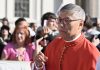
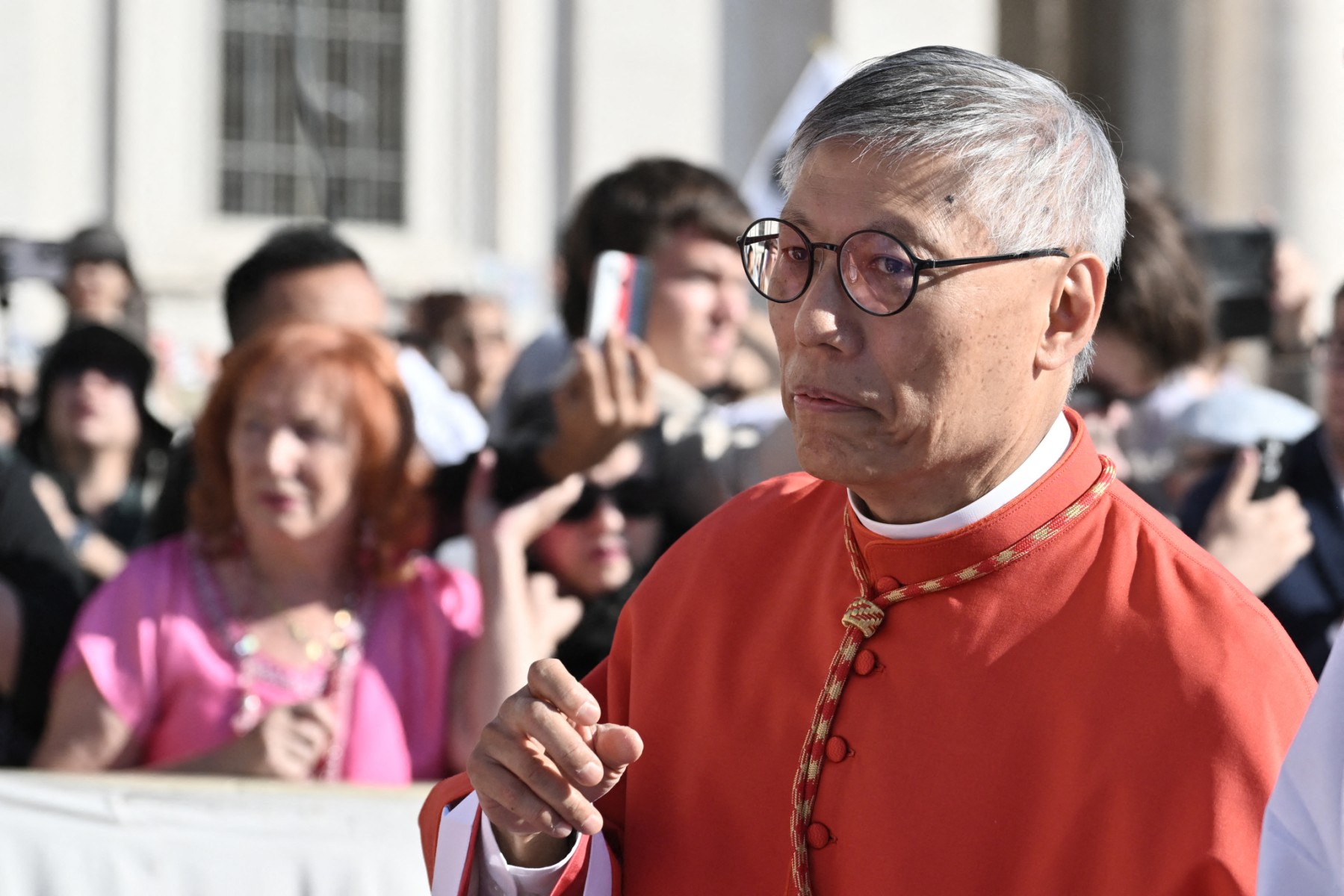
Cardinal Stephen Chow Sau-yan of Hong Kong has called for a new approach to Catholic formation in China that would help clergy, religious and laypeople remain faithful to the Church while embracing their national identity.
Speaking at an international conference in Rome on Nov. 5, Chow proposed intercultural dialogue as a way to address tensions between Catholic faith, Chinese cultural traditions and government religious policies.
According to Fides News Agency, the Jesuit cardinal said formation must consider “what being a faithful Catholic who is patriotic towards his or her country could be like”.
He said intercultural formation “takes seriously the Christian faith and the state policy since both shape the circumstances of the Chinese Catholics”.
The conference at the Pontifical Urbaniana University marked the centenary of the episcopal consecration of the first six Chinese bishops by Pope Pius XI on Oct. 28, 1926.
The prelate said the consecration at St. Peter’s Basilica “marked the beginning of the indigenization of the Catholic Church in China”.
The establishment of the Chinese Catholic hierarchy by Pope Pius XII in 1946 through the apostolic constitution Quotidie Nos later placed the Church in China “on equal footing with others in the Universal Church”.
But Chow said those developments had not resolved the challenge of rooting Catholic faith in Chinese cultural life while maintaining communion with the universal Church.
“These institutional developments did not, by themselves, resolve the continuing challenge of forming Catholics whose faith is deeply rooted in Chinese cultural life, while staying in communion with the universal Church,” he said.
He called the two anniversaries “an important milestone for the Church in China and the Universal Church to start discerning on the formation of the clergy, religious, and laity in China through synodal dialogue”.
Chow examined three approaches to the relationship between Christianity and Chinese society: inculturation, Sinicization and interculturality.
He described inculturation as “a two-way, ongoing dialogue where the Gospel transforms a culture while allowing local cultural values and expressions to enrich the life of the Church”.
He cited the Chinese Rites and depictions of Mary and Jesus in Chinese clothing as examples of efforts to express Christianity through local traditions.
Chow also discussed the Chinese Communist Party’s policy of Sinicization under President Xi Jinping, which requires religious communities, including Catholics, “to align with CCP’s ideology and socialist values, and the spirit of patriotism”.
He noted changes to religious buildings under the policy and cited scholars who distinguish cultural assimilation from political alignment with the Chinese party-state.
“Being patriotic and faithful believers, may help the government to exercise desirable governance for all those who dwell in China insofar that is feasible and appropriate,” he said.
Chow proposed interculturality as a framework that allows different cultures and religious traditions to engage in dialogue and learn from one another.
He described it as the “co-construction and negotiation of meanings, attitudes, and perspectives” through encounters in which participants “open themselves to be influenced or even transformed by other traditions”.
The cardinal cited a 1993 address in Hong Kong by the future Pope Benedict XVI, then Cardinal Joseph Ratzinger, who advocated intercultural dialogue over inculturation.
Chow said the approach allows cultures and religious traditions to “engage in mutual correction” and “shares similarities with Synodality promoted by our Church”.
He said intercultural formation should encourage “intentional dialogues of sincere speaking, empathic listening, identifying converging interests of the common good”.
Such exchanges, he said, could help participants recognize “their own blind spots” and address disagreements constructively.
Chow recalled the Chinese Rites controversy as “a painful process in history but with helpful outcomes even until today”.
“However, the dialogue may not be over,” he said.
The cardinal also cited the experience of the Diocese of Hong Kong, where parishes have been asked to use the “Conversation in the Spirit” method to prepare their three-year pastoral plans.
Some parishes described the process as “an eye-opening experience with greater sense of ownership for the parishioners”, he said.
Chow said intercultural formation could help Chinese Catholics live out their religious commitments while fulfilling their responsibilities as citizens.
He said clergy, religious and laypeople “will be equipped with the know-how for them to ‘become authentic’ Catholics and nationals at the same time”.