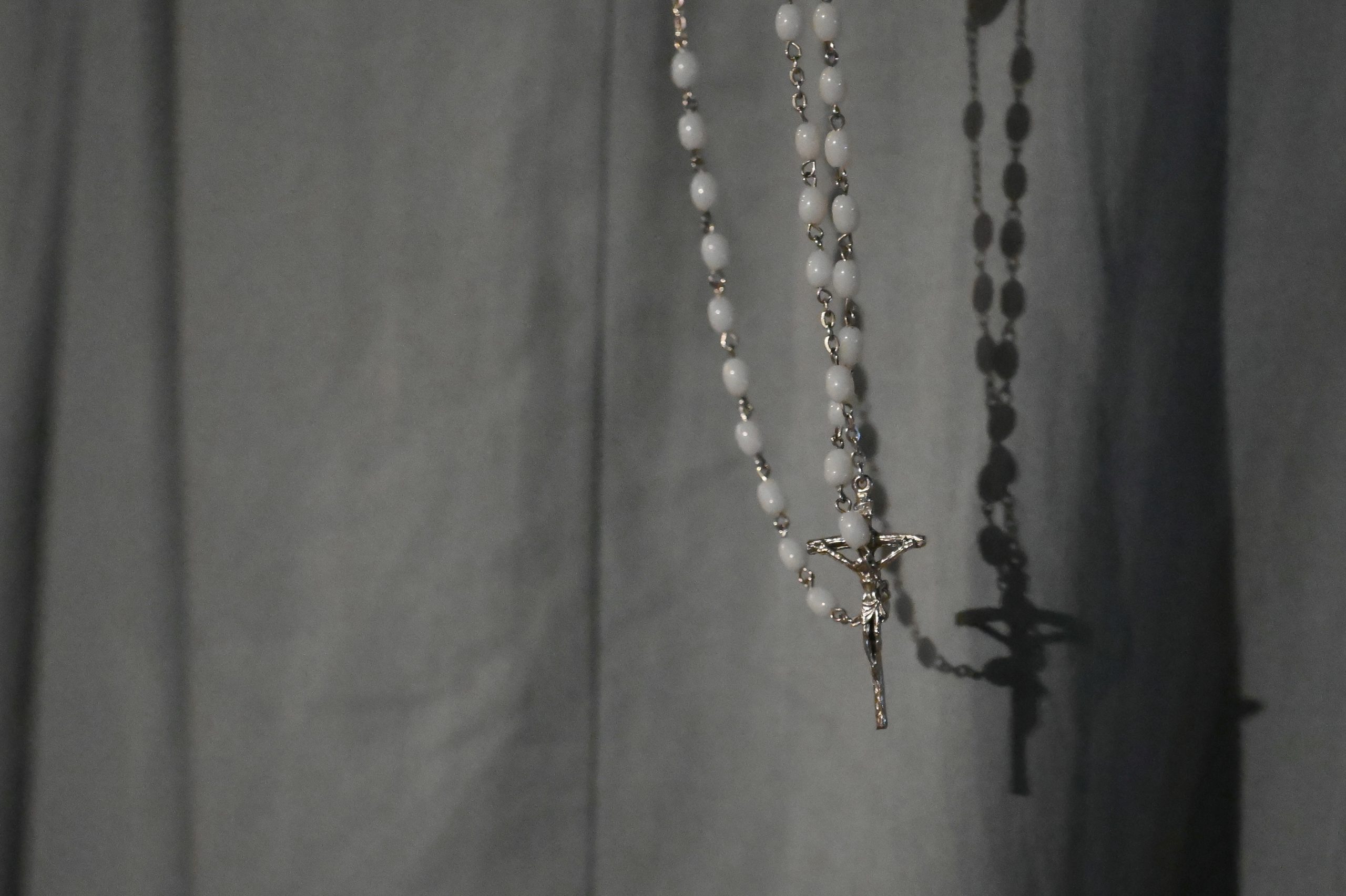
This October, Catholics across Asia will pray the Rosary amid wars, displacement, and a digital culture that often treats people as data, not dignity. Pope Leo XIV’s encyclical Magnifica Humanitas offers more than analysis; it offers a path. It asks us to choose between a new Tower of Babel, driven by power and domination, and a city where God and humanity dwell together—a world where dignity is protected, justice is strengthened, and fraternity becomes possible.
For the Church in Asia—where families are fractured by migration, where minorities face discrimination, and where online hatred spreads faster than truth—this choice is urgent. In that spirit, I propose five “Mysteries of Peace” as a Rosary devotion for our time. These are not new dogmas but a prayerful synthesis of the encyclical’s core themes: human dignity, justice for the poor, disarming words, dialogue instead of war, and the slow, faithful work of building a civilisation of love.
The first mystery is the dignity of every human person. Pope Leo insists that dignity cannot be measured by wealth, usefulness, intelligence, social position, or technological capacity. In an age when migrant workers can be reduced to IDs, when refugees are treated as burdens, and when algorithms predict behaviour instead of honouring freedom, the Gospel reminds us that every face reflects the image of God. Mary’s Magnificat begins with God looking upon “the lowliness of his servant.” Praying for this mystery, we remember those Asia often overlooks: migrant labourers, persecuted minorities, children in conflict zones, the elderly abandoned in cities, and the voiceless. The question is simple: Do our homes, parishes, and policies help every person say, “I am seen. I am valued. I belong?”
The second mystery is justice and the poor. The Magnificat is not only personal gratitude; it is a proclamation that God’s mercy overturns unjust relationships. Pope Leo ties peace inextricably to justice: Peace cannot be built by silencing conflict while poverty, exploitation, and exclusion remain. True peace grows when people receive what is necessary for a dignified life—fair wages, safe work, access to education and health care, and protection from violence. In Asia, where land is seized, where workers are exploited, and where entire communities are displaced by war or development projects, this mystery challenges the illusion that peace is indifference. It asks the wealthy and powerful to accept responsibility, and it asks all of us to ensure that those with little are never forgotten.
The third mystery is disarming words. Pope Leo warns that words can either prepare the way for peace or become weapons. Hatred, contempt, humiliation, misinformation, and dehumanising language create invisible battlefields long before physical violence begins. In Asia’s hyperconnected societies, a careless sentence can wound thousands; a lie can divide communities; a hateful image can turn a neighbour into an enemy. The Church has already urged Christians to resist fake news and create a digital culture of honesty and charity. The encyclical’s call to “disarm words” extends to social media, political rhetoric, and everyday conversation. Mary, who proclaims God’s greatness rather than magnifying herself, teaches us to speak truth without hatred, to correct without humiliating, and to defend the vulnerable without becoming violent ourselves.
The fourth mystery is dialogue instead of war. Mary carrying Christ to Elizabeth is an icon of crossing distances with joy and love. Pope Leo insists that dialogue is essential to coexistence and that negotiation is an alternative to violence. Conflicts need people willing to meet, listen, negotiate, and seek a future beyond revenge. This mystery prays for nations at war, divided families, and communities fractured by religion or ideology. It challenges us to see our neighbour not first as an enemy, but as a fellow human being. Where there is hatred, it asks us to begin a conversation; where there is suspicion, to listen; where there is revenge, to seek reconciliation. In Asia’s plural societies, this is not optional; it is the only way to live together.
The fifth mystery is building a civilisation of love. Pope Leo draws on St. Paul VI’s vision of a “civilisation of love” built not by one spectacular act but by “the sum total of small and steadfast acts of fidelity that serve as a bulwark against dehumanisation.” He connects this work with justice, dialogue, solidarity, responsible action, and prayer. This mystery recognises that peace must become a way of life. It prays that technology will serve humanity rather than diminish it; that politics will serve the common good rather than division; that economics will serve people rather than treat them as instruments. It invites us to begin where we are: with one word, one act of forgiveness, one act of justice, one gesture of kindness. In Asian families, workplaces, and parishes, this is where peace actually grows.
Some may object that a Rosary devotion cannot address complex geopolitical realities. But the encyclical itself insists that the true tools for building peace are not weapons of destruction; they are truth, dialogue, patience, goodness, justice, mercy, understanding, care, and love. These are not soft virtues; they are the hard work of peace. They require courage in the face of power, honesty in the face of propaganda, and persistence in the face of despair.
Praying these five mysteries will not solve every conflict. But it can form hearts capable of peacemaking. It can train us to see dignity where the world sees data, to seek justice where the world sees profit, to disarm words where the world sees weapons, to choose dialogue where the world sees enemies, and to build love where the world sees fear. In a wounded world, that is already a revolution.
This October, let the Magnificat become our song: a song of hope in a wounded world, a song of the lowly lifted up, a song of mercy stronger than violence. As we pray, may we become, in our own time, builders of the city where God and humanity dwell together.
John Singarayar, a member of the Society of the Divine Word, India–Mumbai Province, holds a doctorate in anthropology. He is the author of several books and a regular contributor to academic conferences and publications. His work focuses on sociology, anthropology, theology, philosophy, ecology, artificial intelligence, leadership, management, tribal studies, spirituality, and mission.