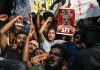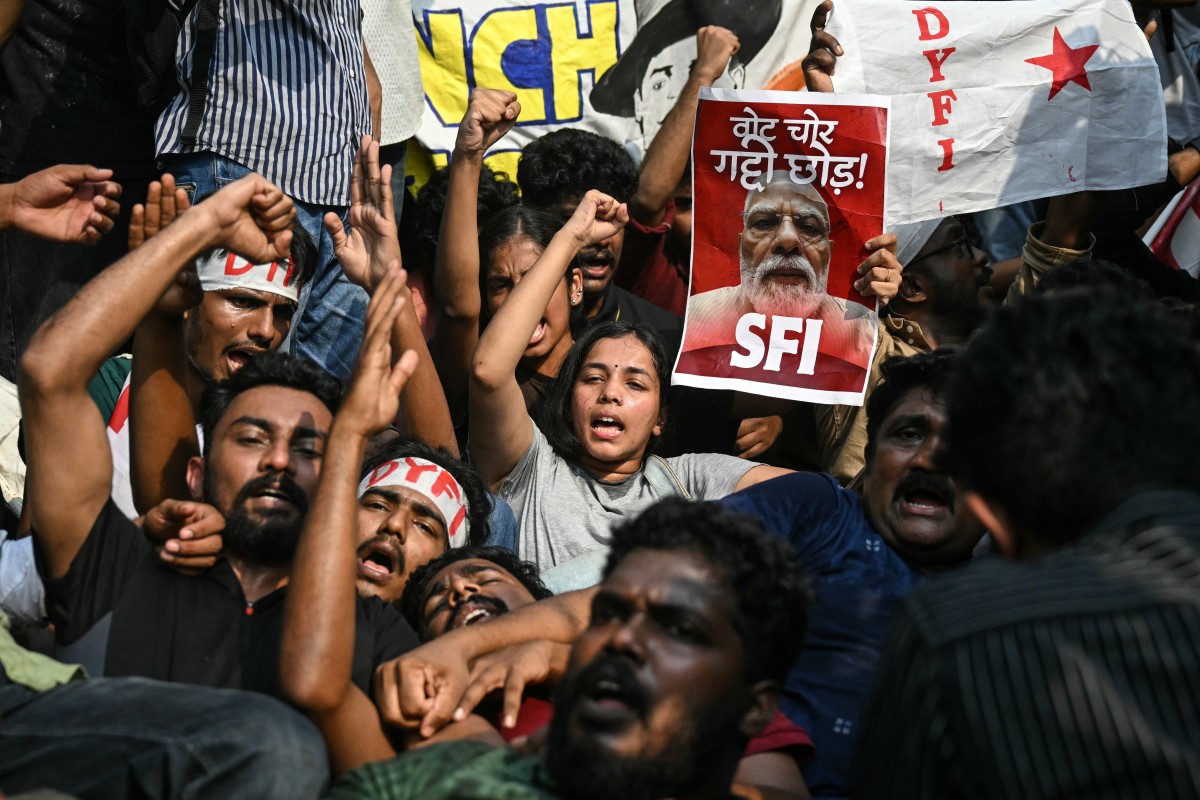
The United Nations human rights office has raised concern over mass detentions during election reform protests in India, as media groups reported that dozens of journalists were detained, assaulted, or obstructed while covering the demonstrations.
The Office of the U.N. High Commissioner for Human Rights said demonstrators, protest leaders, civil society members, lawyers and journalists were detained before and during large-scale protests in Delhi.
The protests were led by the youth-led Cockroach Janta Party and other groups demanding the resignation of Chief Election Commissioner Gyanesh Kumar over alleged manipulation of voter rolls.
India’s election commission has denied wrongdoing and said the revision was intended to remove duplicate, deceased and fraudulent entries.
U.N. human rights office spokesperson Thameen Al-Kheetan called on authorities to ensure that the right to peaceful assembly is “fully respected and fulfilled.”
“Restrictions on peaceful protests must meet strict tests of necessity and proportionality,” Al-Kheetan said.
He also urged law enforcement officers to show “utmost restraint” in responding to peaceful protesters and said anyone arbitrarily detained must be released immediately and unconditionally.
The International Federation of Journalists said at least 30 journalists were temporarily detained while covering protests in Delhi on Oct. 10 and 11 despite identifying themselves as accredited members of the press.
Those detained included independent journalists and reporters from Reuters, Scroll.in, Hindustan Times and Newslaundry.
The federation said several journalists reported physical assault, harassment and obstruction while doing their jobs. Local reports cited by the IFJ said police used excessive force during arrests, seized communication devices and closed key metro stations.
Two other journalists were detained in Ahmedabad and Pune on Oct. 10 while covering protests held in solidarity with the Delhi demonstration. Many of those detained were later released, the IFJ said.
The National Union of Journalists India condemned the detentions and said journalists must be allowed to work “freely, independently, and without fear or intimidation.”
“NUJI urges the police authorities to respect press freedom and refrain from unnecessarily stopping, harassing, or detaining journalists while they are carrying out their legitimate professional responsibilities,” the group said.
Journalists in New Delhi also marched Oct. 13 to protest the detention of reporters covering the demonstrations.
The Press Club of India said attacks on journalists doing their jobs were “unacceptable.”
The protests continued as police tightened security in the capital and barred demonstrators from gathering at Jantar Mantar, a decades-old protest site.
Delhi Police said Cockroach Janta Party leaders Ashutosh Ranka, 30, and Saurav Das, 27, were remanded in custody for five days on Oct. 14 for their “alleged repeated attempts to disturb public peace and violate the law.”
The two had jumped security barricades a day earlier and waved the Indian national flag at Jantar Mantar.
“Their alleged attempts to instigate others through social media to engage in similar unlawful activities were also taken into consideration,” police said.
Congress Party leader Rahul Gandhi criticized their detention.
“Waving the Tricolour at Jantar Mantar in a peaceful protest is not a crime. Jailing youth for it is an act of cowardice,” Gandhi said in a social media post.
The dispute centers on India’s voter roll revision, which media reports said has resulted in more than 133 million names being removed from electoral rolls.
Critics say the process has disproportionately affected minorities, particularly Muslims. Election authorities say the revision was intended to remove ineligible, duplicate and fraudulent entries.
Human Rights Watch also called on the Indian government to uphold the right to peaceful protest.
“The Modi government should stop throwing young protesters in jail and instead engage with them to address concerns over the right to vote and fairness of elections,” the group said.
The IFJ said India’s Supreme Court held an urgent hearing on Oct. 11 following petitions alleging unlawful police conduct.
According to the federation, the court ordered authorities not to illegally detain unarmed civilians, directed the reopening of key transport hubs and ordered an end to interference with journalists carrying out their work.
The IFJ said local reports showed police continued detaining protesters despite the order.
It also cited reports that Delhi police removed hundreds of social media posts about the protests to allegedly “limit the spread of misinformation,” while authorities suspended internet services.
The federation said it continued to document violence and state harassment of media workers in India in 2026, including arrests and assaults in Kashmir, Fatehabad, Uttar Pradesh and West Bengal.