Women in the fishing community of Nambangan, Kedung Cowek, Surabaya, East Java, are turning locally caught seafood into processed products as they seek more stable sources of income for their families.
Their efforts are supported by the Association International of Charity (AIC) Surabaya through training, business mentoring and improvements to a food production facility designed to meet food safety standards.
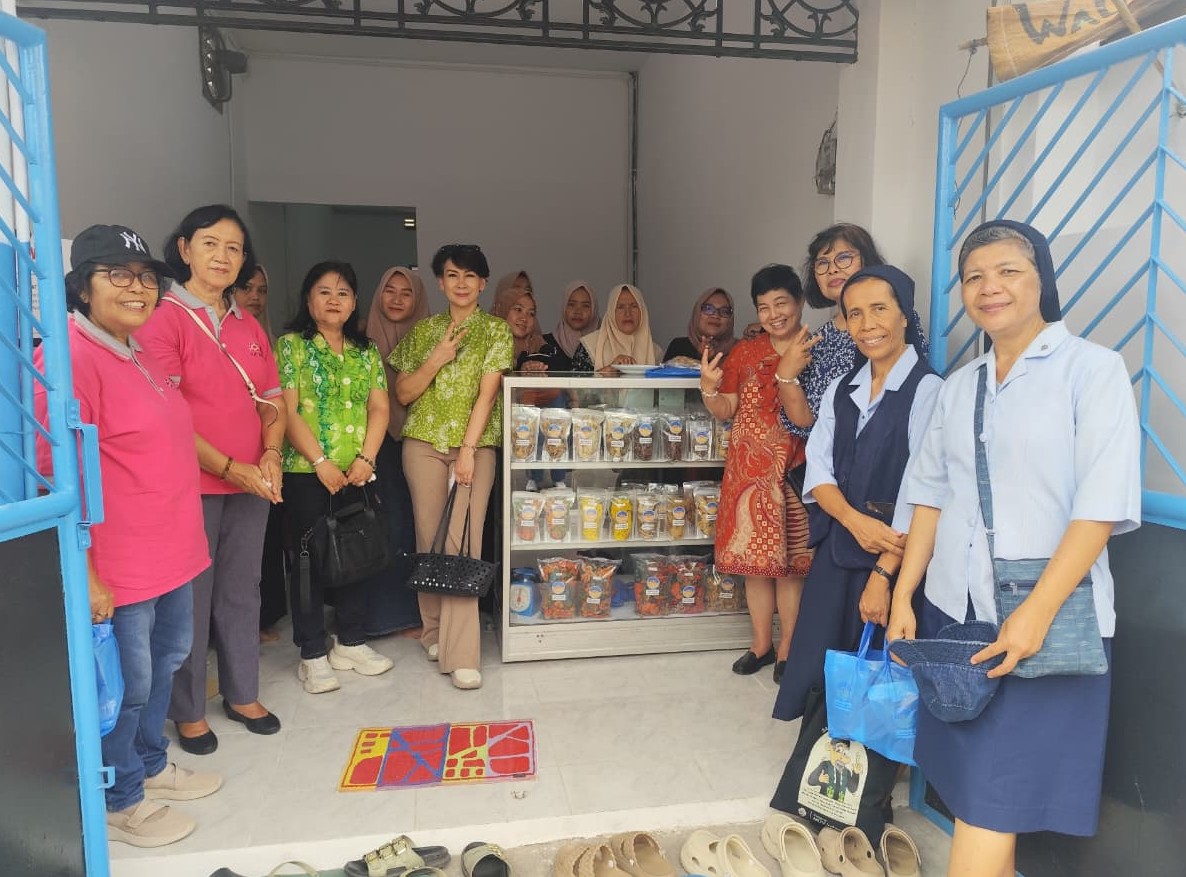
The renovated production facility was inaugurated on Oct. 26, 2026, in the presence of AIC Asia Regional leader Eunice Reyes and representatives of AIC Indonesia and AIC units from several cities.
The program supports women affiliated with the Indonesian Coastal Women’s Association, or KPPI, in Surabaya. It seeks to help them turn local seafood, particularly their signature anchovy product known as teri bulu ayam, into higher-value processed products with wider market opportunities.
Economic pressures on fishing families
Fishing families in Nambangan face challenges from climate change, extreme weather, tidal flooding and coastal development. These conditions have affected fish catches and household incomes.
Many fishermen depend on middlemen who buy their catches at relatively low prices. Unsold fish is often processed using traditional methods that generate limited added value, while financial pressures have pushed some families to rely on loans for daily needs.
AIC Surabaya began working with the Nambangan community in mid-2023. Through dialogue and continued support, the initiative gradually focused on strengthening women’s economic roles through seafood-processing businesses.
In collaboration with Widya Mandala Surabaya Catholic University, AIC organized three training sessions involving the university’s faculties of Pharmacy, Business and Food Technology.
The sessions covered product quality, shelf-life extension, packaging, marketing and digital promotion. Participants also visited souvenir and specialty food outlets to learn about market opportunities and requirements for food products.
AIC also renovated a seafood production facility using grant funding from AIC International, based in Berlin, Germany.
The building was upgraded with improved sanitation, clean water facilities, cooking equipment and refrigeration. The improvements are intended to support compliance with food safety requirements and help the women’s businesses obtain necessary permits and certifications, including household food industry permits, or P-IRT, and halal certification.
“We hope this training will help them increase the economic value of their anchovy products and other processed seafood, meet quality standards, and extend product shelf life,” said Lucia Hendriati, AIC Surabaya’s renovation project coordinator.
Looking for wider markets
Avivah, chairperson of KPPI Surabaya, expressed appreciation for AIC’s continued assistance and mentoring and said she hoped the partnership would help expand the market for the women’s products.
“We are grateful for the support and guidance provided by the women of AIC. We hope everyone here will also help by purchasing our products,” she said.
Ahmad Syukron, chairman of the Indonesian Traditional Fishermen’s Union, or KNTI, in Surabaya, said he hoped Nambangan’s processed seafood products would eventually reach national and international markets.
During the inauguration, nearly all the seafood products displayed at the cooperative’s sales counter were sold to visitors in less than an hour.
The initiative seeks to strengthen women’s skills, improve production facilities and widen market access as they work toward greater economic independence.
For fishing families in Nambangan, seafood processing also offers a way to supplement household income and reduce their dependence on unpredictable catches.