
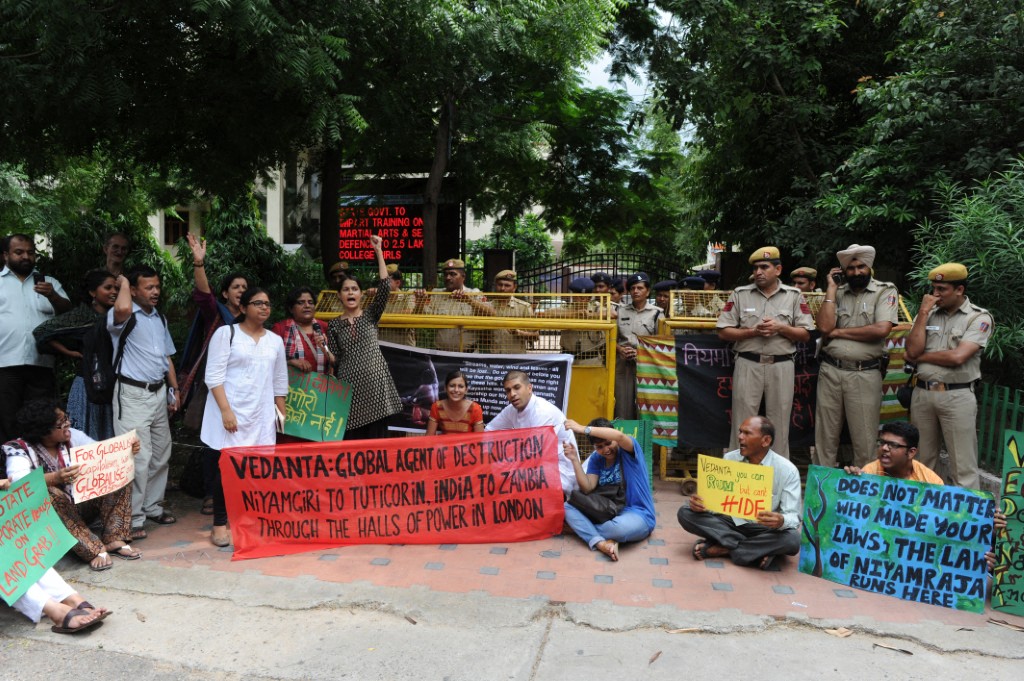
More than 100 Adivasi and Dalit people have been arrested and at least 43 criminal cases filed since 2023 amid protests against large-scale bauxite mining in India’s eastern state of Odisha, according to an international Indigenous rights group.
The International Indigenous Peoples Movement for Self-Determination and Liberation (IPMSDL) said the cases involve communities opposing mining projects in Rayagada and Kalahandi districts.
Vedanta Ltd. secured a 50-year lease in February 2023 to mine bauxite across 1,549 hectares in the two districts. Adivasi communities have since protested against the project in defense of their lands.
Among those detained is Lingaraj Azad, an adviser to the community-led Niyamgiri Suraksha Samiti, or NSS, who has opposed the Sijimali and Kutrumali projects.
Azad has been held in Bhawanipatna jail since March 25 despite securing bail in one case, according to material cited by IPMSDL.
Dongria Kandh leader and NSS president Lada Sikaka was arrested on Sept. 10. IPMSDL said armed state forces were deployed within two hours to Kantamal in Kashipur block and Talaampadar in Thuamul Rampur block, where communities have opposed the Sijimali project.
On Oct. 16, authorities arrested Dalit activist Laxman Naik of Ma Mati Mali Suraksha Manch and community health organizer Dr. Randall Sequeira at Sequeira’s home in Kalahandi.
The two are being held at Rayagada sub-jail on charges including attempted murder, armed rioting, armed robbery and criminal intimidation. IPMSDL described the charges as fabricated.
“Instead of upholding the right to free, prior and informed consent, the Indian government is answering Adivasi communities with arrests, trumped-up charges, and armed deployments to push mining through. This is a clear violation of Indigenous Peoples’ rights,” said IPMSDL.
The group called for the immediate release of detained Adivasis, an end to violence and an end to mining projects it said would displace communities from their ancestral lands.
IPMSDL said the developments in Odisha reflected what it described as a broader pattern in which Indigenous Peoples and their supporters are criminalized while resisting mines, dams and plantations.
The group said governments and corporations have labeled Indigenous Peoples and their defenders as criminals, terrorists or insurgents, while lawyers, health workers and advocates supporting them have also faced detention.
“Criminalization is not a byproduct of our resistance. It is a strategy to silence our legitimate demands and vilify our assertion of land and rights,” IPMSDL emphasized.