A community organization in Indonesia’s Bandung city is encouraging residents to turn discarded materials into marketable products to help reduce waste and create sustainable business opportunities.
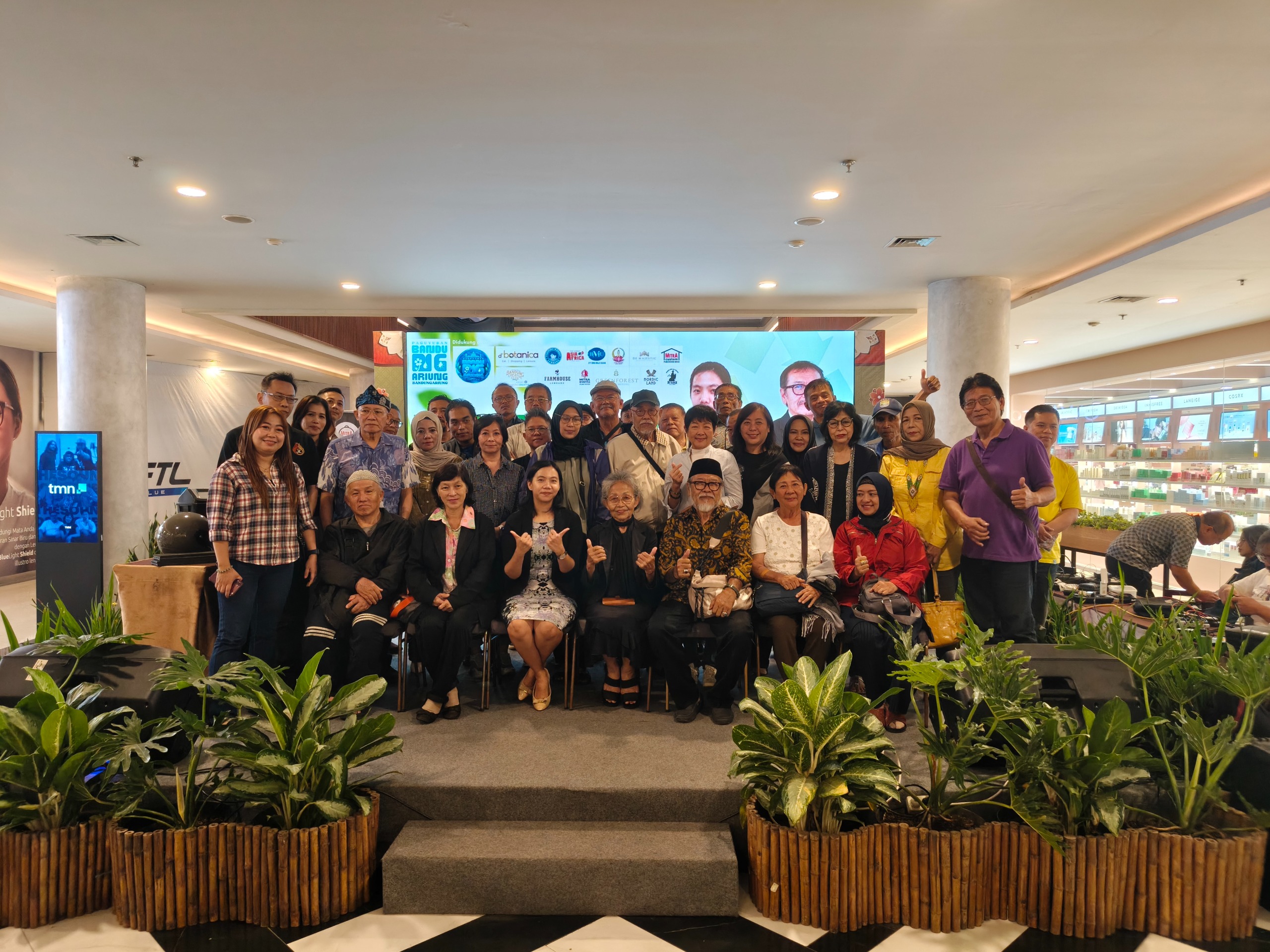
Paguyuban Bandung Ariung organized a public discussion titled “Trash to Cash: Turning Waste into Business Opportunities for a More Sustainable Environment” at D’Botanica Mall in Bandung, West Java, on Nov. 4.
The event brought together residents of different ages to explore how household and industrial waste can be reused, recycled, and transformed into products with economic value.
The discussion featured Gai Suhardja, an interior designer, environmental activist and cultural figure, and Devina Sutanto, director of PT Norita Flexindo.
Gai urged participants to reconsider how they perceive discarded materials and examine their responsibility toward the environment.
Through his presentation, Gai introduced seven levels of public awareness in waste management, ranging from environmentally destructive behaviour, such as littering, to the highest level of becoming an environmental champion.
At the highest level, individuals adopt zero-waste practices, repurpose discarded materials and participate in activities such as planting trees, vegetables and medicinal herbs.
“In the world of design, there is no such thing as waste. There are only materials in the wrong place,” Gai said.
He challenged the prevailing pattern of buying, using and discarding products, advocating a circular economy in which materials are reused to create practical and economic value.
Drawing on his experience in interior design, Gai explained how discarded wooden pallets, used bottles and fabric scraps can become furniture, decorative items and artistic creations.
“That is what Trash to Cash is all about. It is not merely recycling, but upcycling—creating greater value from discarded materials,” he said.
He said reclaimed wood can become more valuable than new timber when redesigned, while plastic waste can be transformed into bags, chairs, wall panels and artworks worth millions of Indonesian rupiah.
Gai also linked environmental responsibility to the traditional values of the Sundanese people of West Java.
He cited the Sundanese proverb, “Leuweung ruksak, cai beak, manusa balangsak,” which means that when forests are destroyed and water resources depleted, people suffer.
“Protecting the environment is not a Western lifestyle. It is part of who we are as people of Bandung and as Sundanese,” he said.
Devina, meanwhile, explained how properly sorted and managed waste can become part of industrial supply chains, generating income and employment while reducing the amount of material sent to landfills.
“Trash to Cash is not just a slogan. It is a new business model. When we start sorting waste at home, we are helping both industry and the environment,” she said.
She emphasized the importance of separating household waste to make recyclable materials easier to collect, process and reuse.
Devina said effective waste management requires cooperation among residents, businesses and government institutions.
“Bandung’s environmental challenges are multidimensional. Therefore, everyone must take part in making improvements, from individuals and business owners to the government,” she told LiCAS News from Kota Baru Parahyangan, West Java.
She also said her participation in the discussion reflected her commitment to public education and environmental awareness.
“To be honest, I accepted the invitation out of respect for Mr. Gai. I also genuinely enjoy sharing knowledge and educating people,” she said.
Devina said these efforts align with her company’s philosophy, “Designing Sustainability, Creating Excellence, and Closing the Loop,” which promotes the reuse of resources and the reduction of waste.
Gai welcomed the participation of Bandung residents, saying the discussion demonstrated how environmental awareness and entrepreneurship could complement each other.
“The enthusiasm of Bandung residents was extraordinary. My role was simply to open their imagination and show that waste can become something beautiful, something creative. Devina then demonstrated how it can become a business. When environmental awareness and business work together, Bandung can become an example of a city that transforms problems into opportunities,” Gai said.
Paguyuban Bandung Ariung encouraged residents to begin with practical measures, including reducing disposable products, separating household waste, and finding new uses for discarded materials.
The organization hopes the initiative will encourage wider community participation in waste management and environmental protection.
Its campaign reflects the Sundanese motto, “Paduli ka Bandung? Yu Urang Ngariung,” which translates to “Care about Bandung? Let’s come together!”
The motto calls on residents to work collectively toward a cleaner and more sustainable Bandung.