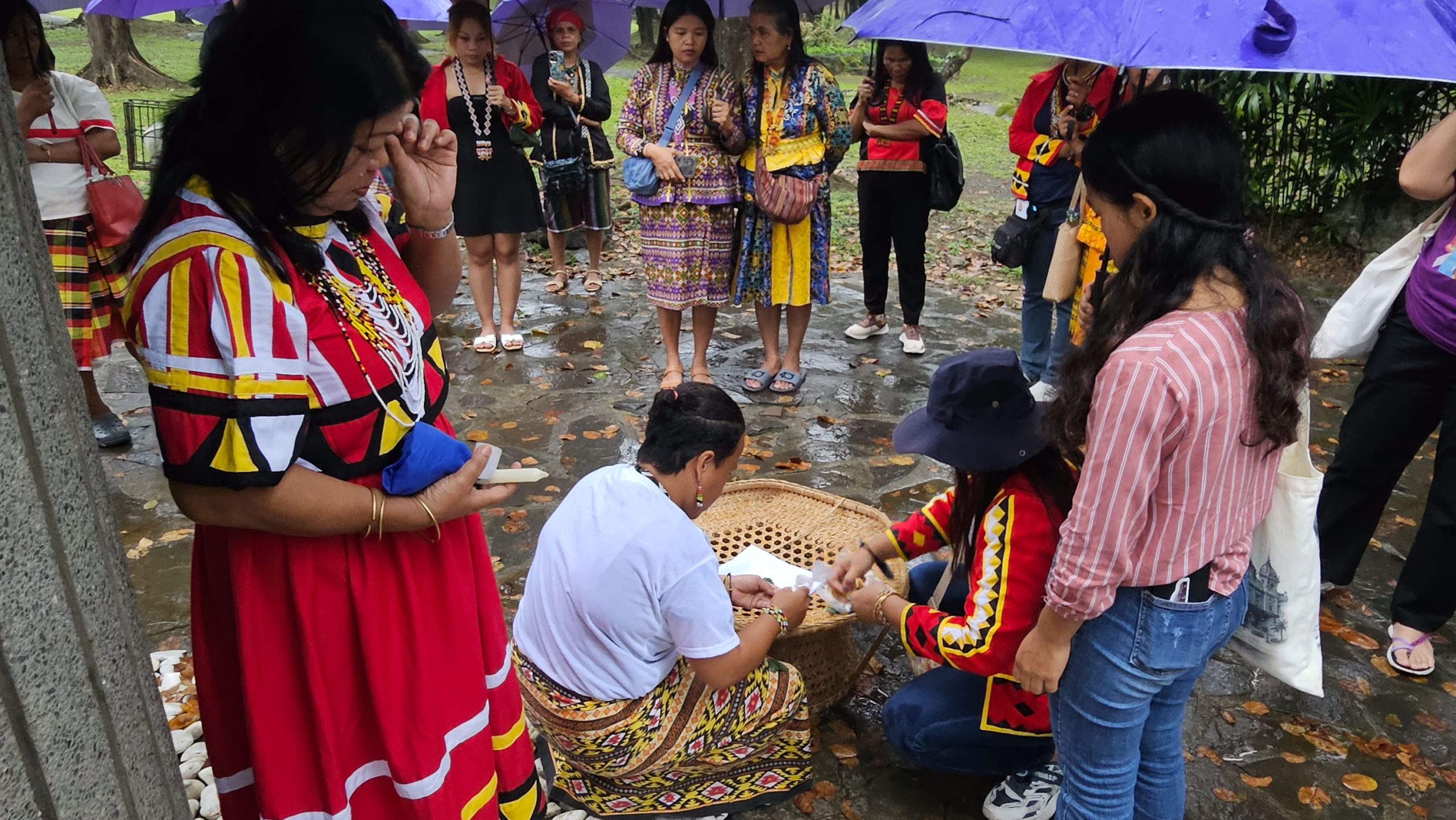
More than 25 Indigenous women in the Philippines held a traditional prayer on November 25, seeking protection from violence, harassment, and red-tagging as they defend their ancestral lands against destructive mining.
The gathering marked the International Day for the Elimination of Violence Against Women, with Erumanen Menuvu spiritual leaders leading the Indigenous prayer known as pangapar.
The women prayed for strength to confront violence within their families, communities and the broader society. They also sought protection for Indigenous women human rights defenders facing attacks, vilification, and threats over their defense of ancestral lands, waters, and rights.
Participants came from the Erumanen ne Menuvu, Dumagat, Higaonon, Teduray, Lambangian, Ituman Magahat Bukidnon, Subanen, Manobo, Kirinteken Pulangiyen Ilantungan Talaandig, and Iraynon Bukidnon communities.
“We did pangapar to ask for protection from Gulay Megbabaya as we continue to be harassed and threatened because we fight for our rights as indigenous women, and our rights to live a peaceful and tranquil life within our ancestral domain. Our security has worsened, and we experience red-tagging when we become active and vocal in our struggle against destructive mining,” said Wilma Tero, a Subanen woman leader.
Red-tagging refers to the practice of labeling individuals or groups as communist insurgents or their supporters.
According to a statement at the gathering, more than seven mining companies have applied for exploration and mining operations covering 40,500 hectares within Subanen territory, which is also a nationally declared key biodiversity area.
The statement raised concerns over the Declaration on ASEAN Critical Minerals for Regional Resilience and Sustainable Growth, adopted by member states during the 49th ASEAN Summit.
It warned that the regional push to develop the critical minerals industry could open more lands to mining, heightening the risk of resource conflicts and threats against Indigenous women human rights defenders.
More than 50% of mining operations in the Philippines are within ancestral domains, according to the statement.
Bae Nena Lumandong, a Higaonon woman leader, said the prayer was also an appeal for accountability and justice.
“We also pray for strength -both physical and mental – as we persevere in our struggle for the recognition of our rights, as we seek accountability from the government and corporations who encroach upon our lands, and justice for attacks against us, women human rights defenders,” Lumandong said.
“As we pray, we affirm our commitment to collective actions for a kinder, more humane and just society,” she added.