
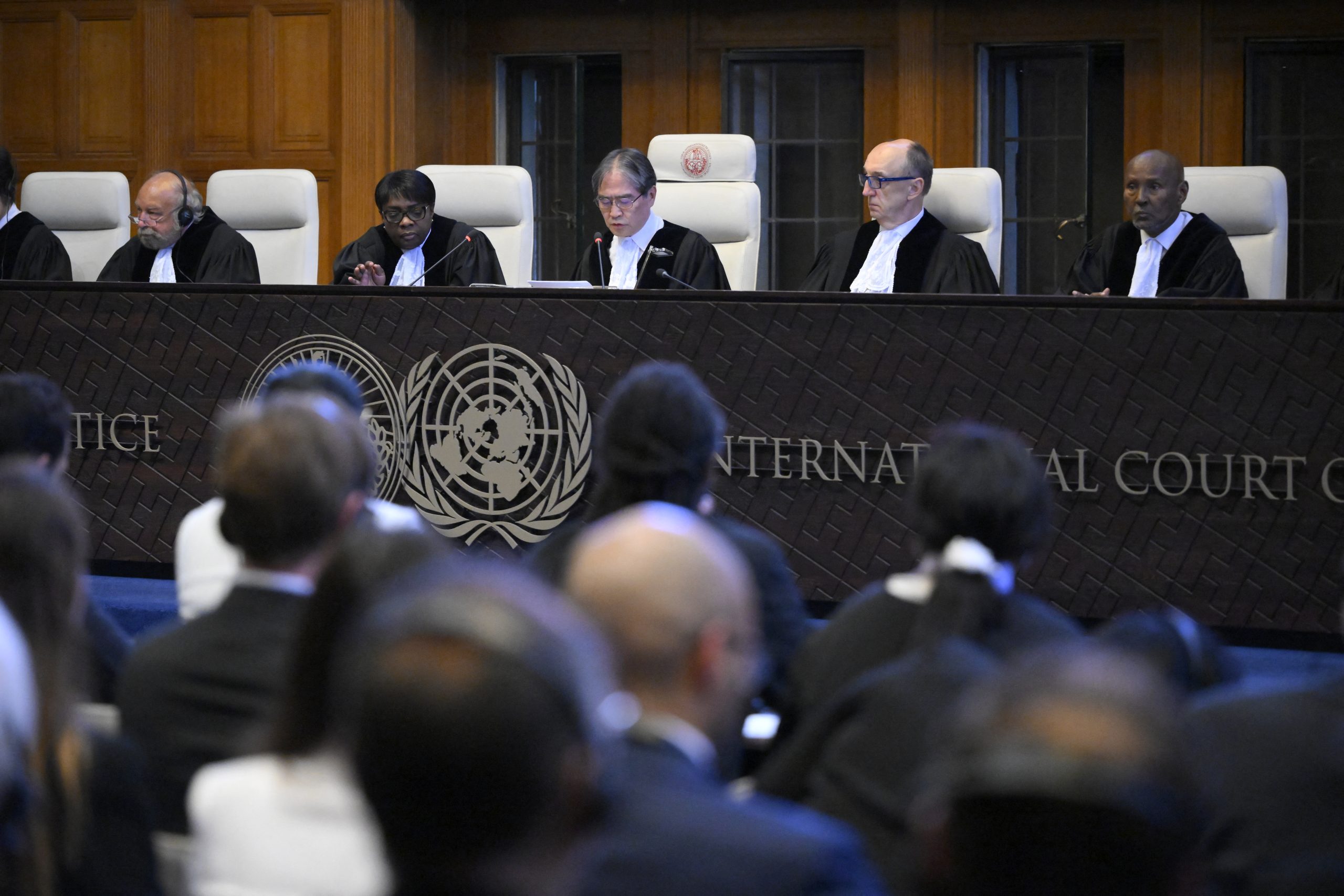
Asian climate leaders and lawmakers have welcomed a landmark ruling from the International Court of Justice (ICJ), saying it gives communities legal grounds to demand accountability from polluting states and corporations as climate disasters intensify across the region.
In its advisory opinion issued on July 23, the world’s highest court declared that states have legal obligations under international law to prevent further harm from climate change.
The ICJ warned that failure to act—including allowing fossil fuel production and subsidies—“may constitute an internationally wrongful act which is attributable to that state.”
“This is a concern of planetary proportions that imperils all forms of life,” said Judge Iwasawa Yuji, who delivered the ruling.
He added that the Court hoped its conclusions would “inform and guide social and political action to solve the ongoing climate crisis.”
The ICJ’s advisory opinion, while not legally binding, carries significant legal and moral authority in shaping international law and jurisprudence.
It was issued following a request by the United Nations General Assembly through Resolution 77/276, spurred by a Pacific-led campaign involving more than 1,500 civil society organizations and backed by the government of Vanuatu.
The Court clarified that climate obligations are not limited to voluntary treaty commitments. It emphasized that states must exercise “stringent” due diligence and ensure their national emissions targets reflect their “highest possible ambition,” as required under the Paris Agreement.
Judge Iwasawa further said that failure to regulate fossil fuel production, grant exploration licenses, or provide subsidies may constitute an “internationally wrongful act.”
The opinion draws from a broad set of legal frameworks—including human rights law, the UN Convention on the Law of the Sea, and customary international law—and reaffirms the duty of states to regulate private actors contributing to climate harm.
In Asia, where millions face the brunt of rising seas, stronger storms, and climate-induced displacement, the ruling was hailed as a critical turning point.
“Across Southeast Asia, from flooded rice paddies in Vietnam to storm-battered coasts in the Philippines, the ICJ advisory opinion lays down a firm legal marker,” said Charles Santiago, co-chair of ASEAN Parliamentarians for Human Rights.
Santiago added that polluters “aren’t just urged to cut greenhouse gases, they are bound under international law to do so and stop inflicting harm through state enforcement.”
Filipino lawmaker Renee Louise Co of Kabataan Partylist said the ruling affirms the right of communities in typhoon-prone provinces to hold big emitters accountable.
“For areas like Rizal and Eastern Samar, this means survivors and youth leaders now have firmer ground to demand support and reparations,” she said. “Women and girls, who make up around 80% of those displaced during storms, can push for protections rooted in international law.”
Environmental lawyer Gerthie Mayo-Anda said the opinion adds weight to existing climate legislation in the Philippines.
“Despite our plethora of environmental justice and climate change laws, our continuing challenge has been the enforcement of these laws and policies,” said Mayo-Anda, executive director of the Environmental Legal Assistance Center.
The lawyer said the court’s opinion will help “strengthen advocacy efforts and accountability actions” of vulnerable communities in the Global South.
The Court’s ruling was the outcome of a youth-led campaign launched in 2019 by Pacific Island law students, backed by the government of Vanuatu and supported by international networks including Pacific Islands Students Fighting Climate Change and World’s Youth for Climate Justice.
“This historic legal decision from the ICJ gives us hope,” said Flora Vano of ActionAid Vanuatu, who testified during the proceedings in The Hague.
She said vulnerable sectors and communities, “especially women and girls on the frontlines of this crisis, will finally be able to fight back for justice and accountability.”
Oxfam International said the ruling affirms that climate justice is a legal obligation, adding that it is “not a wish-list — it is international law.”
Nafkote Dabi, the group’s climate change policy lead, said all countries, particularly rich ones, “now have to cut their emissions faster and phase out fossil fuels.”
The ruling also reaffirmed the duty of states to regulate corporate polluters and provide compensation for loss and damage.
Dr. Delta Merner of the Union of Concerned Scientists said it makes clear that “obligations under existing international law are not voluntary or symbolic,” adding, “they are enforceable duties rooted in science, human rights and intergenerational equity.”
Legal advocates said the opinion is expected to influence ongoing climate litigation and bolster national laws.
Nicole Ponce, global advocacy lead for World’s Youth for Climate Justice, said it “shows how youth and Global South communities have the power to shape international law and seek reparation for damage done.”
While the opinion is not legally binding, its implications are likely to reverberate through courts, legislatures, and climate negotiations worldwide.
“The ICJ’s opinion is more than a legal milestone—it’s a call to action,” said Cynthia Houniuhi, president of Pacific Islands Students Fighting Climate Change. “We’re ready to keep building this momentum together.”