

Representatives of Buddhism, Christianity, Islam, Hinduism, and Sikhism gathered in Bangkok to promote a “virtue ecosystem,” with Catholic schools and leaders emphasizing love, service, and peaceful coexistence.
The 14th National Ethics Assembly convened in Bangkok last week under the theme “Family and Network Power: Strengthening the Ethical Ecosystem for Sustainable Development,” bringing together leaders of Thailand’s five major religions in a show of interfaith cooperation.
Fr. Charlongrath Sangkarat, representing the Catholic Bishops’ Conference of Thailand, joined Sr. Kannikar Iamthaisong, SHC, and Catholic lay leaders in working closely with Buddhist monks and representatives from Islam, Hinduism, and Sikhism.
The Catholic Bishops’ Conference presented an exhibition booth titled “God is love. He loved us,” which featured children’s paintings depicting scenes from the life of Jesus—from his birth and ministry to the Last Supper, crucifixion, and call to discipleship.
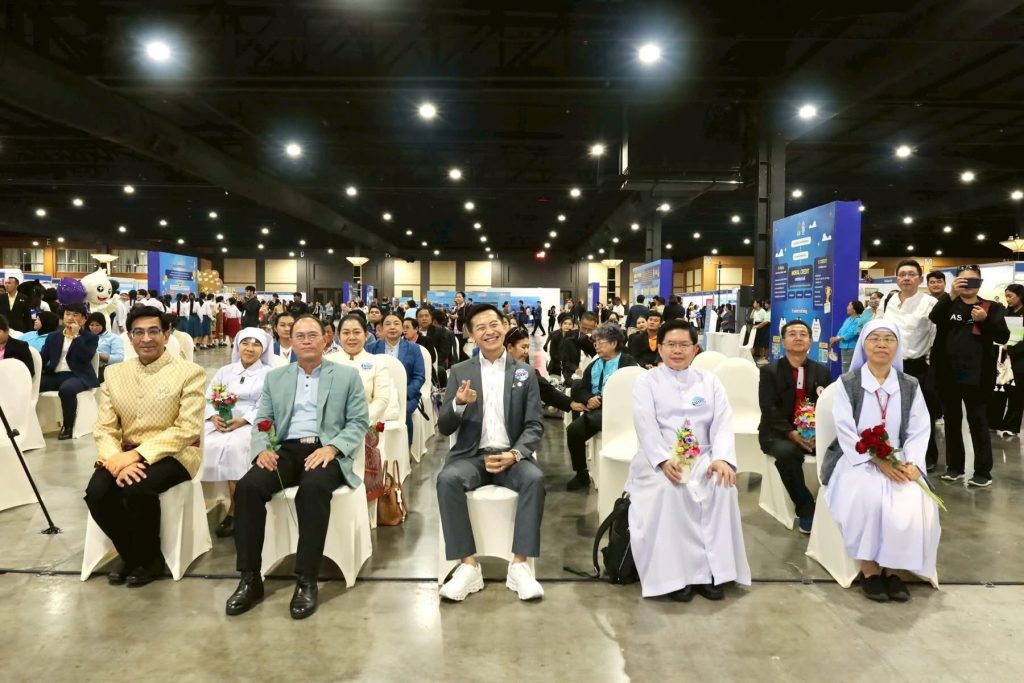
Fr. Charlongrath said the Assembly was marked by active participation and mutual learning. “When we participate, we find that our lives are lives of sharing, participating, and listening,” he told LiCAS News.
“In particular, at the Morality Market, we engaged in art performances, cultural presentations, singing, and sharing Gospel-based values. We must care for the world, our common home,” he added.
Sr. Kannikar noted that eight Catholic schools took part in the event, presenting their commitment to Catholic identity, education, and service.
She reported that inspections across Catholic schools consistently showed love and service as central to their moral formation.
A highlight of the Assembly was the “Tree of Justice,” surrounded by five smaller trees symbolizing how each faith tradition applies its principles to daily life for peaceful coexistence.
Around 1,500 participants each day were invited to write down good deeds inspired by their faith and attach them to a “Tree of Love” as a sign of unity and peace.
The event also outlined five principles of coexistence: respect, listening with an open mind, working together for the common good, love through forgiveness, and understanding grounded in reality.
Organized by the Virtue Center, the Assembly served as a central forum for six social networks—including the five major religions—to advance proposals for Thailand’s national ethics policy.
In the face of political conflict, economic hardship, social tensions, and worsening natural disasters, participants underscored the urgency of building a “virtue ecosystem” rooted in sufficiency, discipline, honesty, volunteerism, and gratitude.
The final recommendations called for fostering cooperation from the individual and family level to wider networks and communities, with the goal of strengthening resilience and integrating virtue into Thai society in a systematic and sustainable way.