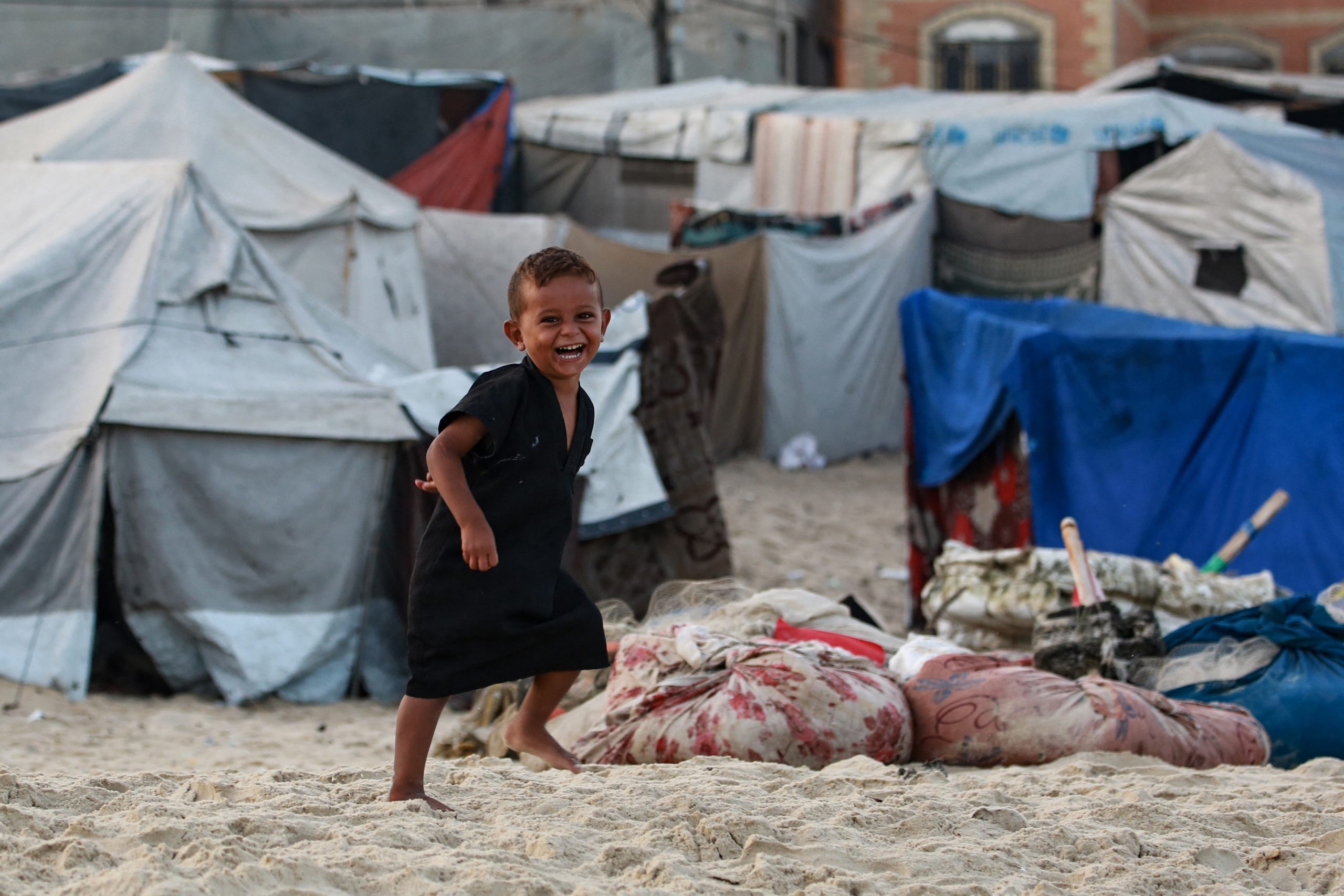
Latin Patriarch of Jerusalem Cardinal Pierbattista Pizzaballa called for realism, compassion, and steadfast faith as reports emerged of a possible breakthrough toward ending the war in Gaza.
“For the first time, anyway, the news is reporting a possible new positive development: the release of Israeli hostages, of some Palestinian prisoners, and the cessation of bombing and military offensives,” he said in a pastoral message dated Oct. 5.
The prelate described it as “an important and long-awaited first step” despite “nothing is entirely clear or definite yet.”
He noted that while uncertainties persist and much remains to be clarified, the Church welcomes the faint signs of hope emerging on the horizon.
The patriarch acknowledged the heavy toll of two years of war, marked by “continued massacres of civilians, starvation, repeated displacement, limited access to hospitals and medical care, lack of hygiene, without forgetting those who are being held against their will.”
He expressed joy for “the families of the hostages, who will finally be able to embrace their loved ones,” and for Palestinian families “who will be able to embrace those returning from prison.”
Yet he reminded the faithful that “the cessation of hostilities is only the first—necessary and indispensable—step on a treacherous path in a context that remains problematic.”
‘Much remains to be done’
Cardinal Pizzaballa warned that “the situation continues to deteriorate in the West Bank,” where small villages face “settler attacks, without sufficient protection from the security authorities.”
He noted that uncertainty and fear dominate daily life for many in the region. “In making decisions about our lives, even the most mundane, we must always consider the convoluted and painful dynamics it causes: are the borders open, do we have permits, will the roads be open, will we be safe?”
Amid this instability, he said the Church’s role is to “speak a word of hope,” urging believers “to have the courage to offer a narrative that opens horizons and builds rather than destroys.”
Faith amid devastation
The patriarch stressed that the Church’s mission is not political. “We are not here to make a political statement or to provide a strategic analysis of events,” he said. “Instead, we seek a spiritual vision that will help us remain steadfast in the Gospel.”
He lamented that “anger, resentment, distrust, hatred, and contempt too often dominate our discourse and pollute our hearts,” describing the violence as part of “what St. Paul called ‘mystery of lawlessness’… Every life lost, every wound inflicted, every hunger endured remains a scandal in God’s eyes.”
Calling the faithful to resist despair, Pizzaballa said, “By our own strength, we will not be able to stand before the mystery of evil and resist it. That is why I feel an ever more urgent call to keep our eyes fixed on Jesus.”
A Church that remains out of love
Reflecting on the Church’s witness in a time of war, the patriarch said, “Our decision to remain, when everything urges us to leave, is not a challenge but an act of love. Our denouncing is not an offense to any party but a call to dare a different path from the reckoning. Our dying took place under the cross, not on a battlefield.”
He cautioned that “even if the war were to end now,” the conflict’s root causes would persist. “The end of war does not necessarily mark the beginning of peace,” he said, adding that rebuilding trust and hope “will require significant time and energy.”
Call to prayer and solidarity
Cardinal Pizzaballa invited the faithful to pray for courage “to sow seeds of life despite pain and never give in to the logic of exclusion or rejection of others.”
He asked for prayers “for our brothers and sisters in Gaza, who despite the raging war around them, continue to courageously bear witness to the joy of life.”
He also joined Pope Leo XIV’s call for a day of fasting and prayer for peace on Oct. 11, urging all parishes and communities to hold moments of prayer “such as the rosary, Eucharistic adoration, liturgies of the Word, and other similar moments of sharing.”