Catholic scholars and educators have called for a renewed moral and ethical awakening in Indonesia as the nation marks its 80th year of independence.
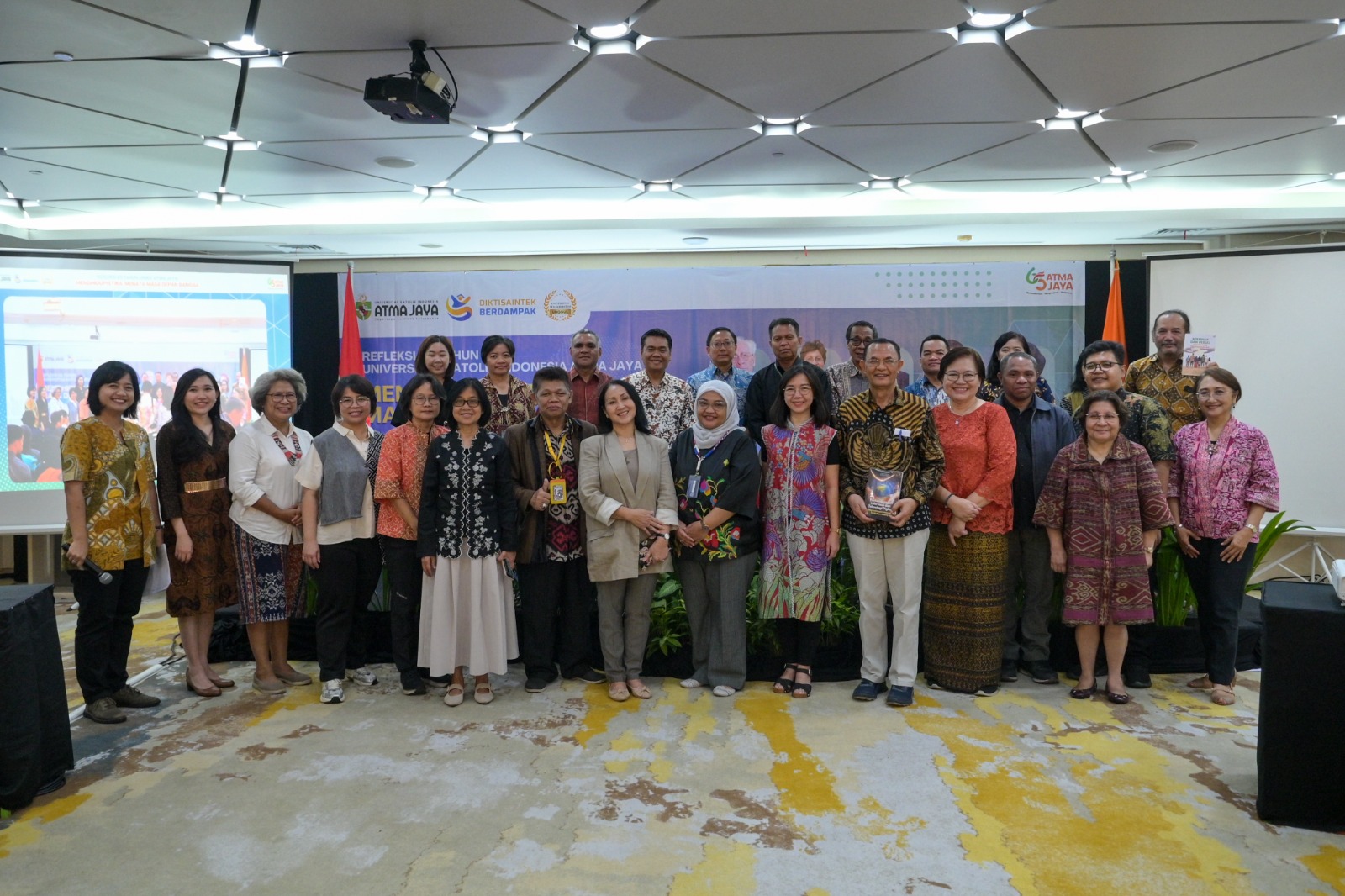
Speaking at a seminar organized by Atma Jaya Catholic University of Indonesia (Unika Atma Jaya) to celebrate its 65th founding anniversary, Church thinkers warned that the country stands at a “moral crossroads,” facing deep ethical challenges in politics, economics, and society.
The event, held in Jakarta, gathered theologians, philosophers, and social scientists who urged Catholic universities to act as “communities of truth” and moral beacons amid growing corruption, intolerance, and the erosion of public trust.
Faith and ethics in national life
The seminar opened with the launch of two new books that underscore Atma Jaya’s intellectual and social mission:
- Perkembangan Informasi dan Teknologi Digital bagi Kehidupan Manusia Kini & Akan Datang (The Development of Information and Digital Technology for Human Life Today and Tomorrow), a multidisciplinary collaboration by Atma Jaya lecturers.
- Berpihak dan Peduli pada yang Terpinggirkan (Taking Sides and Caring for the Marginalized), a collection of best-practice reflections on serving marginalized communities.
Both publications, university officials said, reflect Atma Jaya’s long-standing commitment to integrating faith, ethics, and social engagement.
Communities of truth in an age of confusion
Psychologist Prof. Bernadette N. Setiadi, former dean of Atma Jaya University, opened the discussion by reminding Catholic universities of their distinctive mission as “communities of truth,” inspired by Ex Corde Ecclesiae, the apostolic constitution on Catholic higher education.
“These institutions are not only centers of learning,” she said, “but places where faith and reason meet to serve the common good.”
She urged universities to keep the human person at the heart of education, to integrate ethics into every field of study, and to stand with the poor and marginalized.
“At a time when public trust is fragile,” Setiadi added, “Catholic universities can shape leaders who serve with both competence and conscience.”
Diagnosing Indonesia’s moral crisis
Jesuit philosopher Fr. Franz Magnis-Suseno, SJ, offered a sobering assessment of Indonesia’s moral state.
“Corruption, fake news, intolerance, environmental neglect, and professional misconduct are not isolated problems,” he said. “They are symptoms of a deeper erosion of values that undermines public trust.”
He called for a return to the ethical vision of Pancasila and for the Church to act as a “moral conscience” in public life, insisting that “ethical renewal must precede political reform.”
Populism, policy, and the ethics of growth
Economist Dr. Agustinus Prasetyantoko, also a former Atma Jaya dean, analyzed the fiscal and ethical challenges facing Indonesia’s incoming administration.
He noted that ambitious welfare initiatives — such as the Free Nutritious Meals (MBG) program, “Merah Putih” credit unions, and public housing projects — reflect a genuine desire to reduce inequality but could strain national finances.
“Populism may deliver short-term popularity,” he cautioned, “but without transparency and accountability, it risks weakening democracy and endangering fiscal sustainability. Economic growth must be guided by ethical governance.”
Sexual violence: A moral emergency on campuses
Sociologist Prof. Francisia Ery Seda from the University of Indonesia turned attention to an often-overlooked ethical concern: sexual violence in higher education institutions.
Her studies revealed a high prevalence but low reporting of cases and inadequate institutional support for victims.
“Regulations alone are not enough,” she stressed. “Universities — especially Catholic ones — must lead a cultural change where protecting human dignity is seen as a moral duty, not merely a legal requirement.”
Toward a responsible and hopeful future
The seminar concluded with a shared appeal for moral renewal, emphasizing that Indonesia’s future depends not only on sound policy but on ethical courage.
Speakers highlighted five responsibilities for Catholic citizens and institutions:
- Live with integrity and social trust.
- Be a Church for the poor.
- Promote interreligious harmony.
- Protect the environment.
- Reject corruption in all its forms.
As the nation enters a pivotal period of leadership transition, participants agreed that Catholic universities have a crucial role in forming leaders of conscience.
“The crisis is real,” one moderator said, “but so is the hope. When truth and justice are lived with courage, they can lead the nation toward an ethical and humane future.”