Myanmar’s Catholic bishops have warned that the country is facing a “crisis unlike any we have seen in recent history,” describing the situation as a “polycrisis”.
The prelates said Myanmar is now facing a convergence of conflict, natural disasters, displacement, and economic collapse that has left millions struggling to survive.
“We gather—not physically, but in spirit—at a time of immense pain, uncertainty, and confusion,” the Catholic Bishops’ Conference of Myanmar (CBCM) said in a statement released on Tuesday.
“Our people are facing a crisis unlike any we have seen in recent history. This is not one single tragedy. It is what experts call a polycrisis—where multiple emergencies come together, each one making the others worse,” the bishops said.
“For many of us, the days are heavy, and the nights are long,” the bishops wrote, urging unity and compassion as the country endures overlapping humanitarian and social crises.
Displacement and trauma
The bishops drew attention to the massive displacement that continues to devastate families across Myanmar.
Citing United Nations figures, they said “over 3 million people in Myanmar have been displaced from their homes since the conflict escalated.”
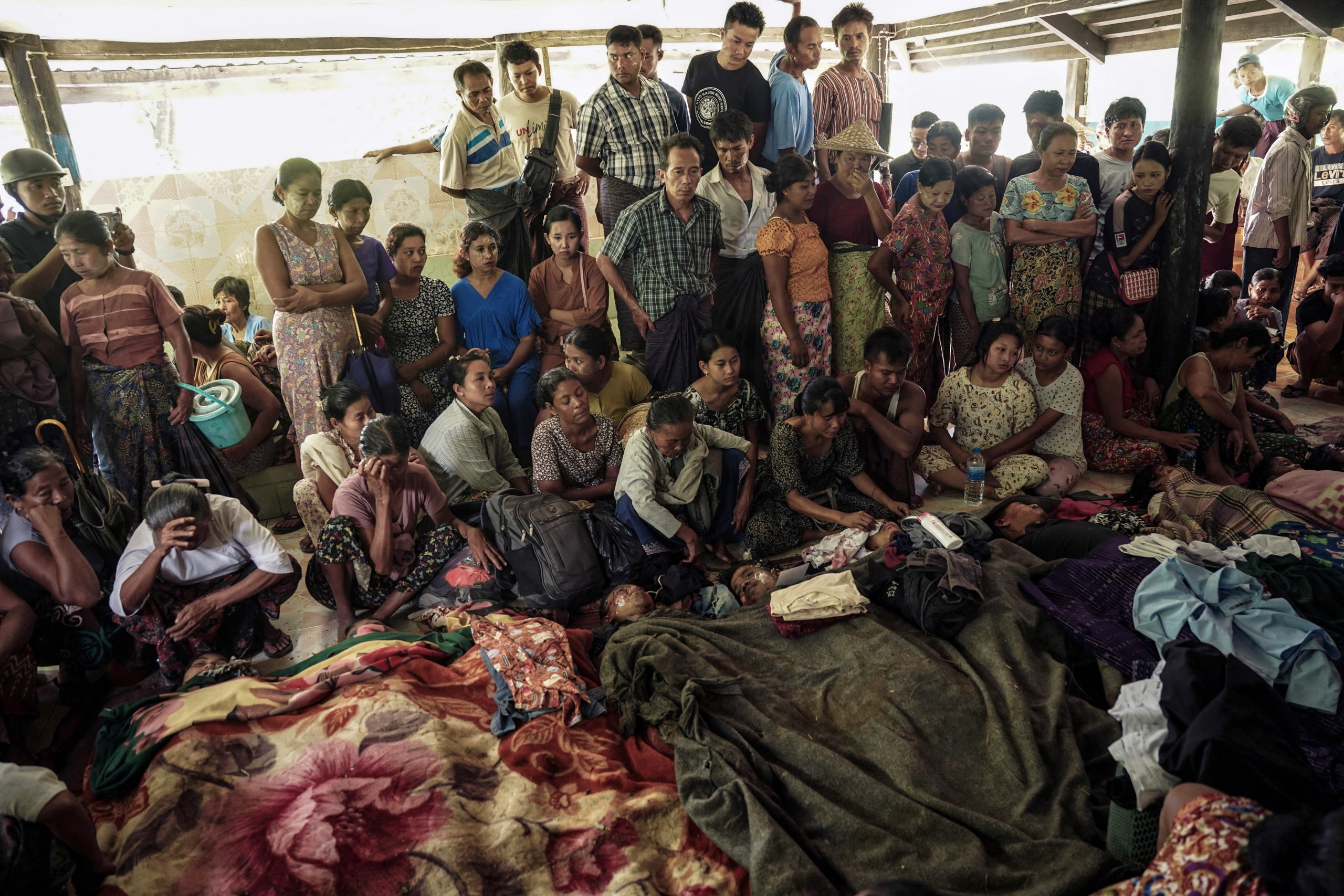
“These are not just numbers,” the bishops said. “These are mothers, fathers, grandmothers, and children. Some are sheltering under trees, in rice fields, monasteries, and makeshift tents—without food, water, education, or safety.”
They noted that “in earthquake-affected areas, entire villages were flattened. Buildings crumbled. Lives were lost in seconds,” while in conflict zones, “towns have turned into ghost cities.”
“Many people have been displaced multiple times. They carry not only bags of belongings but also deep trauma and fear,” the bishops said.
The silent suffering of women and children
The bishops said women and children continue to carry the heaviest burdens of Myanmar’s conflict.
They lamented that many young people have been out of school for years, with classrooms reduced to rubble and their futures left uncertain. Countless children have lost parents, witnessed violence, or fallen ill, their hunger and trauma often left unspoken.
“Women, too, are suffering quietly. They carry the pain of losing family, the responsibility of caring for the young, and the fear of exploitation. In some cases, they must give birth or raise infants with no shelter or healthcare,” the bishops said.
“And yet—they are also the ones holding communities together, cooking food for many, praying in the dark, and comforting the grieving,” they added.
Eroding trust and daily hardships
Beyond physical suffering, the bishops warned of a growing breakdown of trust among stakeholders in the country.
“One of the deepest wounds we see today is the lack of understanding and trust among all the different actors and stakeholders,” they said. “There are multiple sides, multiple visions, multiple needs. But often, there is little dialogue—few genuine spaces where hearts can listen to one another.”
They cautioned that “because of this, aid is blocked, development is delayed, and humanitarian access is restricted.”
Ordinary life, they added, “has become a daily test of survival.”
“In many parts of the country, food prices have skyrocketed. Jobs have vanished. Fuel and medicine are scarce. Electricity comes and goes. Anxiety has become a silent companion in every household,” they said. “And yet—people continue to help one another, often with empty hands but open hearts.”
Reconciliation and peace
Calling for a “Christian approach to reconciliation and peace,” the bishops urged people of faith to “rise together and say no more wars in any part of the world.”
Quoting Saint Paul’s letter to the Corinthians, they wrote: “God has given us the ministry of reconciliation.”
“That is not just a religious duty—it is a human one,” they added. “Reconciliation does not mean forgetting or pretending everything is fine. It means listening to each other’s stories, weeping with those who weep, and seeking a common ground where no one has to lose for others to win.”
The bishops reminded the faithful of Jesus’ words: “Blessed are the peacemakers, for they shall be called children of God.”
“Peace is not passive. It is not silence. It is an active, courageous commitment to choosing life over death, dignity over revenge, community over isolation,” they said.
A message of hope
The bishops ended their message with a call for hope and endurance amid despair. They urged the faithful to remain steadfast, to look beyond grief, and to draw strength from faith.
Peace, they stressed, remains the only path forward—a choice that must triumph over hatred and despair.
“Let our response be simple: compassion in action, truth spoken gently, and peace pursued without rest,” they wrote.
“May our nation, bruised and battered, rise again—not just with buildings, but with new hearts. And may our children say one day, ‘They didn’t give up on peace. And so, we found our way home.’”
The message was signed by Cardinal Charles Bo, president of the CBCM; Archbishop Basilio Athai, vice president; Bishop Noel Saw Naw Aye, secretary general; and all 22 bishops representing dioceses across Myanmar.