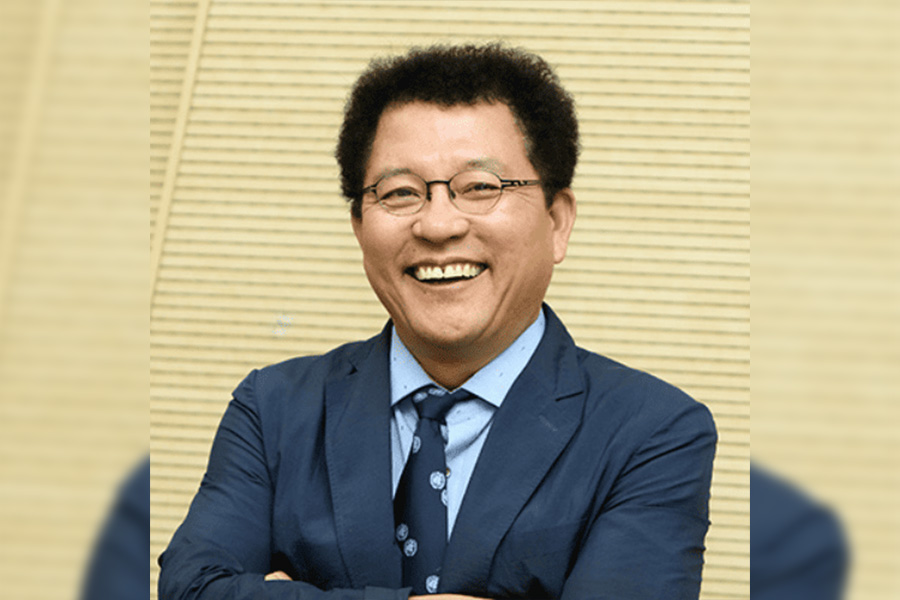
South Korean academic and longtime human rights advocate Anselmo Lee has been elected Vice-President for Asia Pacific of the International Catholic Movement for Intellectual and Cultural Affairs (ICMICA – Pax Romana).
ICMICA, which held its World Assembly in Lisbon on Nov. 16, said Lee will work closely with Catholic intellectuals and professionals across the region to strengthen collaboration and deepen Asia Pacific’s contribution to the movement’s mission.
As regional vice-president, he is expected to accompany national member movements and partners, and help advance the role of Catholic thinkers in shaping responses to “profound social, political, ecological, and cultural transitions” unfolding across Asia and the Pacific.
Lee teaches global governance, civil society, international development, and human rights at several universities in South Korea.
He is the founding co-president of Pax Christi Korea, established in 2019, and serves on the Ecology and Environment Committee of the Catholic Bishops’ Conference of Korea.
His election marks a return to the Pax Romana’s leadership circle. He previously served as Secretary General of ICMICA–Pax Romana in Geneva from 1997 to 2004 and was part of the Asia-Pacific team of the International Movement of Catholic Students (IMCS – Pax Romana) in Hong Kong between 1988 and 1991.
These roles, the movement noted, have given him “extensive knowledge of lay Catholic intellectual and student movements, both in Asia and globally.”
Lee also has a long record in Asian civil society. He headed the regional human rights network FORUM-ASIA from 2005 to 2008 and later served as Executive Director at the National Human Rights Commission of Korea from 2008 to 2010.
“I am deeply honoured by the trust given to me by the ICMICA World Assembly,” he said following his election.
He added that the region’s Catholic intellectuals are being called “to read the signs of the times, to engage in dialogue across cultures and religions, and to contribute to a just and peaceful world guided by Catholic social teaching.”
“I look forward to working closely with our national movements, young professionals, and partners across the region in the coming years,” he said.
An ICMICA International Team representative welcomed the appointment, saying his long-standing engagement with Pax Romana and expertise in human rights and global governance will be “a valuable asset for strengthening ICMICA’s presence and mission in the Asia Pacific region, especially in dialogue with universities, civil society organizations, and Church institutions.”
The mandate of the new international leadership team, including the regional vice-presidents, will run from 2026 to 2029 as Pax Romana enters its second century of mobilizing Catholic intellectuals, students, and professionals around the world.