Catholic priests in eastern Thailand were urged to deepen their understanding of artificial intelligence (AI) and guide the faithful through its ethical challenges during a retreat reflecting on Pope Leo XIV’s landmark encyclical Magnifica Humanitas.
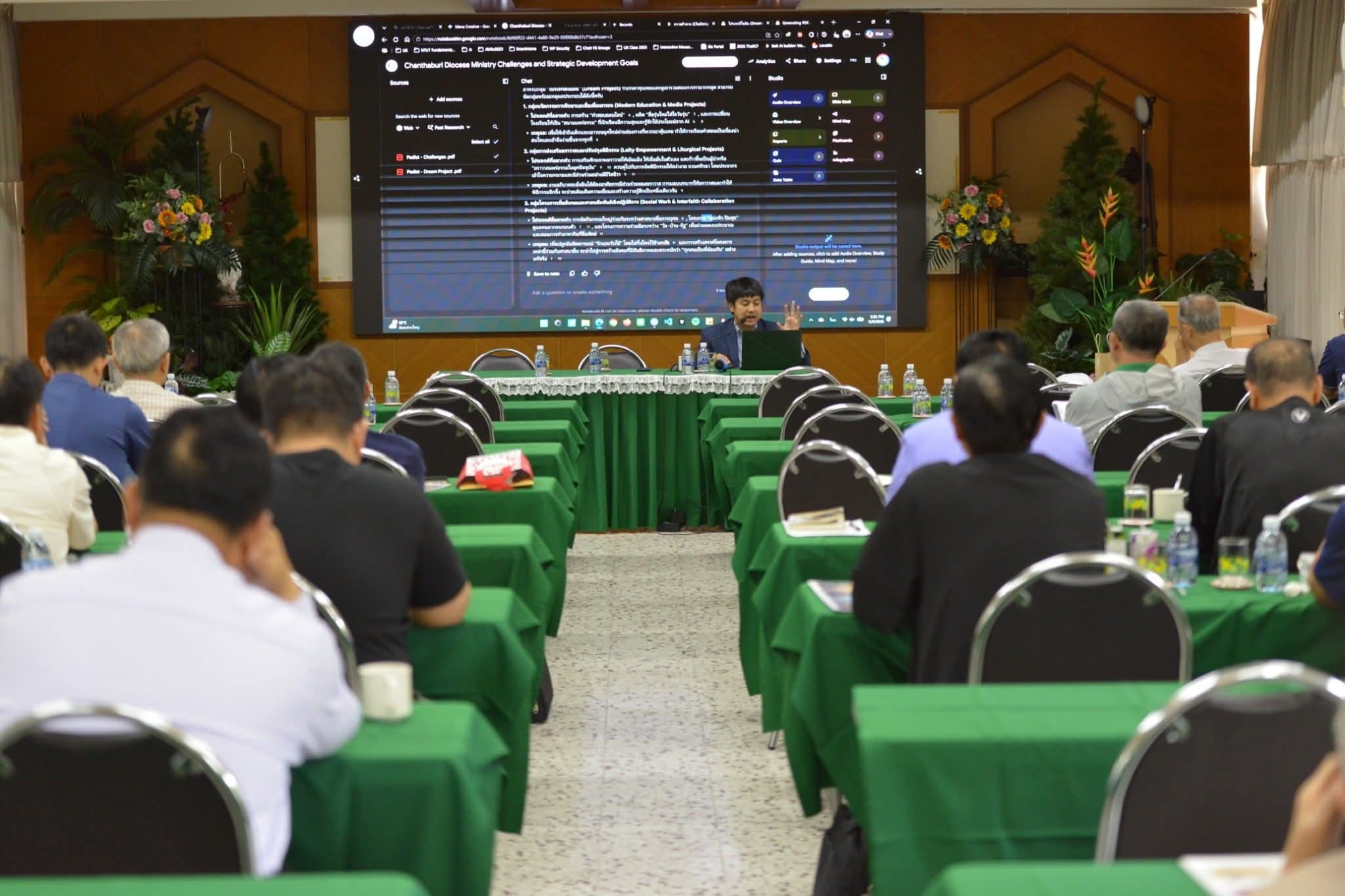
During the monthly retreat of priests in the Diocese of Chanthaburi on June 9, Fr. Joseph Anucha Chaiyadej, executive director of Catholic Social Communication Thailand (CSCT), shared reflections on “Pastoral Care in the Age of Artificial Intelligence”.
The retreat explored the Church’s growing engagement with AI in light of Pope Leo XIV’s landmark encyclical Magnifica Humanitas (Magnificent Humanity), a document that has attracted widespread attention across both religious and technological circles.
Signed on May 15, 202, the 135th anniversary of Rerum Novarum, the encyclical warns that AI could normalize an anti-human vision of society if ethical reflection fails to keep pace with technological innovation.
Rather than focusing on technical developments, the document examines AI’s profound impact on human dignity, work, social justice, education, and the common good.
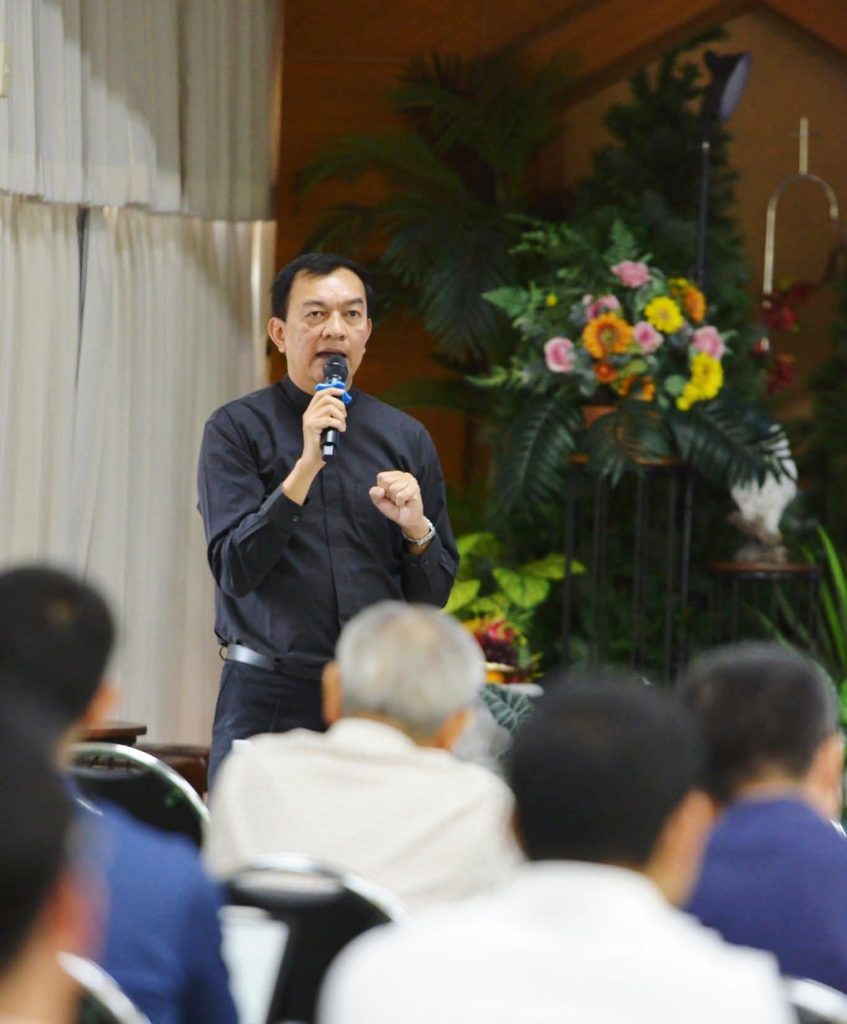
“The remarkable aspect of this encyclical is that it does not discuss AI merely as a technology,” Fr. Anucha explained.
“Instead, it addresses the broader social consequences and ethical challenges that AI presents to humanity,” he added.
The priest noted that the release of the encyclical was itself historic, as Pope Leo XIV personally attended the Vatican press conference introducing the document—an uncommon gesture that underscored the importance the Holy Father places on the subject.
“The Pope’s emphasis on AI means that we, as leaders of the Church, must pay even greater attention,” Fr. Anucha said.
“We need to study, learn, understand, and faithfully communicate the Church’s teaching so that the faithful receive the message as the Holy Father intended,” he added.
He also highlighted the Vatican’s subsequent clarifications, in which Church leaders emphasized that bishops, priests, and pastoral workers must not remain passive observers of technological change.
Instead, they are called to accompany people through ethical discernment, pastoral guidance, and what Vatican officials describe as an “examination of conscience” regarding the use of AI.
For priests, Fr. Anucha stressed that continual learning is essential. He encouraged them to study Church documents, books, research publications, and Thai translations related to AI, while actively participating in seminars and educational activities.
“The Church is inviting us to understand AI through the lenses of ethics, Catholic social teaching, and education,” he said.
He further emphasized that priests are called to be credible witnesses by communicating truthful and reliable information, strengthening the Catholic presence in the media, listening attentively to people’s concerns, accompanying them pastorally, and offering healing and hope amid rapid technological change.
Within Thailand’s Catholic media ministry, Fr. Anucha shared several initiatives already underway.
These include the formation of an informal advisory committee composed of AI professionals from various disciplines to provide expertise and consultation, the production of educational resources and media programs, and an ongoing podcast series exploring the relationship between artificial intelligence and the Catholic faith, which has already reached 16 episodes.
“Our goal is to continue gathering knowledge from the Church’s perspective so that we can faithfully accompany society in this new era,” he said.
Pakawat Kraissomsuk, managing director of Mana Creative and special lecturer at the Faculty of Communication Arts at Assumption University, who also addressed the gathering, told LiCAS News later that what impressed him most was the enthusiasm shown by priests of all generations.
He observed that senior priests demonstrated genuine openness to learning about new technologies and exploring how AI could support their pastoral ministry, while younger priests continued to strengthen their digital skills for evangelization.
“What touched me most,” Pakawat observed, “was seeing both generations united by the same guiding principle—the ‘Wisdom of the Heart,’ a theme so strongly emphasized by Pope Francis.”
“No matter how advanced technology becomes,” he reflected, “human beings will always need pastors who truly understand their people, reach the depths of their hearts, and take time to reflect so that knowledge is transformed into the wisdom of love.”
The gathering concluded by reaffirming that priests remain on the front lines as they accompany families navigating the profound social changes brought about by the digital revolution.