
Thai Catholic delegates have returned home from the second Asian Mission Congress in Penang, Malaysia, with renewed inspiration and a clearer vision for strengthening the Church’s mission in Thailand and across Asia.
The four-day gathering, held under the theme “The Great Pilgrimage of Hope: Journeying Together as People of Asia … ‘and they went a different way’ (Mt 2:12),” brought together around 900 participants from 32 countries. Attendees included 10 cardinals, 104 bishops, more than 200 priests and religious, and over 400 lay leaders and youth reflecting on evangelization amid Asia’s cultural diversity and rapid social change.
Organized by the Federation of Asian Bishops’ Conferences Office for Evangelization, the congress was hosted by the Diocese of Penang, with support from PMS Asia and in collaboration with the bishops’ conferences of Malaysia, Singapore, and Brunei. It followed the first Asian Mission Congress held in Chiang Mai, Thailand, in 2006.
Thailand was represented by 34 delegates comprising six bishops, seven priests, four religious sisters, 13 lay leaders, and four youth, led by Archbishop Francis Xavier Vira Arpornratana of Bangkok, president of the Catholic Bishops’ Conference of Thailand.
Speaking to LiCAS News after his return to Bangkok, Archbishop Francis said participation in the congress was an important step in charting the future direction of the Church in Thailand.
“It was an opportunity to share and to learn about the right path forward, twenty years after the first Congress in Chiang Mai, where we ‘learned, lived, and shared the story of Jesus,’” he said.
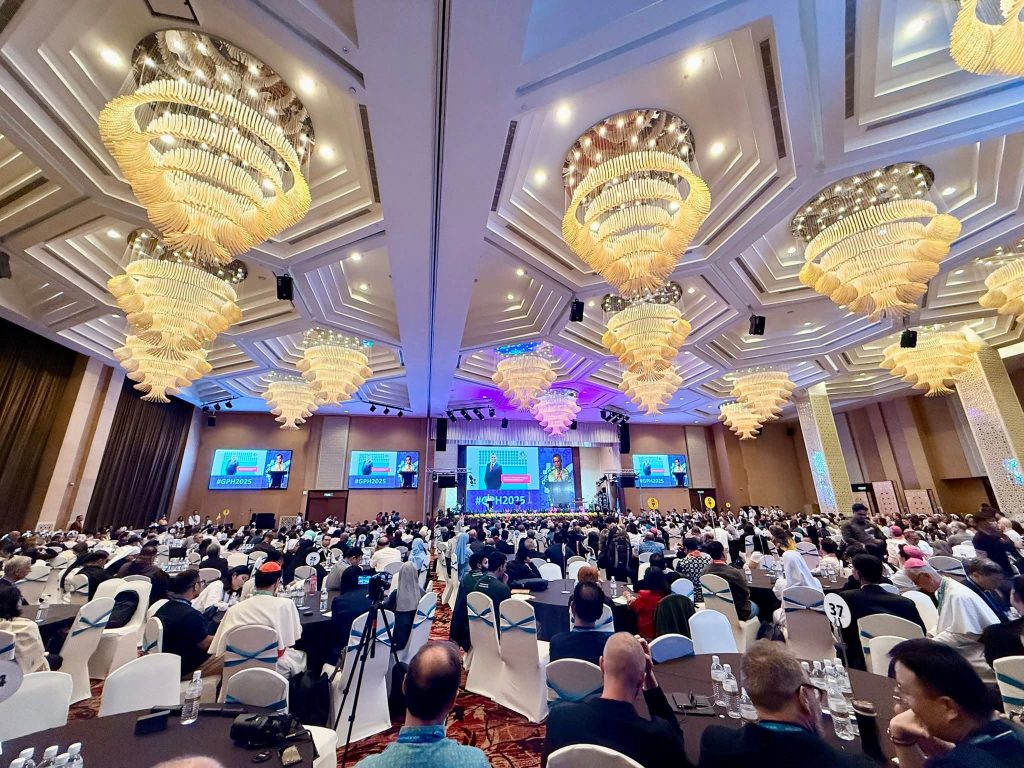
The prelate noted that the gathering deepened understanding of Asia’s cultural diversity and helped participants rediscover ways to read and proclaim God’s Word to facilitate authentic encounters with Christ.
“We renewed our understanding of one another’s cultures, learned how to better interpret the Word of God so people may encounter Christ, and shared meaningful experiences with our neighbors across Asia,” the archbishop added.
He described the congress as a milestone moment that invited serious reflection on the Church’s missionary identity in a rapidly changing continent and strengthened the call to form “pilgrims of hope” in local communities.
Fr. Suwat Luangsaard, deputy secretary general of the Catholic Bishops’ Conference of Thailand, said the congress affirmed the Church’s shared journey with Christ across Asia.
“Jesus invites us to walk with him by entering into his life, so that we may recognize him when he appears in our lives and cultures,” he told LiCAS News.
Christ’s presence, he added, was evident throughout the congress in the richness of Asian cultures and traditions.
“This reassures the Church that we are walking together—united in faith amid diversity—and ready to proclaim Jesus’ mission, especially among the poor and the marginalized,” he said.
Insights from keynotes and workshops
Fr. Joseph Anucha Chaiyadej, executive director of Catholic Social Communication of Thailand, singled out the keynote address by Cardinal Luis Antonio Tagle, pro-prefect of the Dicastery for Evangelization, as particularly impactful.
According to Fr. Anucha, the cardinal urged participants to emulate the Magi, who sought God with humility and openness, while rejecting the attitudes symbolized by Herod—fear, power, and self-preservation.
“Cardinal Tagle reflected on how the Magi went home by a different way after encountering the child Jesus,” Fr. Anucha said. “Their story is a model for Asia’s peoples—diverse seekers led by holy longing.”
Ms. Mariya Benyasut, vice president of the Catholic Business Executives and Professionals of Thailand, recalled that Cardinal Tagle delivered his message with warmth and humor, noting his participation in the Chiang Mai congress two decades ago.
“He reminded us that Catholics must never tire of telling the story of Jesus, a story that continues to transform lives, cultures, and communities,” she said.
She added that the Magi’s humility—acknowledging their limits and seeking guidance—mirrors the spirit of synodality, the Church’s call to journey together through listening and collaboration.
Participants were divided into seven thematic groups for synodal sharing and discussion.
“As laypeople, we discussed our understandings of mission and the difficulties we face,” Ms. Mariya said. “We realized mission begins with small actions around us—walking together as a synodal Church.”
She added, “We trust that the Holy Spirit walks with us. We only need to listen to His voice.”
Impact sessions addressed key pastoral concerns, including digital evangelization and artificial intelligence, the Alpha for Youth program as a missionary tool, and the Christian vocation to witness in pluralistic societies.
Joining the group on digital mission, Fr. Anucha said participants explored how the Church can engage Asia’s dynamic online culture.
“We examined emerging trends and the role of AI in evangelization and community building,” he said, noting that case studies from the Church in Singapore provided practical models for innovative digital ministry.
Organizers explained that the congress aimed not only to exchange strategies but to share personal testimonies of faith, highlighting pastoral and catechetical experiences across different Asian contexts.
Fr. Wutthikrai Chinnalai of the Parish Missionary Group of the Archdiocese of Bangkok said the congress underscored the importance of personal witness.
“Mission is proclaiming our own encounter with Jesus,” he said. “It is not only words—it is letting Jesus live in us.”
Young Thai participants also shared reflective testimonies on how the congress renewed their missionary commitment.
“Youth are not the future of the Church; we are the present,” one delegate said, describing the congress as a transformative experience that strengthened his resolve to serve with “courage, creativity, and compassion.”
The congress concluded with the theme “Go Forth” (Matthew 28:18–20), commissioning participants to return as missionary disciples.