
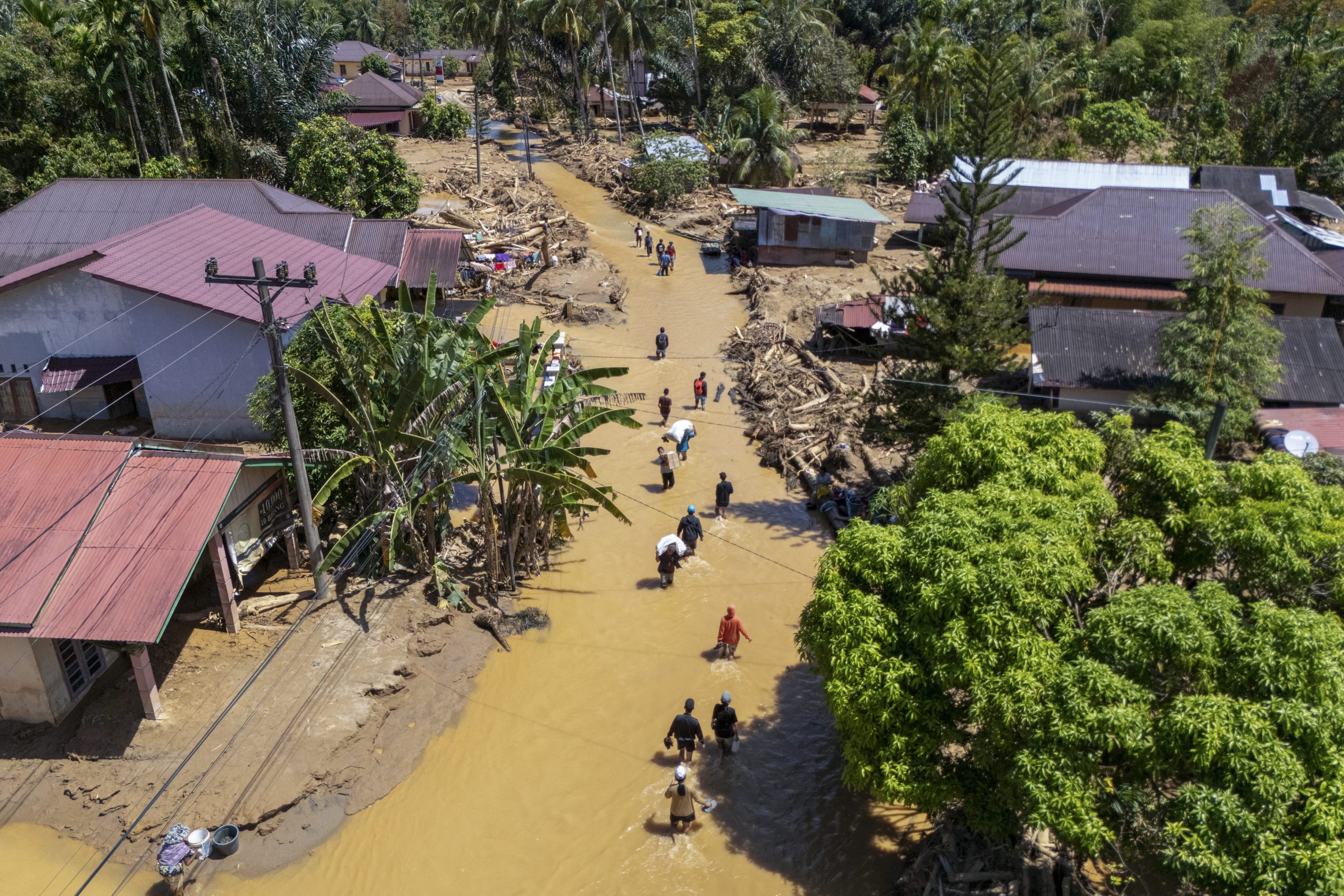
Capuchin friars in northern Sumatra in Indonesia have opened their monasteries to families displaced by last week’s deadly floods and landslides, as Church workers struggle to reach cut-off communities still waiting for aid.
Friar Yoseph Norbert Sinaga, Provincial Superior of the Capuchin Friars Province in Sibolga, said in a Fides News Agency report that the situation remains critical despite improving weather conditions.
“The worst is over, but the emergency continues. Floods and landslides have swept away entire villages. Many people are homeless. Rescue teams are now trying to reach the displaced: for some it is possible, for others it is not, because the areas remain isolated,” he said.
Tropical Cyclone Senyar brought torrential rains across the diocese, leaving numerous dead and missing, affecting 1.5 million people, and displacing more than 570,000. Friar Sinaga said basic needs are now becoming severe.
“Now we are suffering from the lack of water and electricity, but above all, the lack of drinking water is a serious problem. Even we, in the monasteries, don’t have water and must collect it from springs in the forest,” he said.
“There are thousands of people in the Sibolga territory who have lost everything; they are homeless. Soon we will have to help them resume a normal life, starting with rebuilding their homes,” he added.
The friars, who have been present in the region for over a century, have turned their Novitiate into an emergency shelter for more than 200 displaced people.
“They are families, children, and the elderly; they live with us, and the friars try to offer not only food for their bodies, but also moral and spiritual comfort,” Friar Sinaga explained.
Young friars, he said, have been playing with children “creating an atmosphere of fraternity and joy even in this situation of hardship and suffering.”
“Now our brothers and sisters need immediate help. Later, we will also try to help rebuild their homes,” he said, noting that Franciscan communities across Indonesia are responding to their appeal for solidarity.
The disaster in Sumatra is part of a wider regional emergency. Officials in Indonesia and Sri Lanka said Wednesday they were still struggling to reach survivors in remote areas after floods and landslides across four countries left more than 1,500 people dead.
In Indonesia alone, 770 people have been confirmed dead and 463 remain missing. Large areas remain isolated by damaged roads, power outages, and communication failures, according to a report by Agence France-Presse (AFP).
Across the region, the same weather system brought heavy rains to Thailand and Malaysia, where additional deaths were reported.
A separate cyclone, Ditwah, battered Sri Lanka, killing at least 474 people, with 356 still missing. Authorities there estimate the disaster’s cost at up to $7 billion.
Scientists say climate change is increasing the frequency and intensity of extreme rainfall across the region.
As cleanup begins in some areas, Church workers in Sumatra expect the humanitarian needs to grow. The Capuchins of Sibolga said they will continue focusing on shelter, water, and long-term rebuilding for families who have lost everything.









