
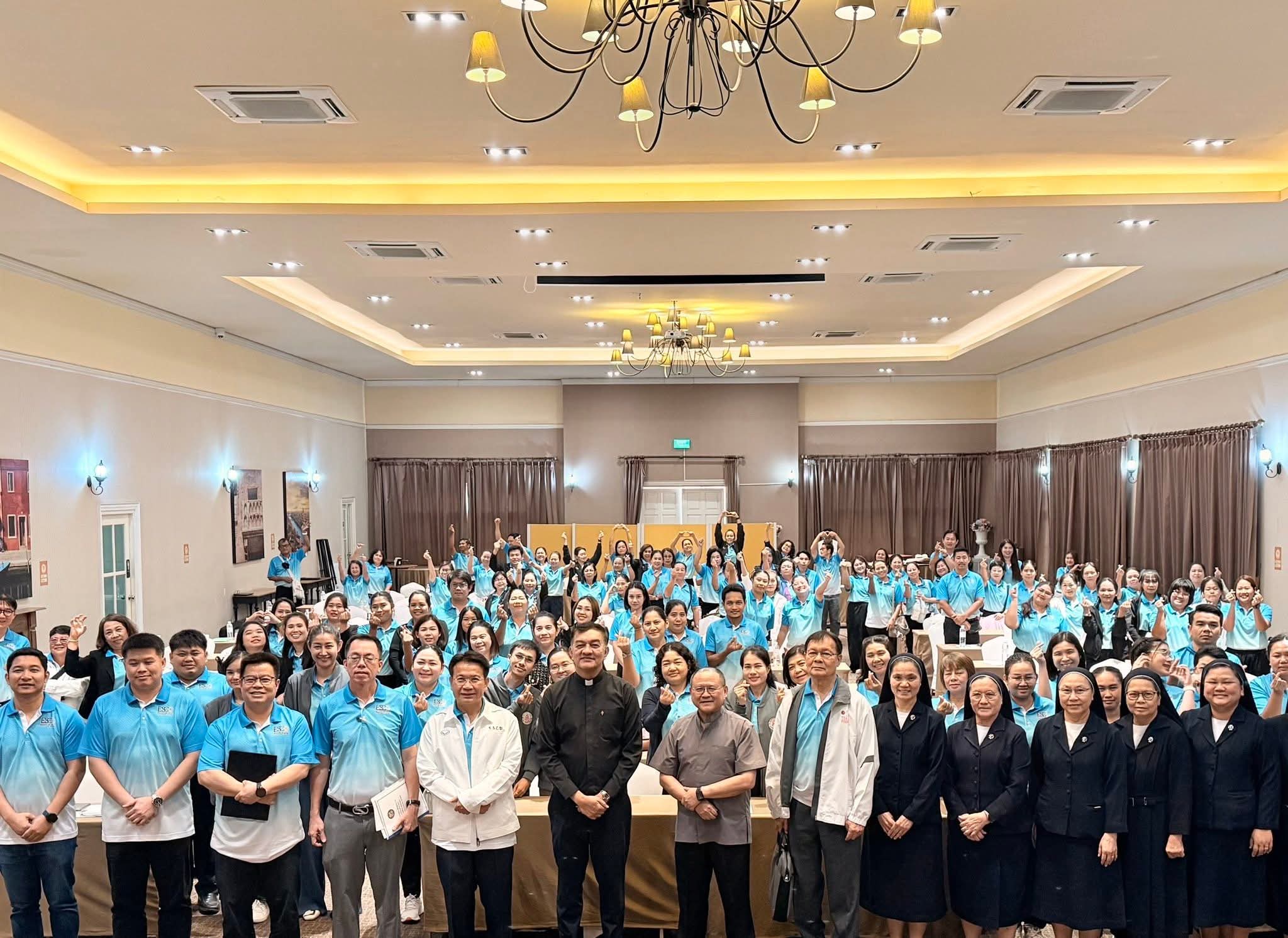
Catholic school leaders in eastern Thailand gathered on April 22 to examine how artificial intelligence is reshaping education, urging a balanced approach that embraces innovation while safeguarding the dignity and holistic formation of students.
The seminar, organized by the Education Department of the Diocese of Chanthaburi, brought together more than 100 participants, including diocesan priests involved in education, religious sisters, school administrators, assistant administrators, and representatives from 15 schools under the Catholic School of Technology network.
The meeting centered on the theme, “Protecting Students in Safe Media Use.”
Father Anucha Chaiyadej, director of Catholic Social Communication Thailand (CSCT), led the discussions, offering insights into the impact of modern media and emerging technologies on young people.
He highlighted, “While AI offers powerful tools for personalized learning and academic support, it also raises profound anthropological, spiritual, and pedagogical questions.”
Participants explored how digital technologies and AI affect students’ concentration, self-awareness, worldview, and relationships.
Through group discussions, they identified some of the most concerning impacts on learners, including reduced critical thinking, overreliance on automated answers, and weakened interpersonal engagement.
A central question emerged during the seminar: How should educators respond when students trust AI-generated answers over their teachers?
The discussion shifted from whether students should use AI to how they can be formed to evaluate AI-generated information critically, particularly scientific claims, using the same rigor applied in academic inquiry.
“AI must be approached as a tool, not a substitute for human reasoning,” one participant noted during the brainstorming session.
Educators emphasized the need to teach students verification skills and intellectual responsibility, especially when AI use bypasses reflection or discourages independent thinking.
The seminar also addressed concerns about how AI may affect students’ confidence and sense of self-worth.
Participants agreed that Catholic education must respond by reinforcing the formation of the whole person, intellectually, spiritually, and morally, grounded in Catholic social teaching and respect for human dignity.
The ethical dimensions of digital life extended beyond the classroom.
Participants debated the growing trend of sharing children’s images on social media. While some viewed it as a way to celebrate life and build community, others warned of risks to children’s privacy and digital consent, with some experts framing excessive sharing as a potential violation of children’s rights.
Questions about future employment also surfaced, reflecting widespread anxiety among students.
Speakers acknowledged that while AI is unlikely to replace all jobs, it will significantly transform the workforce. As a result, AI literacy and adaptability are becoming essential competencies for future graduates.
Looking ahead, educators recognized that certain professions may disappear while new ones emerge, requiring a shift in educational priorities.
Beyond technical skills, there is a renewed call to cultivate human qualities that AI cannot replicate, such as empathy, ethical judgment, creativity, and spiritual depth.
In response to these challenges, Catholic schools in the diocese are adopting a stance of cautious optimism.
Initiatives include developing ethical guidelines for AI use, promoting digital and media literacy among teachers and students, and rethinking pedagogical approaches to ensure that technology enhances rather than replaces the essential relationship between teacher and learner.
The seminar concluded with a shared commitment to guide students in navigating the digital age responsibly, ensuring that technological progress remains anchored in values that promote human flourishing and the common good.