
The Diocese of Surat Thani concluded its sixth annual “iMind Youth Camp” with a call for young Catholics to become “leaders of love” by serving the poor, protecting human dignity, and bringing hope to society through acts of compassion.
Held at the Cathedral of Archangel Raphael in southern Thailand, the weeklong “6th Annual Youth Camp for Disciples of Christ and Evangelization” gathered 66 participants, including priests, religious sisters and brothers, youth coordinators, and 43 Catholic youth representatives from 13 parishes across the diocese.
Under the theme “iMind: Beloved to Love,” the camp focused on helping young people recognize God’s love and transform that experience into meaningful action for others, especially the poor and vulnerable.
Drawing inspiration from Church teachings on Christian love, the program encouraged participants to deepen their faith while developing leadership rooted in compassion, service, and social responsibility.
The camp opened with interactive formation activities at a public park, where participants joined a “Walk Rally” centered on themes of love, unity, and hope. Through teamwork exercises, obstacle challenges, and creative digital media projects, the youth explored how Christian values can be lived out in daily life.
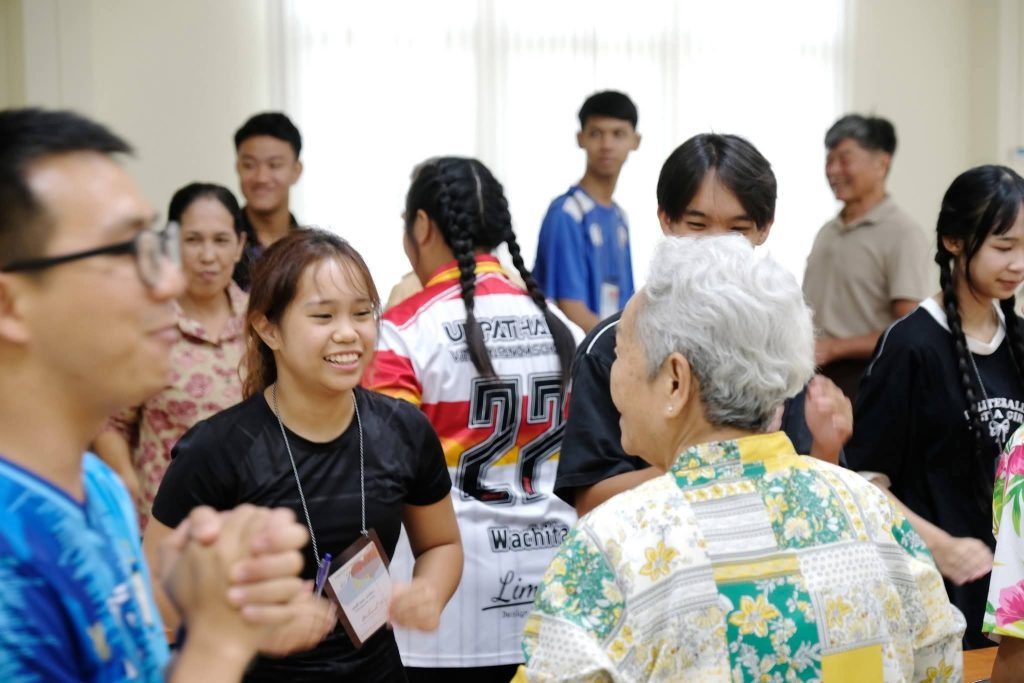
Photo credit: Catholic Media Office, Surat Thani Diocese
A major highlight of the gathering came on the second day, when Bishop Paul Trairong Multree of Surat Thani presided over a thanksgiving Mass and challenged participants to make God’s love visible through service to others.
The bishop stressed that love for God cannot be separated from love for the poor.
“God dwells in the least of these,” he told the young people, emphasizing that caring for the marginalized is not merely an optional charitable activity but “a fundamental mission” of every Christian.
He urged the youth to make the Church a true “home” and “sign of hope” for all people, especially those forgotten or abandoned by society.
Using the example of Francis of Assisi, Bishop Paul highlighted humility, simplicity, and solidarity with the poor as essential elements of authentic Christian discipleship.
The bishop concluded his reflection with a series of questions for the participants: “Are we aware that we are loved? When we know we are loved, how can we love others? And today, how will we take action?”
The camp’s strongest impact came through outreach activities across Surat Thani province, where participants put their learning into practice through acts of mercy and community service.
The youth visited bedridden patients and elderly residents, distributing food and essential supplies to a dozen households. They also organized recreational activities for elderly people at the provincial social development center and brought joy to local children through games and community programs.
Government agencies and Christian groups in the area supported the outreach initiatives.
In the evenings, participants joined Taizé prayer services and received the sacrament of reconciliation, fostering moments of silence, healing, and spiritual renewal.
The camp concluded with a closing Mass presided over by Father Arkadech Tapping, chairman of the diocesan pastoral commission, who presented Carlo Acutis as a model for modern youth.
He reminded participants that Carlo Acutis became holy not through extraordinary achievements but by “doing ordinary things with extraordinary love.”
Quoting the young Italian blessed, Father Arkadech challenged participants to remain faithful to their unique identity in a world shaped by comparison and imitation.
“Everyone is born original. Sadly, many die as mere copies,” he said.
Following the Mass, participants prayed before the relics of Carlo Acutis, entrusting their mission and future to his intercession.
As the camp ended, the young delegates returned to their parishes carrying the message printed on their camp shirts: to remain mindful of human dignity, mindful of compassionate presence, and mindful that Christ is hidden in every vulnerable person they encounter.
Organizers said the camp aimed not only to strengthen faith but also to form a new generation of Catholic youth capable of becoming witnesses of hope and agents of transformation in Thai society.