Catholic leaders and environmental advocates in Indonesia urged parishes to turn Pope Francis’ ecological teachings into concrete community action during a forum promoting the “Green Parish” movement in Yogyakarta.
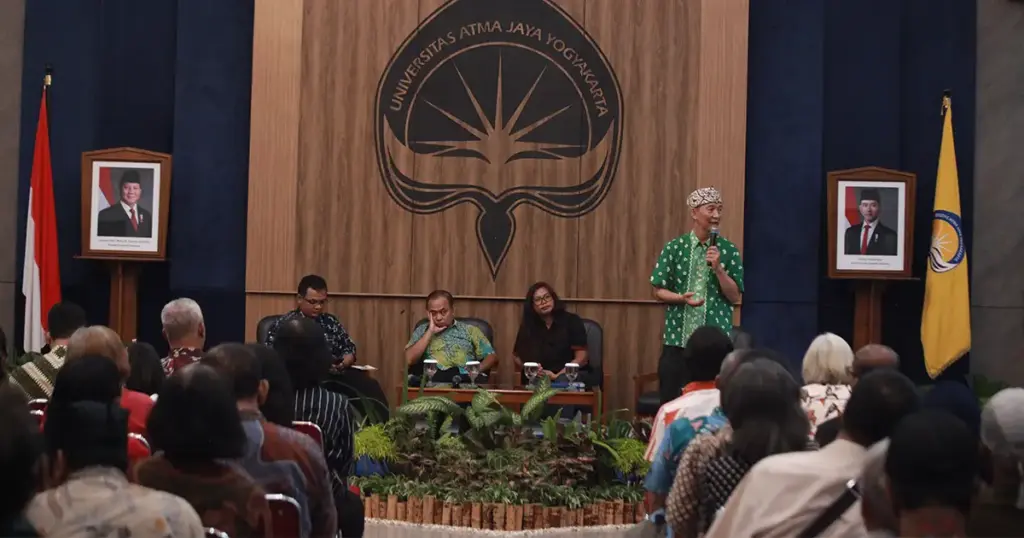
The May 16 talk show, titled “Green Parish Movement, the Implementation of Laudato Si’ and the Church’s Social Movement,” highlighted ecological conversion as an expression of Christian faith and encouraged Catholics, especially young people, to respond to environmental problems through parish-based initiatives.
The event was held at the Bonaventura Building Auditorium of Atma Jaya University Yogyakarta and organized by the East Yogyakarta and West Yogyakarta vicariates in partnership with the university.
Among the speakers was Kianto Atmojo, who said the teachings of Laudato Si’, Pope Francis’ encyclical on care for creation, and Laudate Deum, his follow-up climate document, call people to deepen their relationship not only with God and others, but also with nature.
“Caring for the environment becomes part of faith. Human beings are called to care for the Earth as God’s creation,” he said.
Atmojo explained that the Green Parish movement promotes an ecocentric approach that sees humans as part of nature, contrasting it with anthropocentric thinking that prioritizes human interests without considering environmental consequences.
He said ecological conversion can take shape through practical parish initiatives, including environment-themed homilies, prayers for creation, observance of the Season of Creation, reducing plastic use, and proper waste management.
“Waste management is important, including processing it into useful organic fertilizer,” he said.
Fransisca Supriyani Wulandari shared the experience of Maria Marganingsih Parish in Kalasan, where parishioners have developed environmental programs addressing waste and flooding.
“We developed the 3A concept — prevent, sort, and manage waste — so it can be recycled and reduce pollution,” she said.
Wulandari said the parish also promotes tree planting, sustainable energy and water management, and the formation of environmental volunteers.
“We also go directly to communities to provide education and training on waste processing so awareness of protecting the environment can grow together,” she said.
Meanwhile, Bernardus Wibowo Suliantoro described the waste crisis as a moral issue rather than merely a sanitation concern, particularly because of its impact on vulnerable communities in Yogyakarta.
“Waste reflects humanity’s relationship with nature. This is about moral responsibility and social solidarity,” he said.
Suliantoro also warned against what he described as five ecological sins: greed, indifference, consumerism, unwillingness to endure hardship, and social injustice.
“A healthy environment is not a gift, but the result of commitment and collective work,” he said.
Organizers said the forum aimed to deepen environmental awareness among Catholics, particularly young people, and encourage greater participation in Church-led ecological action.