

Thai Catholic educators ended their national assembly with a five-point commitment calling for ethical technology, stronger human formation, and greater inclusion in schools.
The Catholic Education Council of Thailand (CECT) adopted the commitments at the close of its 55th Annual Conference on Aug. 19 at The Greenery Resort Khao Yai after four days of discussions, prayer and liturgical celebrations.
The assembly brought together 577 education leaders representing 11 dioceses across Thailand. The commitments focused on holistic human formation, ethical use of technology, synodal collaboration, inclusion and what the council described as “action-oriented hope.”
Co-hosted by four northeastern dioceses, the gathering also marked the 60th anniversary of the Second Vatican Council declaration Gravissimum Educationis. Participants reflected on Pope Leo XIV’s Apostolic Letter Drawing New Maps of Hope and discussed pastoral and technological challenges facing Catholic education in Thailand.
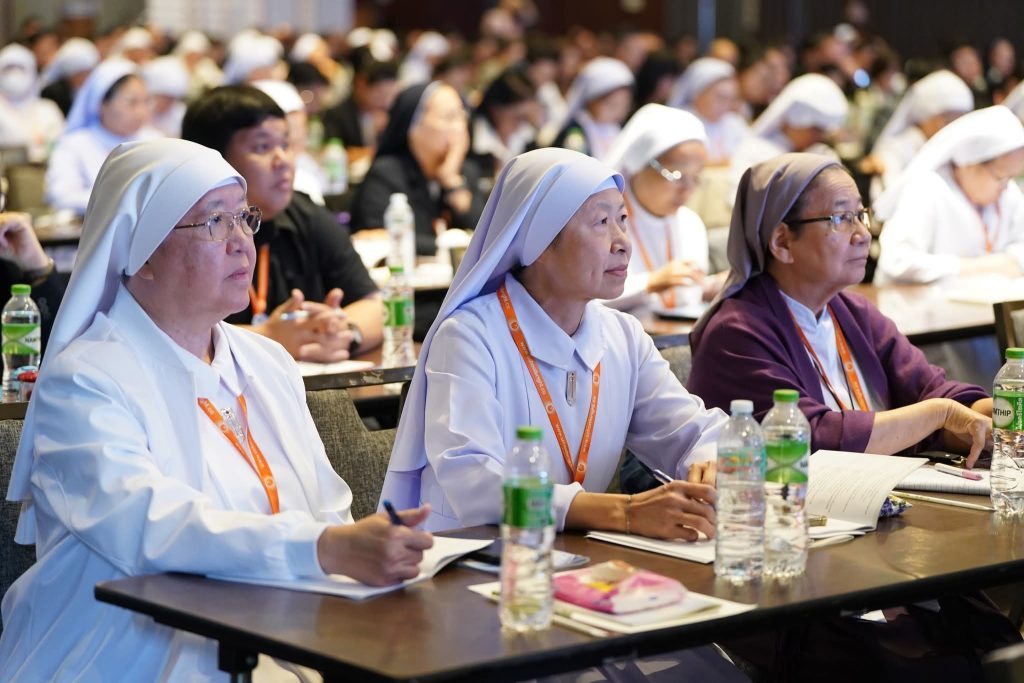
In its closing statement, the CECT said advances in artificial intelligence should remain at the service of human dignity and the common good.
“Amidst the rapid advancements in digital technology and artificial intelligence, we recognize that the crucial question is not merely ‘What can artificial intelligence do?’ but rather, ‘How should humans use artificial intelligence while upholding the intrinsic value and uniqueness of human intellect?’ Technology must serve humanity and the common good—it can never replace conscience, personal relationship, compassion, or the spiritual dimension.”
Under its five-point commitment, the council called on Catholic schools to:
- Strengthen holistic human formation by developing academic competence, critical wisdom, moral faith and a commitment to service.
- Promote ethical technology stewardship by using digital tools and artificial intelligence in ways that uphold human dignity, learning and the common good.
- Deepen synodal collaboration through listening and shared responsibility among students, families, the Church and wider society.
- Advance inclusion by standing with poor, marginalized and vulnerable communities and expanding equitable access to education.
- Foster action-oriented hope by creating safe, nonjudgmental learning spaces and connecting schools through what the council called “Educational Constellations.”
Bishop Joseph Luechai Thatwisai of Udon Thani, episcopal chairman for communication, commended organizers for combining theological reflection with technology that enabled educators outside the venue to follow the sessions.
Fr. Decha Arpornratana, former CECT secretary-general, said the gathering had expanded its reach while maintaining the quality of its discussions.
“In terms of both quality and quantity, we have maintained an exceptional standard. The quality is reflected in the timeliness of our reflections on Pope Leo XIV’s Apostolic Letter, while our reach expanded significantly with nearly 80 more key stakeholders participating than last year.”
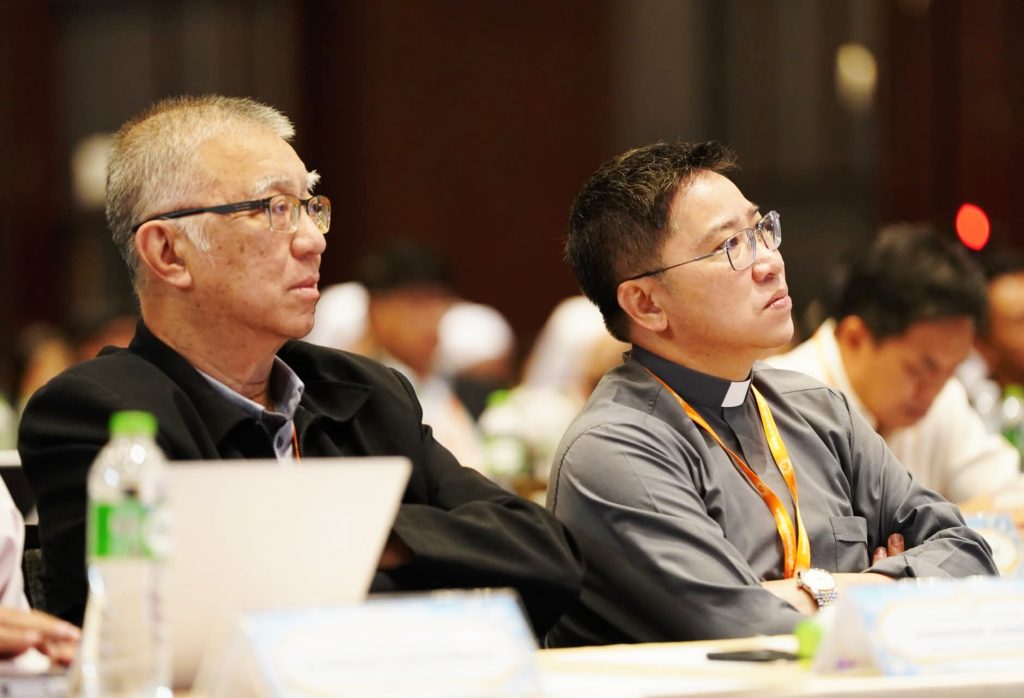
Lalida Vangtal of Udomvithaya School in Ratchaburi province said discussions on artificial intelligence underscored the importance of human critical thinking and deep listening.
Sr. Deanna Maria Combong, RA, superior of St. John’s School Thabom in rural Loei province, said the assembly renewed the fundamental vocation of Catholic educators.
“If there is one truth I will carry in my heart from this conference, it is this: We do not simply manage schools; we form human persons. We do not merely build organizations; we build the Kingdom of God.”
Dr. Kitikorn Dowpiset, vice president for academic affairs and ethics development at Assumption University of Thailand, described the four-day gathering as an opportunity for schools to examine their future direction.
“The conference allowed us to examine our institutional landscapes with clarity. Day by day, we were provided with the divine provisions and sacred tools necessary to map out sustainable, courage-filled paths for our respective institutions.”
Suparak Tachanarong, a Muslim educator and assistant director for student affairs at Ursulines Vasudevi School in Bangkok, said transformation in education must begin with educators themselves.
“Any true transformation must begin within ourselves. Every step an educator takes is like a pilgrimage—shaping daily interactions to become a compass that guides our youth with hope, faith, and unconditional love.”
The assembly concluded with the biblical assurance that “hope does not disappoint us” from Romans 5:5, as participants returned to their schools with the five commitments as a framework for Catholic education in Thailand.