

Rescuers in Nepal were digging through mud-filled hydropower tunnels Monday in a bid to reach more than 100 workers believed still alive underground.
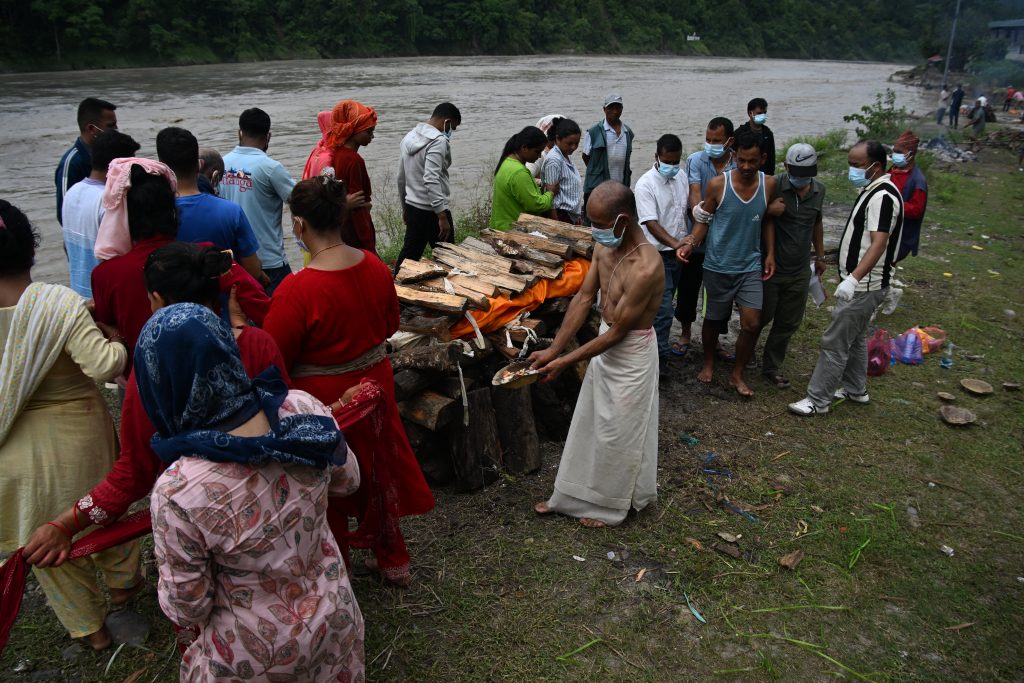
According to a report by Agence France-Presse, the death toll from flash floods and landslides along the Nepal-Tibet border reached 919, and 4,793 people remained missing.
Three bodies have been recovered from two tunnels, but rescuers have yet to make contact with those feared trapped. The Nepali government said more than 100 workers may still be alive inside several tunnels.
They are among 933 hydropower workers reported missing after a wall of mud and debris swept through parts of Nepal on Wednesday morning, according to the National Disaster Risk Reduction and Management Authority.
At the Upper Trishuli 3A hydropower site, rescuers broke through into the upper section of a tunnel filled with mud, pumped air inside and used drilling equipment and excavators to dig deeper.
“When members of the team descended using ropes and called out to those inside, there was no response,” Prime Minister Balendra Shah said in an update Sunday night.
The Nepal Army said Monday that rescuers continued to “clear water, mud, and sediment from inside the tunnel.”
Specialized tunnel-rescue teams from India, China, and South Korea have joined the operation.
At the Upper Trishuli-1 site, a Chinese team “entered approximately 300 meters (984 feet) into the tunnel and conducted a search, recovering one body,” the Nepal Army said.
Indian rescuers at the Chilime Hydro tunnel entered about 100 meters before reaching an area blocked by mud and soil. Two bodies were recovered during the operation.
Nepali mountain rescue teams, which regularly assist climbers on Mount Everest and other Himalayan peaks, were also taking part in the search.
Rescue and relief operations continued across flood-hit areas, where roads were damaged and bridges destroyed.
“We are continuing to work for search, rescue and relief operations,” Armed Police Force spokesman Netra Bahadur Karki told Agence France-Presse.
“Rescue teams have now reached most areas, by road or by helicopters. Our priority remains rescue and safety of the people,” he added.
Nepal’s disaster agency said Monday that 4,247 people were missing on the Nepali side of the border, where 903 deaths had been confirmed.
In Tibet, 546 people were missing, and 16 had died, according to China’s state broadcaster CCTV.
The combined toll stood at 4,793 missing and 919 dead. Authorities cautioned that the figures could still change as search and rescue operations continued.
Among those missing in Nepal were 45 Nepali Army soldiers, 38 police and armed police officers and 18 customs and immigration officers.
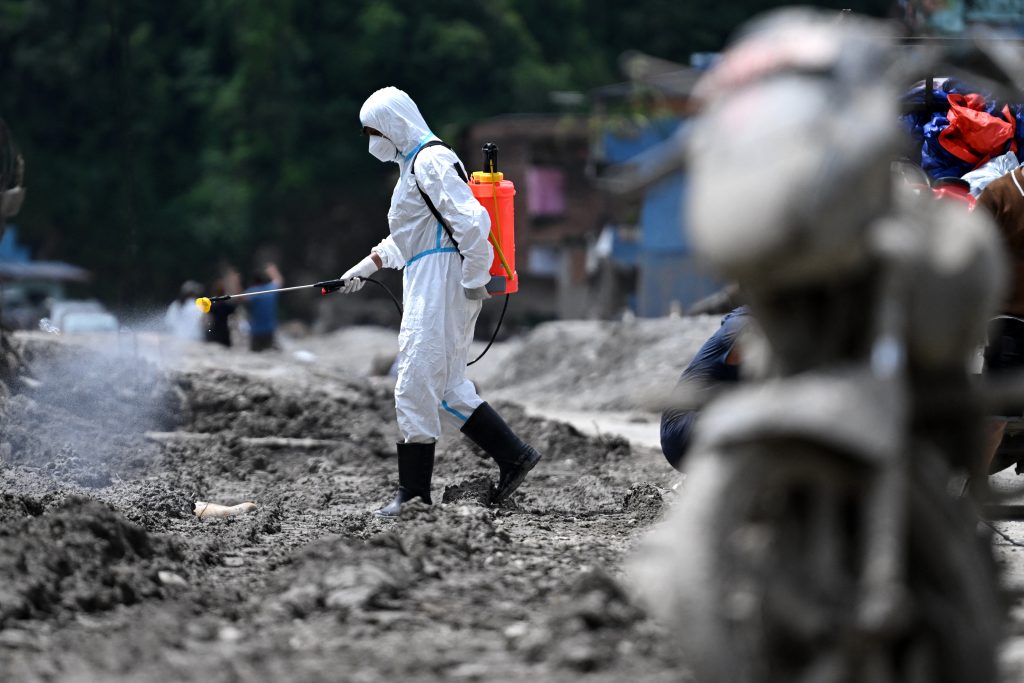
At least 1,158 people remained unaccounted for in Nuwakot, one of the hardest-hit districts.
Nepal’s disaster agency also said 592 foreigners were missing. Chinese officials reported that at least 261 foreign nationals were unaccounted for in Tibet.
The floods also caused widespread damage to Nepal’s energy infrastructure.
The Nepal Electricity Authority said 11 hydropower stations and one solar power station, with a combined capacity of 431.1 megawatts, had stopped operating, equivalent to about 10 percent of the country’s installed electricity generation capacity.
Another 15 power projects under construction, with a planned capacity of 470 megawatts, were also damaged.









