
A Philippine Catholic bishop urged the government to hold off irreversible commitments to the proposed Pax Silica development until concerns over water security, Indigenous land rights, ecological risks, and public accountability are addressed.
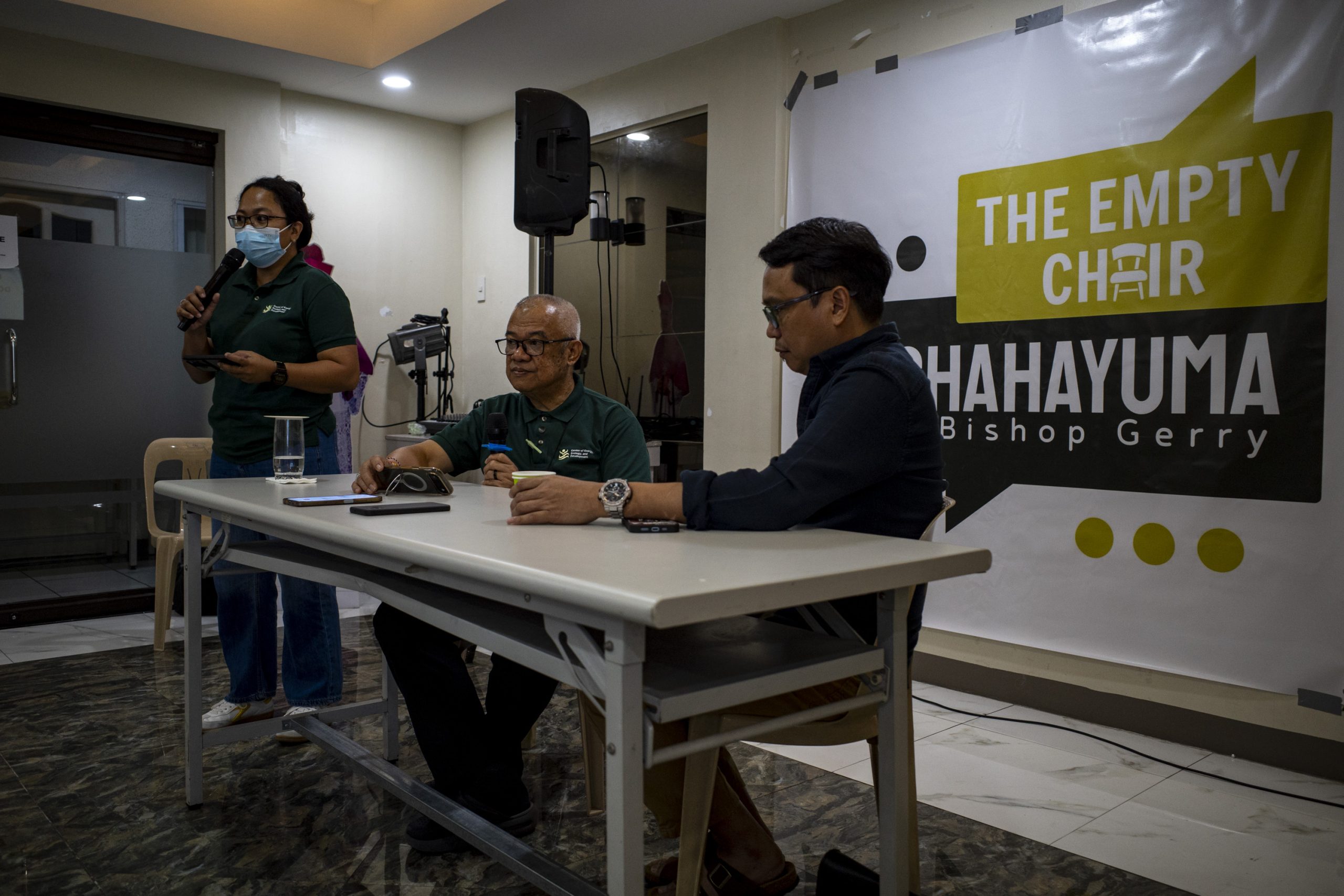
Bishop Gerry Alminaza of San Carlos, president of Caritas Philippines, called for full disclosure of the project’s plans, agreements, and water and energy studies during a Sept. 22 press conference with Gerry Arances, executive director of the Center for Energy, Ecology and Development.
Alminaza also sought an independent assessment of the project’s cumulative environmental and social impacts and “genuine consultation and participation, especially with affected Aeta and local communities.”
He called for “a clear guarantee that no irreversible commitment will be made until land rights, water security, ecological risks, and public accountability are fully addressed.”
The prelate said the Bases Conversion and Development Authority estimates that the proposed development in New Clark City could require about 65 million to 90 million liters of water a day and eventually around 3 gigawatts of electricity.
Such requirements, he said, “demand serious public scrutiny in a country already struggling with water stress, energy insecurity, and climate vulnerability.”
Alminaza questioned where the project would source its water and whether supplies would remain dependable during prolonged drought.
“What will be the cumulative impact on rivers, watersheds, farms, and surrounding communities? And who will bear the cost if the projections prove wrong?” Alminaza asked.
Arances said the projected electricity demand raises further questions about how Pax Silica would fit into the country’s power system.
“Three gigawatts of power is not a simple requirement,” he said.
He warned that the strategy behind Pax Silica “risks perpetuating the very problems that brought us into the current energy crisis,” saying government energy policy remains tied to gas, nuclear power and coal.
“The very solutions being proposed by the government are the same things that caused the energy crisis in the first place,” Arances said.
Concerns over Pax Silica also extend to land that Aeta leaders regard as part of their ancestral domain.
Alminaza said the government maintains that the project site is public land titled to the Bases Conversion and Development Authority and that Indigenous communities will not be displaced.
But “competing claims cannot be settled by assurances alone,” he said. They must be addressed “lawfully, transparently, and with the meaningful participation of the communities concerned—before contracts are finalized and decisions become difficult or impossible to reverse.”
Alminaza stressed that his position was not an argument against technology, investment or decent work.
“Technology is not the enemy,” he said, identifying instead the danger as “development that is rushed, opaque, and detached from ecological limits and human rights.”
The press conference was held during the Season of Creation, which this year carries the theme “Living Water.”
Alminaza warned that water scarcity cannot be treated as a distant threat in an archipelagic country dependent on forests, watersheds, rivers and rainfall.
“We must protect our water sources before scarcity becomes catastrophe,” he said.
He described “water bankruptcy” as a condition in which water is taken faster than nature can restore it, warning that depletion can remain hidden even as groundwater declines and ecosystems lose their capacity to recover.
“But beneath the surface, we are already borrowing from the future,” Alminaza said.
He framed the response through “Hayuma,” or paghahayuma, which he described as “mending what is broken together.”
“Someone must speak for them. But more than that, those who can speak for themselves must no longer be excluded from the room,” he said.
“We need collective action now—before damage is done, not apologies after it is too late,” Alminaza said.