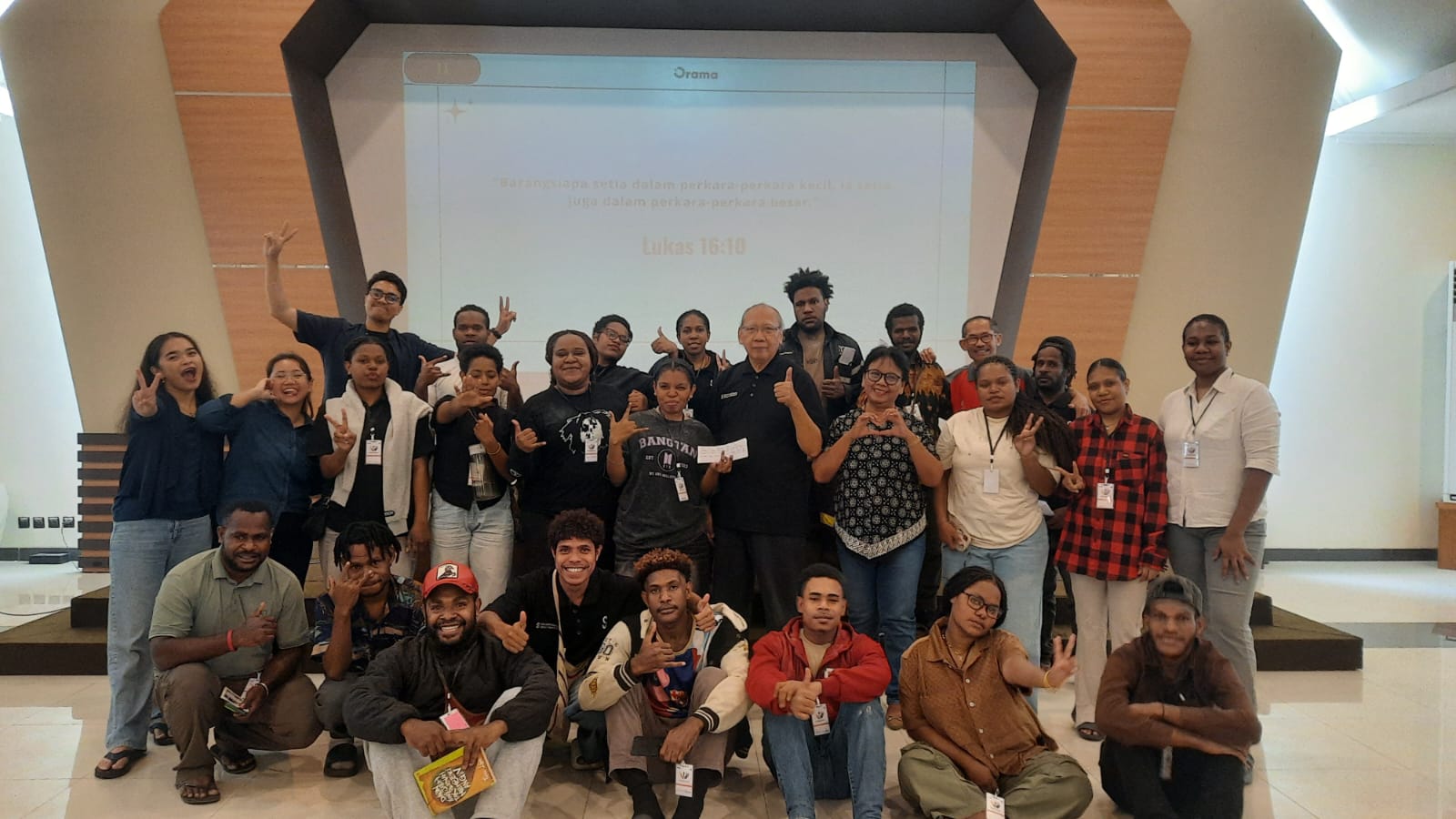
For students from Timika, Papua, studying at Soegijapranata Catholic University (SCU) in Semarang, Indonesia, a retreat in Central Java offered an invitation to reflect on how faith, education, and service can shape their lives.
Held in mid-August 2026 at the Sanjaya Pastoral Center in Muntilan, the retreat invited the students to explore the history of the Catholic Church’s missionary work in Java while reflecting on their own calling as young Catholics.
One of its central messages was that being a missionary does not necessarily mean traveling to remote areas to proclaim the Gospel or provide services in education, healthcare, and socioeconomic development.
The missionary spirit can also be lived out in everyday life by making Christ’s love present, fostering solidarity and dedicating oneself to the well-being of others.
Designed as a short spiritual retreat, the program offered more than an opportunity for renewal. It encouraged participants to recognize that the missionary spirit is an essential part of every Christian’s identity, including those preparing for their future through higher education.
Exploring the Missionary Heritage of Muntilan
The choice of Muntilan as the retreat venue carried special significance. The town holds an important place in the history of the Catholic Church in Indonesia, particularly through its contributions to education, evangelization, and community service.
The missionary movement in the region helped nurture Catholic figures who would later make significant contributions to both the Church and the nation.
Among them was Archbishop Albertus Soegijapranata, SJ, the first native Indonesian Catholic bishop and a National Hero of Indonesia. His life demonstrated that commitment to the Church cannot be separated from responsibility toward one’s country and humanity.
His name was later adopted by the university where the Papuan students are pursuing their education.
The participants were also introduced to Father Richardus Sanjaya, a pioneering Indonesian diocesan priest who played an important role in the history of the Catholic Church in Java. His legacy is commemorated through the Sanjaya Pastoral Center in Muntilan.
Through the stories of the two figures, the students were encouraged to understand that missionary work does not emerge overnight. It is built through perseverance, sacrifice, courage and faithfulness in responding to the challenges of each generation.
The participants also visited the Mission Museum at St. Anthony’s Catholic Church in Muntilan and the prayer house dedicated to Father Sanjaya in Sedan hamlet, not far from the retreat center.
The visits provided opportunities to reflect on how faith can be translated into concrete action through education, service, and a commitment to human dignity.
The missionary heritage of Muntilan became a mirror through which the students could reflect on their own vocation and responsibilities.
From Recipients of Education to Bearers of Hope
After exploring the history of missionary work in Java, the students were invited to consider a personal question: How can young Papuans studying in Semarang live out the missionary spirit in their own lives?
Missionary work is often associated with proclaiming the Gospel or serving communities that need greater access to education, healthcare, and socioeconomic opportunities.
Yet the missionary spirit encompasses something broader. Every Christian is called to bring the Good News to others through daily conduct, personal choices, professional responsibilities, and genuine concern for fellow human beings.
Within this understanding, the Papuan students were encouraged to recognize that they are not merely beneficiaries of educational opportunities. They, too, are called to participate in the Church’s mission within society.
Their opportunity to pursue higher education in Semarang represents both a privilege and a responsibility. Behind their journey from Timika to Java lie the support of their families, opportunities to develop their talents, and hopes for a better future.
Each student brings unique abilities, interests, and aspirations. Yet they share the opportunity to grow as individuals and eventually make meaningful contributions to society, particularly to their communities in Papua.
Educational success, therefore, should not be measured solely by academic grades, achievements or university degrees. Education should also nurture mature individuals with integrity, deep faith and sensitivity to the needs and struggles of others.
Studying diligently, developing discipline, respecting differences, and cultivating social awareness are important steps in preparing for a life of service.
Developing Talents for the Nation and Humanity
The retreat’s message closely reflects the educational philosophy of Soegijapranata Catholic University, expressed in its motto, Talenta Pro Patria et Humanitate—Talents for the Nation and Humanity.
The motto emphasizes that higher education should not merely produce intellectually capable and professionally competent graduates. It should also form individuals willing to use their knowledge and abilities in service of society.
SCU traces its origins to the Semarang branch of Atma Jaya Catholic University, established on July 5, 1964. The institution subsequently developed through the Catholic Institute of Technology in Semarang before becoming Soegijapranata Catholic University on August 5, 1982.
Over the years, SCU has continued to expand its academic programs and fields of study. Its educational mission, however, remains rooted in developing human talents for the benefit of the nation and humanity.
For the Papuan students, the motto carries particular significance.
The knowledge and skills acquired during their university years are not merely tools for securing employment or achieving personal success. Education also opens opportunities for them to help address the needs and challenges of their communities.
In this sense, the talents developed through education are both gifts and responsibilities. The greater the opportunity to learn and grow, the greater the potential to contribute positively to the lives of others.
Returning to Papua, Bringing Hope and Change
One of the hopes reflected upon during the retreat was that the students would eventually return to Papua and contribute to the development of their communities.
Equipped with knowledge, professional skills, life experiences and values cultivated during their university education, they are expected to make meaningful contributions according to their respective fields and abilities.
Such contributions may take many forms, including education, healthcare, economic development, community empowerment, and efforts to foster a society characterized by peace, justice and mutual respect.
It is in these concrete actions that the missionary spirit finds its fullest expression.
Proclaiming the Gospel does not always require preaching or organizing religious activities. The Gospel can also be made visible through honesty at work, a willingness to serve, the courage to defend human dignity, and compassion for those in need.
A teacher who helps children build a better future, a healthcare professional who serves patients with compassion, or a professional who carries out responsibilities with honesty and integrity can all embody Gospel values through their work.
The journey ahead will undoubtedly bring challenges. The students will face difficulties both during their university years and as they enter professional and community life.
Nevertheless, studying far from home, encountering different cultures, and deepening their faith can become valuable experiences that strengthen their resilience and broaden their perspectives.
Becoming Missionaries Today
One important realization the retreat sought to nurture was that the missionary calling does not have to wait until someone graduates, holds an important position, or becomes an influential figure.
The mission can begin today.
For university students, the missionary spirit can be expressed through dedication to their studies, academic honesty, respect for others, willingness to help fellow students, and openness to learning from people with different backgrounds.
These seemingly simple actions are essential preparations for becoming individuals who can serve society responsibly and compassionately.
From Muntilan, where the legacy of the Catholic Church’s early missionaries remains visible, the Papuan students were invited to carry home an important realization: they are not only preparing for their personal futures but also preparing themselves to become bearers of hope for others.
The history of missionary work in Muntilan demonstrates how the perseverance and dedication of earlier generations have produced lasting contributions that continue to benefit society today.
The same spirit is now entrusted to younger generations, including the Papuan students developing their talents at SCU Semarang.
Ultimately, being both educated and faithful means being willing to place one’s knowledge, abilities, and life experiences at the service of others, bringing Christ’s love into the world and promoting human dignity.
From Muntilan to Papua, may the missionary spirit continue to grow—transforming the experience of receiving education into a lifelong commitment to sharing, serving, and bringing hope to others.