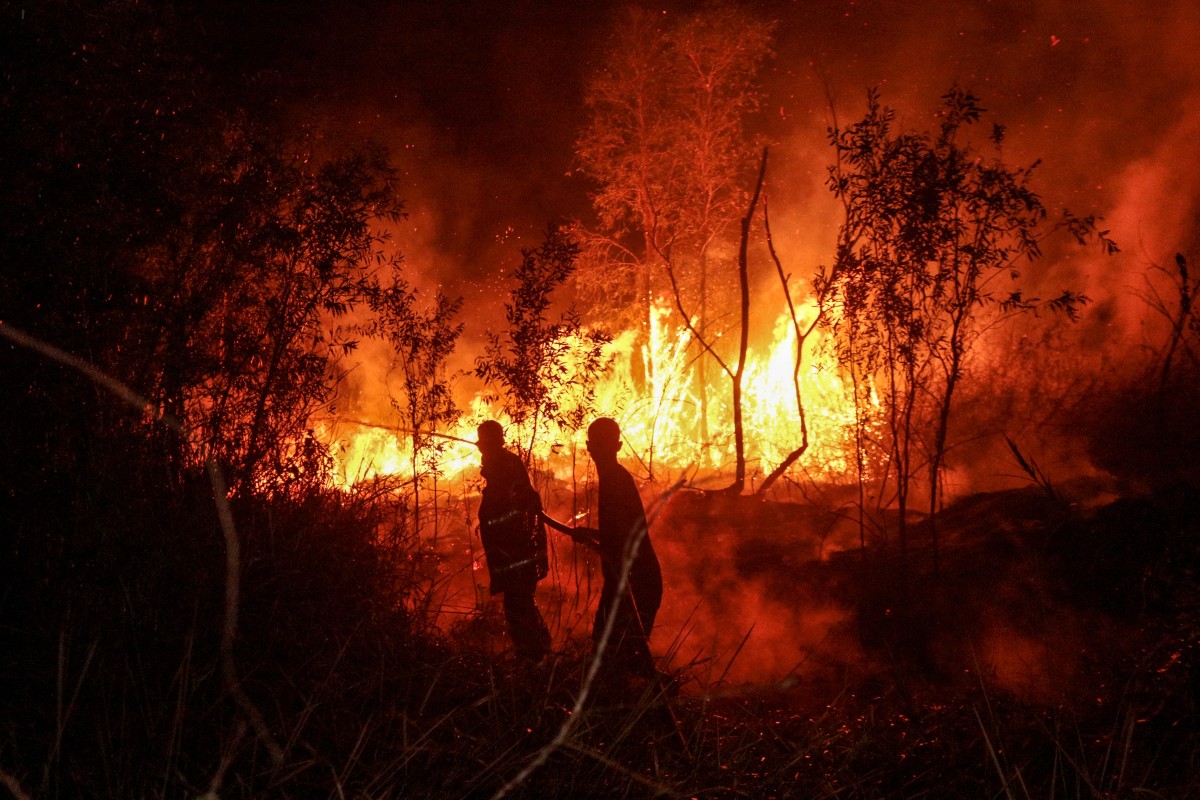
As smoke from forest and peatland fires in Indonesia spread across Southeast Asia in October, Catholics in Kalimantan and Malaysia called for prayer, changes in farming and consumption practices, and cooperation across borders.
At 7 p.m. on Oct. 16, three of Singapore’s five regions were in the “very unhealthy” range, with the 24-hour Pollutant Standards Index at 225 in the central region, according to the National Environment Agency.
The same day, Sustainability and Environment Minister Grace Fu said that “some of the haze experienced in Singapore originated from fires on the lands of seven companies in Indonesia.”
Singapore will issue the companies preventive measure notices under its Transboundary Haze Pollution Act, requiring them to put out fires, stop any burning and submit action plans. Fu said the haze may not ease until the inter-monsoon period, expected in late October or early November.
On Nov. 4, Singapore’s Parliament unanimously passed amendments to the Act after about six hours of debate. The maximum fine rises from S$ 100,000 a day, capped at S$ 2 million, to S$ 1 million a day, capped at S$ 20 million.
The law now allows action against companies whose fires abroad pose a credible risk of haze reaching Singapore and lets the government restrict goods and services, including financial services, to offending firms, The Straits Times and CNA reported.
“The THPA is not a silver bullet. It is one of many tools we must use to address the transboundary haze situation,” Fu said.
‘Export of smoke’
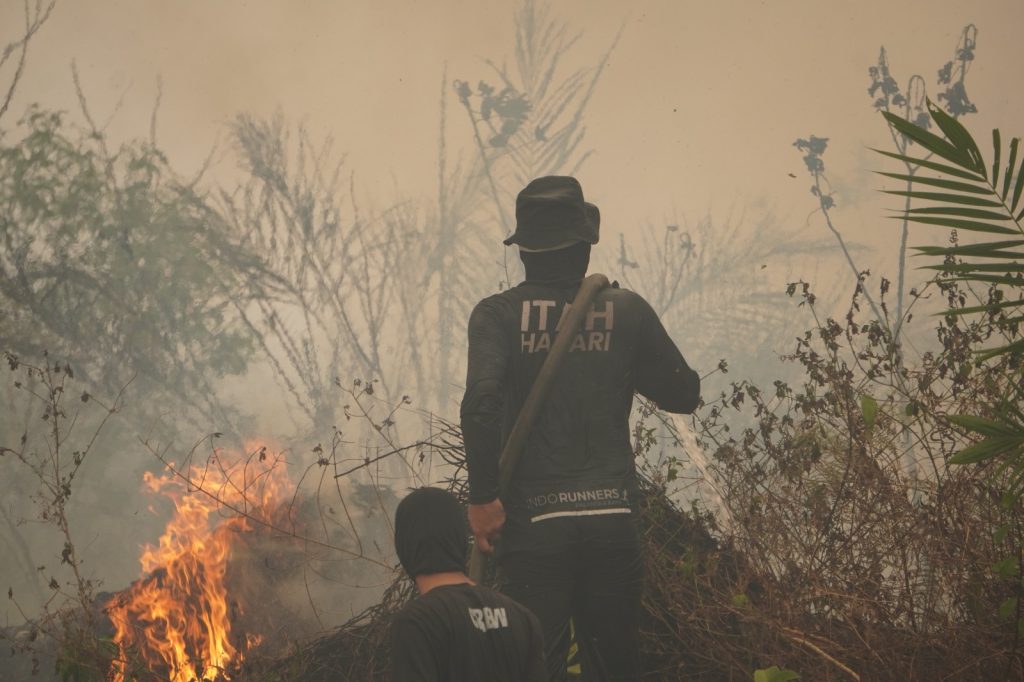
In the Indonesian part of Borneo, the fires have brought what Father Wilbrodus Andreas Bisa, OFM, calls an “export of smoke.” Bisa heads the Justice, Peace and Integrity of Creation commission of the Diocese of Banjarmasin in South Kalimantan province.
Nature is damaged by air pollution and the loss of ecosystems, while residents suffer respiratory infections and heavy losses in farming and plantations, he said in written responses in Indonesian.
“The environmental crisis is also a human and moral crisis,” he said, citing Pope Francis’ 2015 encyclical Laudato Si’.
Speaking out about the harm through dialogue with policymakers and working with people of goodwill to prevent and stop the fires is “the most feasible option,” he said.
He expressed hope that such efforts would build a shared awareness that “to imagine humanity without the earth is impossible, while the earth without humanity is possible.”
The fires are a complex problem that needs a shared solution from grassroots communities, people of goodwill and stakeholders, he said.
“Remain one in prayer, and keep building dialogue and cooperation with various parties and people of goodwill so that the problem of the forest and land fires may soon come to an end,” he added.
Friars at work
In Indonesia, Franciscan friars “continue to promote integral ecology through formation and education, eco-pastoral formation and collaboration with local communities,” including “encouraging sustainable practices that protect forests and avoid the use of slash-and-burn methods,” said Friar John Wong, OFM, the Rome-based General Definitor for Asia-Oceania of the Order of Friars Minor.
In written responses, he said the Order addresses environmental and community concerns through disaster relief, practical assistance, formation, education, healthcare, advocacy, collaboration and prayer.
He stressed that environmental health and community well-being are inseparable, with each area of work contributing to the Order’s response.
St. Francis’ Canticle of the Creatures sees the sun, water, earth and all living creatures as “gifts to be received with gratitude and treated with respect.”
‘A wounded mother’
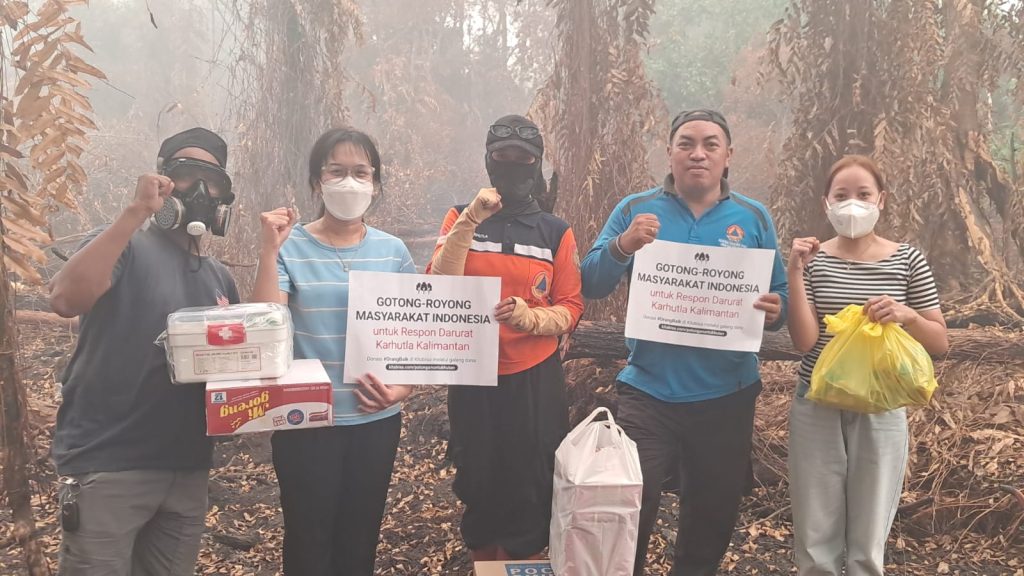
In neighboring Central Kalimantan, the provincial capital Palangka Raya and many districts have lived in smoke since late July, said Frans DS Sani Lake, 55, director of JPIC Kalimantan, an independent nongovernmental organization founded in 2010 in Palangka Raya and run by justice and peace activists outside the structures of the Catholic Church.
The organization belongs to the Central Kalimantan Forest and Land Fire Response Coalition (RAKAT), an interfaith civil society coalition.
Nearly 16,000 hectares of forest and land in the province had burned by mid-September, according to Indonesia’s National Disaster Management Agency (BNPB), most of it peatland that keeps smoldering after the flames are out, he said.
“Those who bear the heaviest burden are village communities and Indigenous peoples around the peatlands. They breathe the thickest smoke, lose their farms and food sources, and are often the ones suspected of starting the fires,” he said in written responses in Indonesian.
JPIC Kalimantan presses for the restoration of peatlands and for the rights of Indigenous peoples to their land, he said.
Laudato Si’ calls Catholics to hear both the cry of the earth and the cry of the poor, he said.
“In Kalimantan, both are heard in one labored breath. St Francis praised God through ‘Sister Mother Earth, who sustains and governs us,’ but the burning peat is a wounded mother,” he said.
He said faith requires more than prayer and humanitarian assistance, calling for ecological conversion and justice that hold those responsible for environmental destruction accountable and address its impact on affected communities.
He stressed that smoke from fires crosses national borders, underscoring the shared responsibility of countries to protect the environment.
He also welcomed Singapore’s efforts to trace companies linked to the fires and urged the faithful to scrutinize the sources of profits earned by companies and banks operating in the region.
‘From charity to solidarity’
In West Kalimantan province, the Church has held novenas for rain, including in the Diocese of Ketapang, handed out masks, distributed clean water and health aid, accompanied families whose homes burned and held seminars on disaster mitigation.
“All of that is important and very good,” said Capuchin Father Pionius Hendi, who chairs Inter-Franciscans for Justice, Peace and Integrity of Creation (INFO JPIC) Indonesia.
In written responses in Indonesian, he said the Church’s response should move “beyond momentary humanitarian aid towards transformative solidarity.”
The priest said solidarity requires working alongside affected communities rather than simply providing assistance, recognizing them as active participants in efforts to bring about change.
He urged people to look beyond the extent of forest fires and examine who benefits from the destruction, who suffers its consequences and why such disasters continue to occur.
He also called for addressing the underlying systems responsible for environmental destruction, stressing that assistance to affected communities must be accompanied by efforts to prevent recurring harm and pollution.
Smoke over Palembang
Residents of Palembang, the capital of Indonesia’s South Sumatra province, and four surrounding districts have endured poor air quality for about four months, disrupting classes, work and religious activities, according to Bonie Bangun, coordinator of Perkumpulan Sumsel Bersih (Clean South Sumatra Association).
Bangun said the South Sumatra provincial health office recorded 11,021 cases of acute respiratory infection in its data for the 41st week of the year, through Oct. 18.
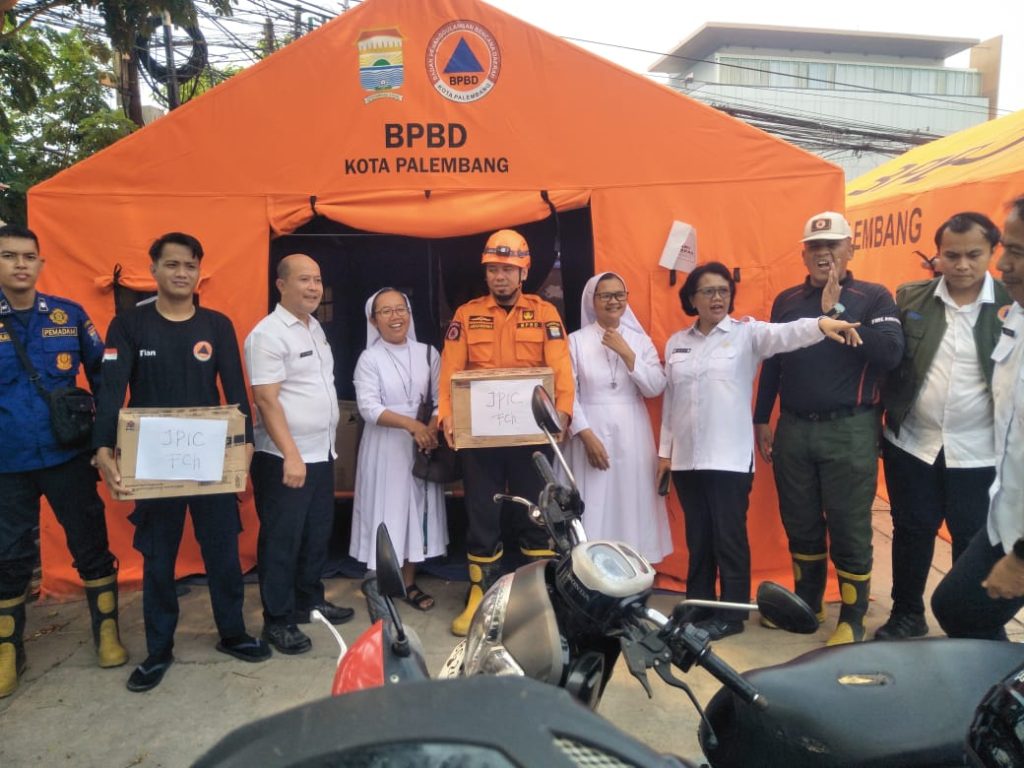
In written responses in Indonesian, he said the Justice and Peace Commission of the Archdiocese of Palembang and the Justice, Peace and Integrity of Creation office of the Franciscan Sisters of Charity (FCh) had assessed affected communities, distributed medicines and masks, provided health services and urged Catholics to take precautions against the haze.
His association and seven other civil society groups have also established a haze response center with designated spaces called “healthy houses” for residents.
The groups are collecting medicines, oxygen, vitamins, firefighting equipment, food and financial donations to support affected communities, firefighters and volunteers.
Bangun described the forest and land fires as both an environmental disaster and a moral crisis, reflecting humanity’s failure to care for creation.
“Forest fires show humanity’s failure to care for God’s creation and our common home,” he said.
‘Sister Air’
In Peninsular Malaysia, haze has affected Kuala Lumpur, Selangor, Johor and Negeri Sembilan, disrupting parish activities, according to the Archdiocesan Creation Justice Ministry under the Archdiocesan Office for Human Development (AOHD) of the Archdiocese of Kuala Lumpur.
Malaysia’s Ministry of Education ordered schools in areas with high air pollution readings to close beginning Oct. 9.
In written responses, the ministry described the haze as evidence of environmental destruction that crosses national borders, exposing communities in Malaysia and Singapore to smoke from fires in Indonesia.
The ministry also invoked St. Francis of Assisi’s Canticle of the Creatures, which praises “Brother Wind” and “Sister Air,” to emphasize the responsibility to protect clean air from environmental degradation driven by corporate profit.
The ministry uses parish networks to educate Catholics about the links between consumption, unsustainable farming and environmental damage. It urged Catholics to press governments for stronger environmental enforcement and regional agreements to protect remaining peatlands and forests.
It also called for closer cooperation among Catholic social action organizations in Malaysia, Singapore and Indonesia.
In the Diocese of Penang, on Peninsular Malaysia’s northwest coast, haze has disrupted outdoor activities, particularly for schoolchildren, older people and those with respiratory conditions. Parish events have also been affected on some days.
Jeanne J. Saw, a core team member of the Penang Diocesan Creation Justice Commission, said the commission continues to pray for affected communities and firefighters while educating Catholics about environmental degradation, climate change, responsible consumption and sustainable lifestyles.
The commission is led by Deacon Isaac Simbun. Saw also serves as an Animator of Animators for the Asia-Pacific region of the global Laudato Si’ Movement.
Saw called for solidarity among communities across national borders and urged Catholics to take action beyond prayer.
“Our solidarity and responsibility must cross borders just as the haze crosses borders,” she said.