
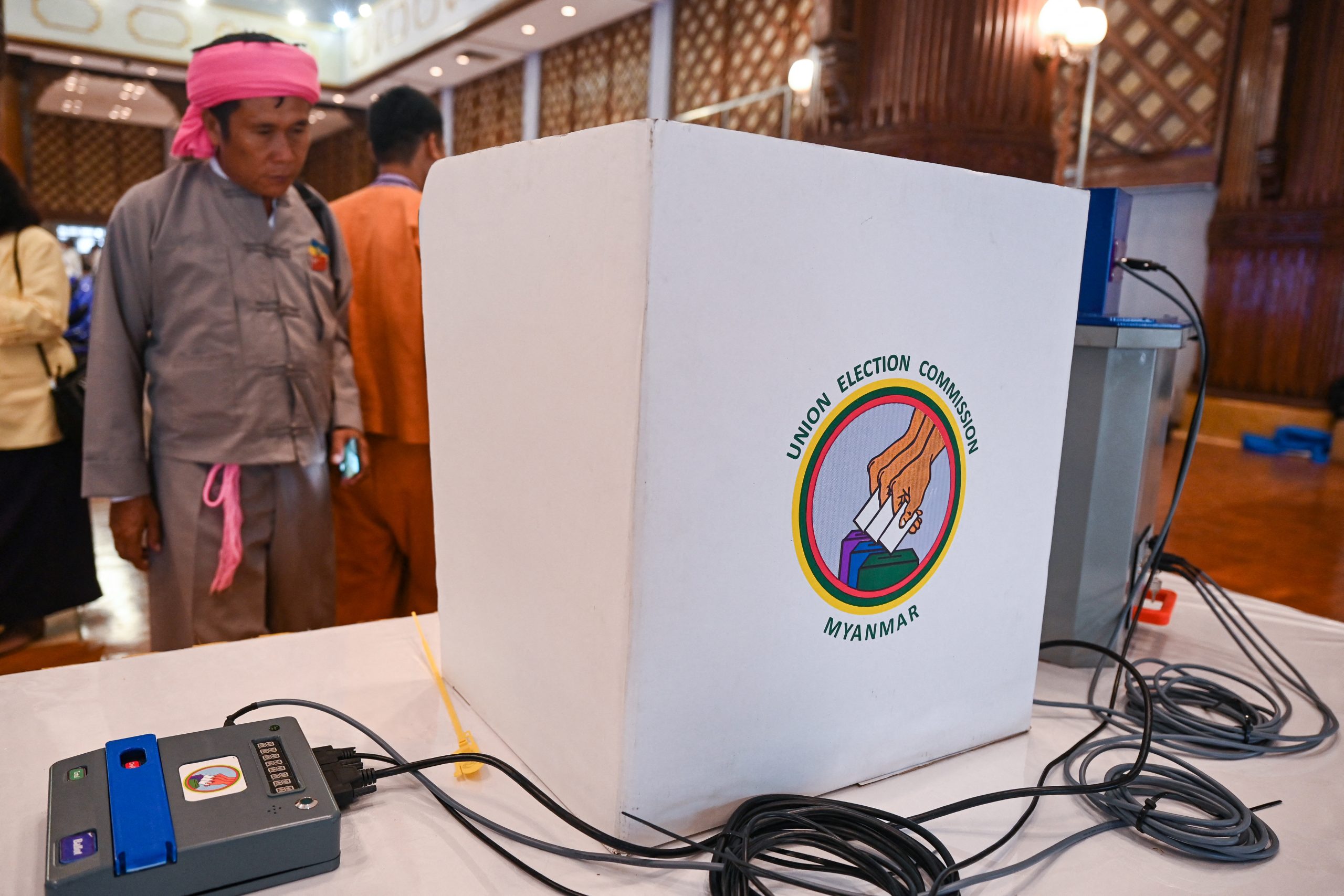
Catholics in Myanmar are cautiously welcoming the military junta’s plan to hold elections on December 28, 2025, viewing the polls as flawed but a possible step toward civilian participation.
In a report by Vatican news agency Fides, Joseph Kung Za Hmung, a Catholic from Yangon and founder of the country’s first private Catholic university, said that the plan “could ultimately lead to greater civilian participation in the country’s government and represent a small positive step.”
“We will see that the influence of the military junta will diminish in some ways,” he said. “There will be autonomous commissions, there will be talk of releasing political prisoners, the country will have democratic institutions again, and this will be a positive development that will allow us to take a first step towards ending the exclusive rule of the junta.”
Kung acknowledged that the elections are far from free, stressing that many citizens cannot or will not participate.
Still, he noted that despite the predictable results and clear limitations, the polls remain a form of democratic expression and a possible first step toward restoring civilian rule.
The junta said voting will run in phases until January 2026, with 55 parties registered, nine competing at the national level.
The electoral commission has set 330 constituencies for the lower house, 110 for the upper house, 364 for regional assemblies, and 29 for ethnic minorities.
Some constituencies overlap with resistance strongholds, sparking intensified offensives by the military.
Kung still called the polls “a first, faint glimmer of hope for a way out of a truly difficult situation.”
Yet Church leaders warn that hopes remain fragile, with some pointing out that the elections will exclude much of the population.
Father Stephan Tang Gun of the Missionaries of Faith said the electoral process “will be incomplete,” adding that only about “50% of the population will participate, and which will take place only in the areas controlled by the military junta.”
“For this reason, the election has been criticized by international institutions… who speak of it as a ‘farce vote’ that only serves to consolidate the military junta’s rule over the nation,” he added.
The priest claimed that the junta is using the elections as a way to restore its legitimacy at home and abroad, while projecting an image of stability.
“The situation… remains serious; fighting continues unabated, for example, in the Banmaw area in the north, and in the Sagaing region, the conflict is claiming victims and increasing the number of displaced people,” Father Tang Gun said.
He added that bishops, priests, and religious continue to provide aid to displaced families “even under very difficult conditions, sometimes aggravated by floods.”
“And we all continue to pray for the future of the country and ask for peace and justice,” he said.









