
The Catholic Bishops’ Conference of Thailand (CBCT) has taken a decisive step in embracing synodality, aligning its pastoral direction with the universal Church’s implementation phase of the Synod on Synodality.
Drawing on the Pathways for the Implementation Phase of the Synod—a key interpretive and operational document issued by the Vatican’s General Secretariat earlier this year—Thai Catholic leadership has embarked on a structured journey of discernment, participation, and action through 2028.
Earlier this year, the Vatican published the Pathways for the Implementation Phase of the Synod, which provides a shared framework to assist local Churches worldwide in walking together in a synodal manner.
It clarifies the objectives of this phase, defines roles for diocesan bishops, synodal teams, and ecclesial bodies, and recommends tools—such as communal discernment—to sustain momentum toward the Ecclesial Assembly in Rome in October 2028.
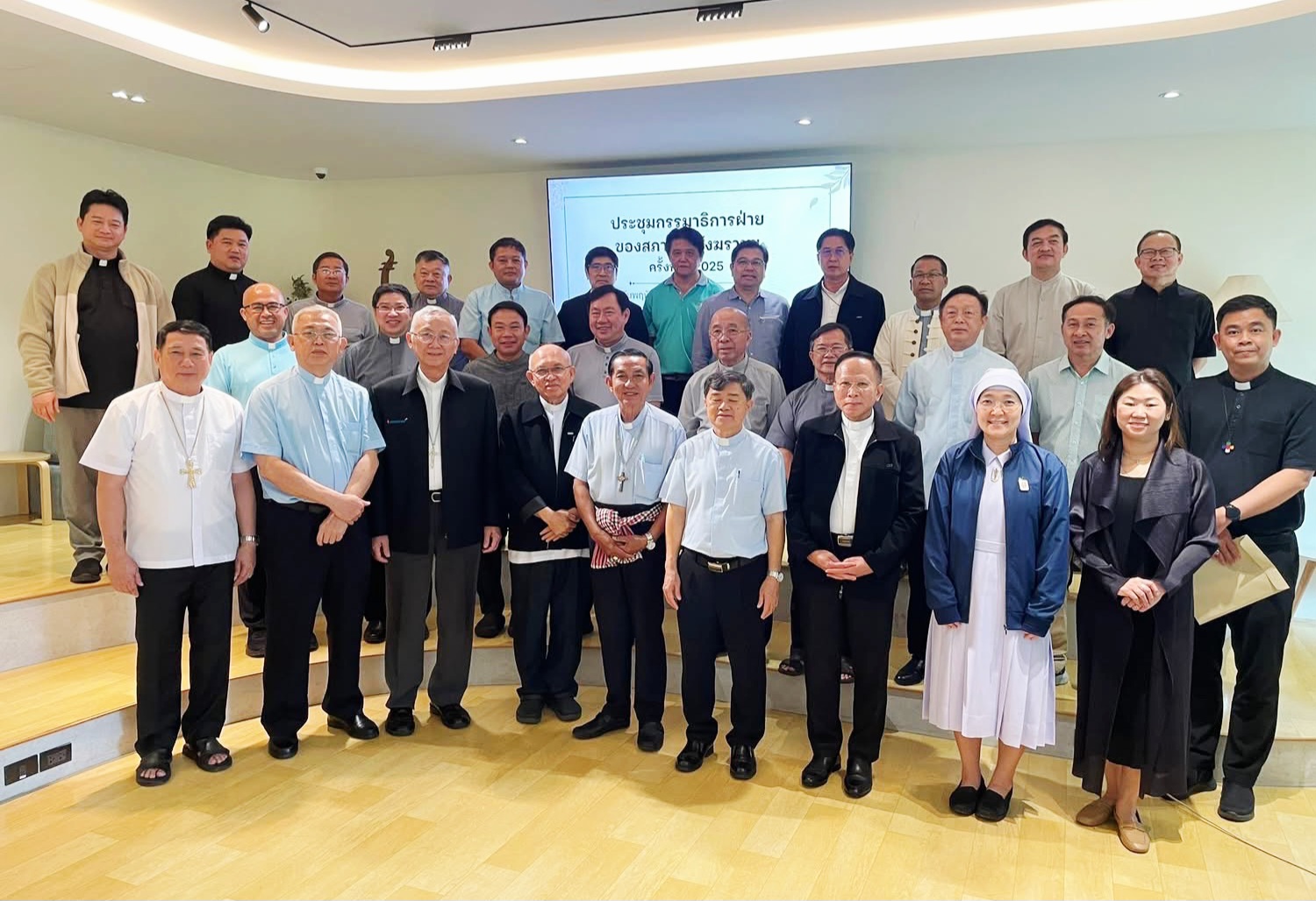
In Thailand, the CBCT initiated its implementation efforts with a national meeting this month. Participants included vicars general from all eleven dioceses and leaders of the four principal episcopal offices.

The gathering opened with a lecture titled Pathways for the Implementation of the Synod, which offered theological and practical guidance on understanding and enacting the Vatican’s implementation framework.
Father Suwat Luangsaard, CBCT Deputy Secretary-General, presented the Guidelines for the Implementation of Synod 2025–2028, which outline tasks and responsibilities across the CBCT’s central agencies and dioceses.
He emphasized the document’s role in orienting engagement with the Synod’s Final Document and guiding the operational plan for the coming years.
He stressed the need to translate summary documents into real outcomes that animate the daily life of the Church, stating that the guidelines suggest “how to engage with the Synod’s Final Document… and offer advice on methods and tools that can help shape the path during the implementation phase.”
To ensure broad participation, the CBCT has established a Synod Operations Committee. Each diocese will form its own committee—comprising clergy, religious communities, lay associations, and ecclesial movements—to contextualize synodal principles locally.
These diocesan committees are currently being recruited and are expected to report to the national CBCT committee and, through national channels, to continental and global levels.
Father Suwat told LiCAS News on Tuesday (August 26): “Each local Church has its own path, but it does not walk alone… We will accompany its progress and conclude it, validating its results.”
He added that “this committee will work in line with the Synodal Paths guidelines to translate the Synod’s ideas into concrete practice within the diocese and evaluate their performance.”
The overarching aspiration is for synodality to become an integral, lived reality in both local and universal Church life.
By embedding synodal structures and practices—such as inclusion, shared discernment, and co-responsibility—in everyday pastoral ministry, the CBCT seeks to ensure that synodality moves from theory into tangible, transformative ecclesial practice.
The CBCT’s efforts reflect the broader ecclesial call to cultivate a synodal Church rooted in communion, participation, and mission, as envisioned by Pope Francis and articulated in the Pathways document.
As local Churches across the globe embrace this new stage of ecclesial life, the journey toward the Ecclesial Assembly in Rome pledges not only evaluation but renewed momentum for mission.