A Philippine bishop has urged Filipinos to extend the same compassion shown to the family of Ateneo basketball player Rene Baterbonia to the family of teammate Divine Adili, saying grief should not stop at national borders.
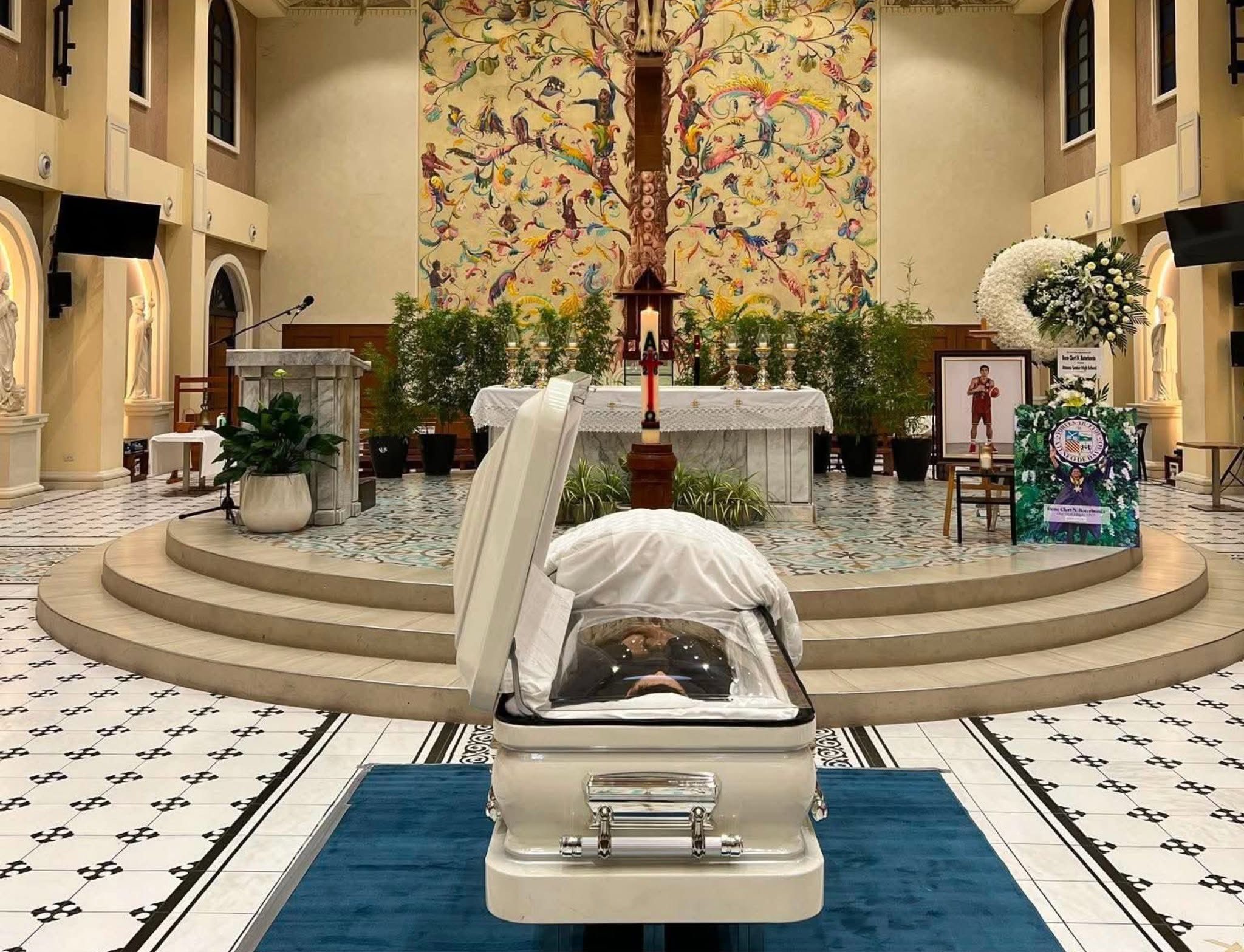
In a reflection, Bishop Gerardo Alminaza of San Carlos said the public mourning that followed Baterbonia’s death offered an opportunity to recognize the shared dignity of both young men and the families they left behind.
“If we were moved by Rene’s story, can our concern also extend to Divine’s family?” Alminaza said, adding, “Can our compassion reach beyond borders, cultures, and nationalities?”
Baterbonia and Adili died on June 8 during a team-building activity in Dipaculao, Aurora, while members of the Ateneo de Manila University men’s basketball team were on a beach outing.
Their deaths sparked widespread grief, particularly in Mindanao, where Baterbonia was known as a promising young athlete. The tragedy also prompted calls for accountability from members of the Ateneo community and the families of the two players.
Ateneo President Fr. Roberto “Bobby” Yap, SJ, said the university reached out to both families on the night of the incident and offered assistance.
Relatives, however, later expressed frustration over how information about the tragedy was communicated, saying they learned details of the incident through social media before receiving direct updates from university officials.
Coach Tab Baldwin and team manager Christopher “Epok” Quimpo resigned a week after the incident.
For Alminaza, the public response revealed more than grief over the loss of a promising athlete. It also raised a broader question about whether compassion can extend beyond nationality, geography and familiarity.
“The death of Rene Baterbonia touched people far beyond the world of sports,” the prelate said.
“Across Mindanao and throughout the country, thousands mourned a young man whose future appeared bright and full of promise,” he added.
Many Filipinos, he said, saw in Baterbonia “their own sons and daughters, their classmates, neighbors, and friends.”
His story resonated because it reflected the pressures carried by many young people striving to build a future amid economic hardship, uncertainty and family expectations.
“His life was a reminder that behind every achievement is a person carrying burdens that rarely make headlines—family expectations, financial worries, uncertainty about the future, and the quiet pressure to succeed,” Alminaza said.
The bishop then turned to Adili, a Nigerian student-athlete whose family, he said, was experiencing the same loss.
According to Alminaza, Adili’s father described him as the eldest child and primary provider for his family, leaving behind three younger siblings “whose future has suddenly become far less certain.”
“His death did not receive the same public attention. His home is far from ours. Most Filipinos had never met him, and many may never have heard his story,” Alminaza said.
“Yet the pain experienced by his family is no different from the pain felt by Rene’s loved ones,” he added.
Alminaza pointed to Ubuntu, an African philosophy often expressed as “I am because we are,” as a reminder that human lives are interconnected.
“At its heart, Ubuntu teaches that our lives are bound together. We become fully human not by standing apart from one another but by recognizing our connection to others.” he said.
The bishop said the principle echoes a central Christian conviction.
Alminaza said the stories of Baterbonia and Adili challenge society to move “beyond sympathy and toward solidarity,” especially with families left behind and young people whose futures have been disrupted by tragedy.
“The greatest tribute we can offer Rene Baterbonia and Divine Adili may be to build a society where no one is forgotten, where compassion is not limited by nationality, and where the bonds of our common humanity are stronger than the distances that separate us,” he said.
“For in the end, whether from Mindanao or Nigeria, we belong to one human family,” Alminaza added. “And every son and daughter of God deserves dignity, hope, and the chance to dream.”