
Catholic schools in Thailand are setting new standards for values-based education, with their “moral schools” initiative now serving as a model for both Catholic and non-Catholic institutions.
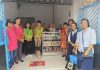
On Wednesday (Sept. 10), the Central Region Catholic Schools Network, officially known as the Network of Moral Schools Based on the Catholic Educational Identity, held its second “Morality Market: Show, Share, Connect and Appreciate,” with Archbishop Francis Xavier Vira Arpondratana of Bangkok presiding.
Archbishop Vira, who also leads the Catholic Bishops’ Conference of Thailand (CBCT), praised the movement for shaping both students and teachers. “I’m surprised to see so many Catholic schools working to develop such a network,” he said. “It is encouraging to see children recognize the importance of becoming good people.”
The initiative defines morality as a key student characteristic, shown through behaviors such as discipline, honesty, volunteerism, sufficiency, and gratitude. Inspired by the Catholic principle of “love and service,” the program encourages students to practice “love for all” and “service through volunteerism.”
Fr. Charlongrath Sangkarat of the CBCT explained that schools have turned challenges into opportunities. “Problems we want to solve and good deeds we want to do are now transformed into ‘morality projects,’” he said. “Teachers have shifted into mentors, and schools have become centers of charitable love.”

So far, 19 Catholic schools in the network have been recognized as exemplary models, showcasing best practices that inspire other institutions.
The program builds on commitments made at the 14th National Morality Assembly last month, which prioritized competency-based learning, community engagement through family learning spaces, and the development of “morality coach teachers” to link schools, communities, and faith groups.
At Wednesday’s event, awards were presented to model schools and coaching teams for their contributions. Nine schools, all Catholic, received plaques as “Model Virtuous Schools,” while exhibitions highlighted successful morality projects and learning resource centers.
The ceremony drew more than 100 participants, including school administrators, teachers, and students from 17 schools in the central region. Komes Klansomchit, deputy secretary general of the Office of the Private Education Commission (OPEC), Ministry of Education, joined representatives of five major religions in attending.
“The event honored and showcased cooperation at the network level,” Komes said, noting the recognition of schools through the Virtuous Center’s certification program.
With its growing reach, the Catholic moral schools movement is positioning itself as a powerful force for instilling values and shaping young people into ethical leaders for Thai society.