
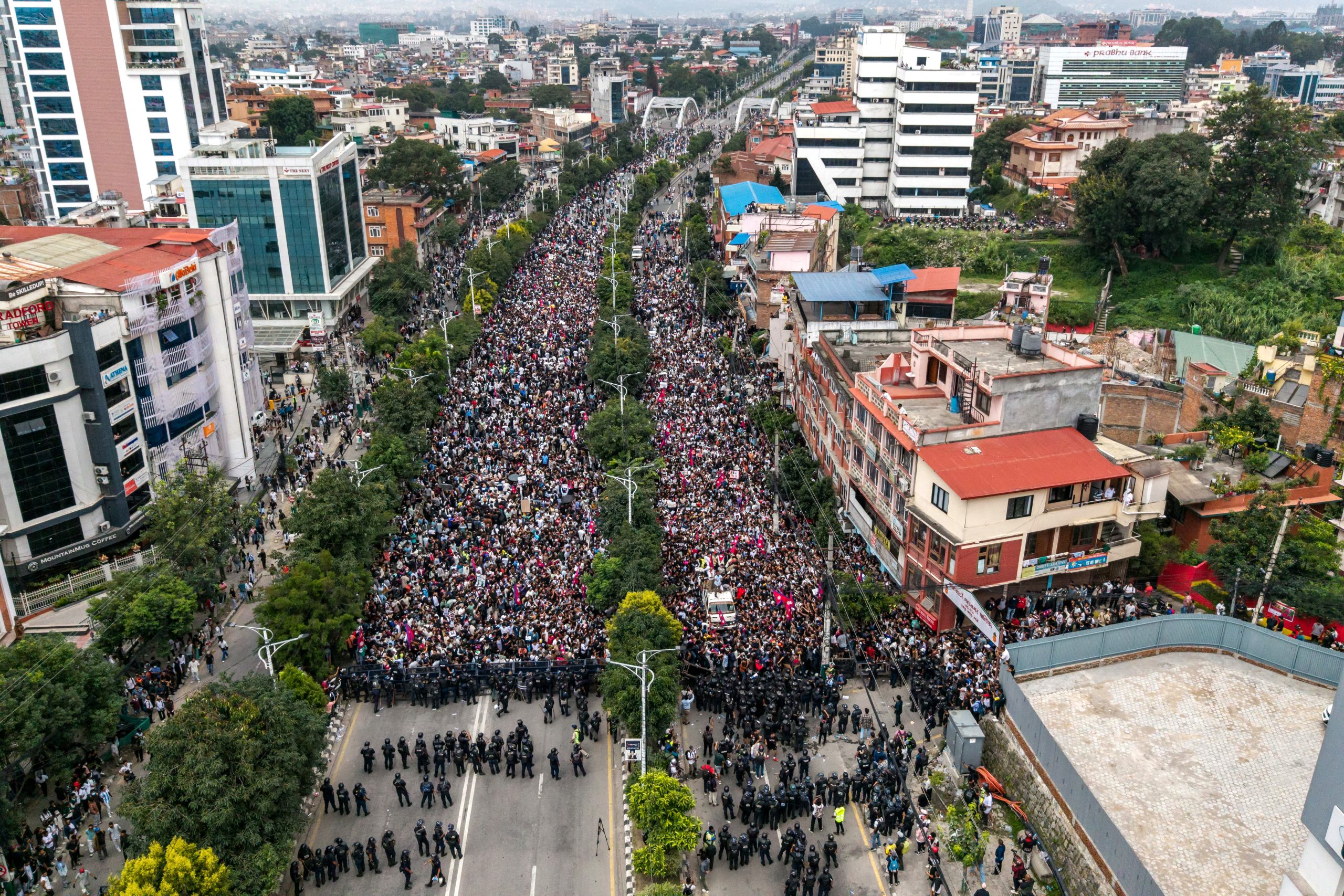
Deadly protests against corruption and repression have forced Prime Minister K.P. Sharma Oli to resign, in what observers describe as one of Nepal’s most serious political crises in recent years.
“I see many people on the streets, young people and students, protesting against corruption and a political class that only thinks about its own interests,” said Father Silas Bogati, Apostolic Administrator of the Vicariate of Nepal.
The priest said the young people of Nepal “are frustrated by the failure of those in power,” adding that that frustration has escalated into anger and even violent acts after their peers were killed by the police.”
“We are in a very delicate phase; young people are on the streets and intend to continue protesting until the government resigns,” he added.
Father Bogati arrived in Kathmandu this week after a pastoral trip and was caught in the middle of the turmoil, according to a report by the Vatican’s Fides News Agency.
With transport shut down, he walked from the airport to his residence, passing streets filled with demonstrators who had gathered near Prime Minister Oli’s residence to demand his resignation.
Hours later, Oli yielded to the pressure. “In view of the adverse situation in the country, I have resigned effective today to facilitate the solution to the problem and to help resolve it politically in accordance with the constitution,” he wrote in a letter to President Ramchandra Paudel.
Largest protests in years
At least 22 people have been killed and more than 300 injured since security forces opened fire on September 8.
Amnesty International said police used rubber bullets, tear gas, water cannons, and live ammunition. Parliament’s main building was torched.
Protests spread beyond the capital to Pokhara, Rupandehi province, and Siraha, where government offices and courts were attacked.
The demonstrations, led largely by Generation Z, erupted after the government banned 26 social media platforms.
Though lifted a day later, the ban ignited wider anger over decades of corruption and lack of opportunities. Many waved Nepal’s flag and chanted, “Stop corruption, not social media” and “Youth against corruption.”
“The issue of the social media ban, which sparked the protests, was like a spark: deep dissatisfaction with the development of society and their future was perceived among young people,” said Father Bogati.
Young Nepalese protesters say they have no prospects for jobs or development and accuse the ruling elites of pursuing only their own interests.
Cases of corruption and scandals have deepened anger, with youth denouncing nepotism and cronyism. Their demands have now shifted toward sweeping political change and the resignation of the government.
The anger had been building. A viral online campaign called “nepo kid” exposed the lavish lifestyles of politicians’ children. Transparency International reports that 84 percent of Nepal’s population sees corruption as a “big problem.”
Church and civic voices
“The gap between politicians and ordinary people is palpable in the country,” Father Bogati warned. “Lawmakers are not perceived as people working for the good of the country, which has led to discontent and demonstrations. The repressive measures taken have increased frustration and fueled tensions.”
Nepal’s small Catholic community, estimated at 8,000 faithful, stands in solidarity. The priest said the Catholic community is “just a drop in the ocean in Nepal, but we are part of the country and share the desire for justice and good governance.”
He explained that the Catholic community contributes to the nation mainly through education, where children and young people are formed in the Church’s social teaching—emphasizing justice, peace, security, transparency, solidarity, and the common good.
Other leaders have echoed calls for restraint. Agriculture Minister Ramnath Adhikari resigned, declaring: “Peaceful protest is a right of citizens. The widespread repression, killings, and use of violence are leading to a dictatorial system rather than a democracy.”
Kathmandu’s mayor, Balendra Shah, described the movement as “purely a Gen Z movement,” urging youth to “take the lead in running the country. Be ready!”
International alarm has grown. The UN human rights office said it received “numerous and concerning reports of unnecessary or disproportionate use of force.”
UN rights chief Volker Türk said he was “appalled” and urged dialogue. India’s Prime Minister Narendra Modi stressed that “stability, peace and prosperity of Nepal are of utmost importance to us.”
For now, the crowds continue to swell, demanding a new political order. As one protest leader, Sudan Gurung, declared online: “The Nepal government has fallen, the youth have won the protest. The future is ours.”









