Korean Cardinal Lazzaro You Heung-sik said the early 20th-century “Concilium sinense” in Shanghai marked a turning point not only for the Church in China but also for Catholic communities across East Asia, including Korea.
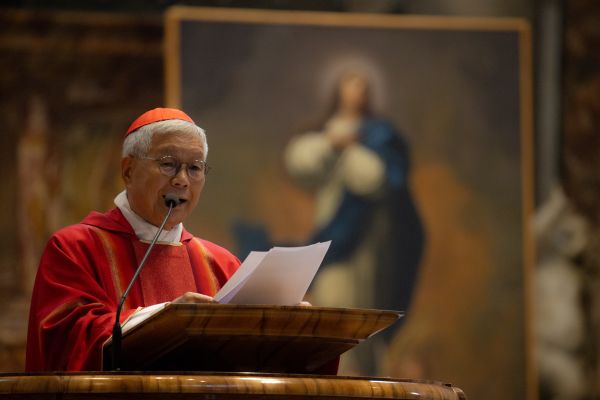
Speaking via video link from Rome to a symposium in Seoul on Nov. 15, the Prefect of the Dicastery for the Clergy said the 1924 gathering “marked a fundamental turning point in the history of the Catholic Church in China” and “in my opinion also had a profound impact on the Korean Church.”
In a report by the Vatican’s Fides News Agency, the prelate said the Holy See “promotes and actively pursues the path of dialogue initiated by Archbishop Costantini.”
The symposium, held at the Spirituality Center of the Archdiocese of Seoul, explored “The Council of Shanghai: positive impact on the inculturation of the Church in East Asia.”
Cardinal You noted his participation in the centenary conference of the Concilium Sinense held at the Pontifical Urbaniana University on May 21 this year.
During the event, he recalled, “I also had the honor of forging a new friendship with the Bishop of the Diocese of Shanghai, Joseph Shen Bin,” who joined the Rome conference as a speaker.
According to the cardinal, the Shanghai council allowed the universal Church to take “its first courageous step toward transferring ecclesiastical jurisdiction to the local clergy.”
He traced the development to efforts that began more than six decades earlier, culminating in the Holy See’s decision to convene the Conference of Catholic Bishops in China in 1922, under the leadership of Archbishop Celso Costantini.
Cardinal You said the Seoul symposium offered “a valuable opportunity for us to reflect deeply on the historical foundations of the Catholic Church in Korea and to prepare for the future,” especially because the principle of inculturation “has also had a profound impact on the Korean Church.”
He pointed to the participation of Bishop and Servant of God Bonifatius (Josef) Sauer, who led the Apostolic Vicariate of Wonsan, as evidence of the council’s influence on Asia.
The Shanghai gathering, he said, encouraged the Korean Church to move beyond “Eurocentric” models and strengthened the formation of local clergy, helping Catholicism “take root and grow within its national culture.”
Cardinal You expressed regret that he could not attend the Seoul symposium in person at the “Spirituality Center of Myeongdong Cathedral in Seoul, the heart of the Catholic Church in Korea.”
He said he hoped the academic event would “provide an opportunity to reflect on the significance and impact of the Council of Sinense in Shanghai and represent a milestone in reaffirming the Catholic Church in Korea as a center of evangelization in Asia.”
“Let us contemplate,” he added, “our courageous martyrs who lived their faith until death. May we, their descendants, build a future filled with new hope in these turbulent times we are experiencing.”