

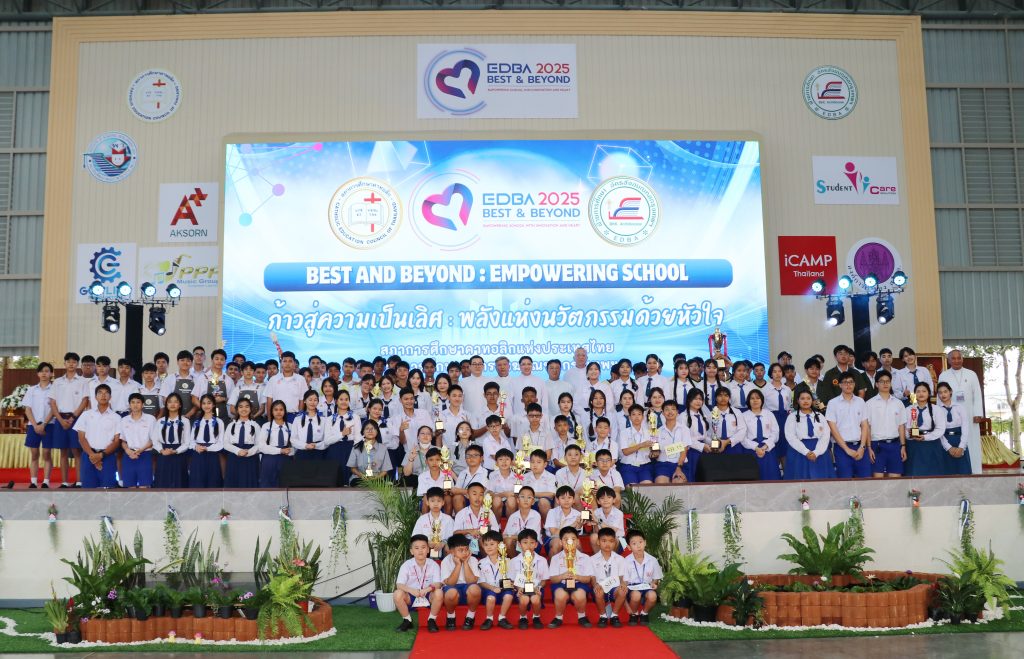
More than 4,500 students, teachers, and educators from Catholic schools across Thailand gathered in Bangkok on Dec. 8 for a nationwide innovation fair highlighting student projects that combine science, technology, and faith-based values.
The “EDBA 2025 BEST & BEYOND: Empowering Schools with Innovation and Heart” Innovation Fair, organized by the Catholic Education Council of Thailand (CECT) and the Education Department of the Archdiocese of Bangkok (EDBA), brought together participants from over 90 Catholic schools and 30 partner organizations at Holy Family School on the outskirts of the capital.
Through the fair’s theme, students presented hardware and software projects developed using applied learning in science, technology, and design, demonstrating technical skills alongside collaboration, communication, and interdisciplinary problem-solving.
“This fair, the first of its kind for Catholic education in Thailand, demonstrates how young minds can turn big ideas into reality,” said Fr. Paul Eakarat Homprathum, secretary general of CECT and director of EDBA, in an interview with LiCAS News.
“More than 50 student-led projects from schools across the country were presented, reflecting creativity, teamwork, and a deep sense of social responsibility.”
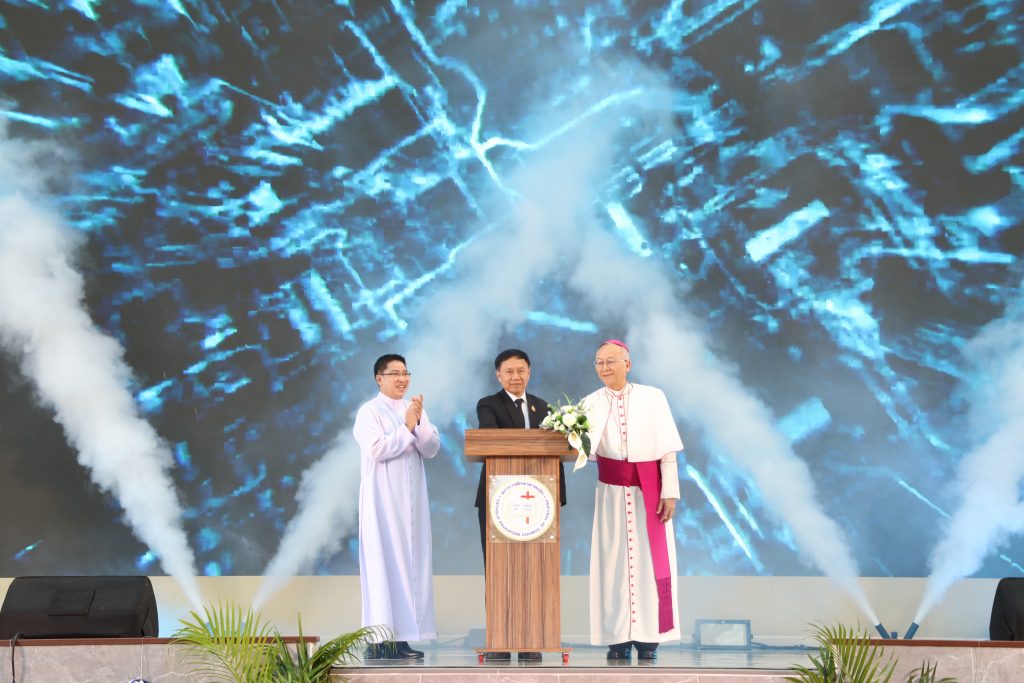
Fr. Paul said the event went beyond a simple exhibition of inventions.
“The Innovation Fair is not merely about displaying projects,” he said. “It is a celebration of ingenuity and problem-solving, introducing students to emerging technologies such as robotics and artificial intelligence, while fostering a spirit of discovery and service.”
Structured Learning Zones
To accommodate the wide range of activities, the fair was organized around three major components: the Exhibition Area, Innovation City, and the Technology Knowledge and Innovation Competition Zone.
The Exhibition Area showcased best practices from Catholic schools in the Archdiocese of Bangkok, presented through thematic zones such as Empowering Hearts for a Greener World; Empowering Students with Excellent Education; and Three Pathways to Holistic Humanity.
The Innovation City Zone featured hands-on activities and games highlighting student innovations developed through computer science learning.
Exhibits were grouped under thematic areas such as Agriculture and Food Production Systems, Food Technology and Innovation, and Health and Life Care.
This zone recognized more than 60 award-winning student inventions that reflected technological creativity anchored in sustainability and human well-being.
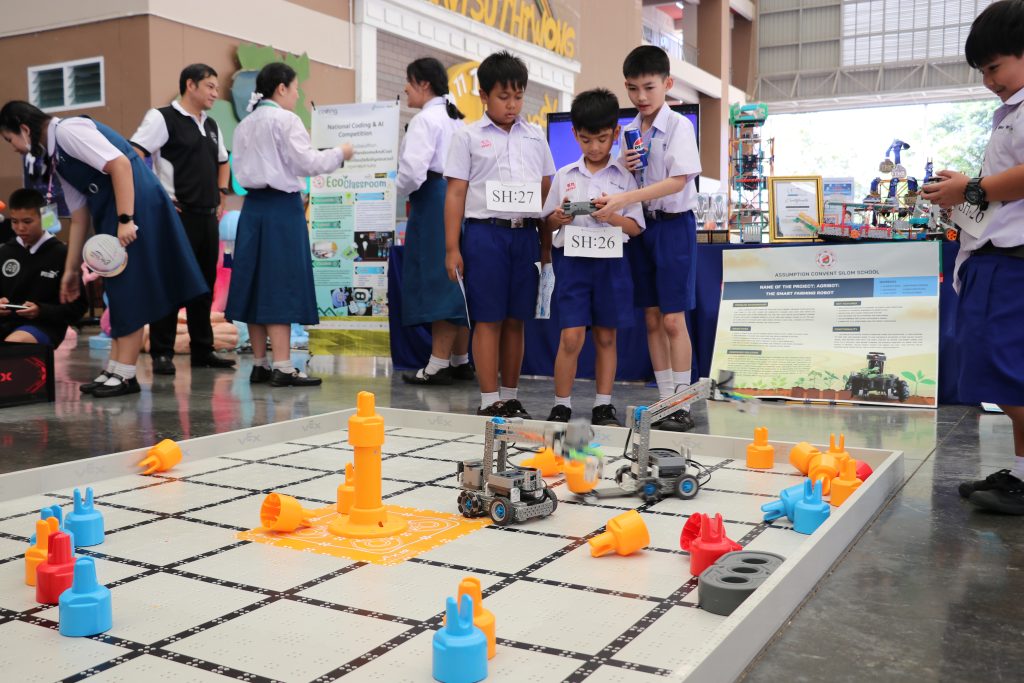
The Technology Knowledge and Innovation Competition Zone hosted contests for students in several challenge areas, including the Sheep Herding Robot, Maze-Solving Challenge, and Mini Arm Challenge.
Innovation contests were also held for both lower and upper secondary students, encouraging practical problem-solving through teamwork and applied engineering.
Faith and Education Together
The opening of the fair was marked by a liturgical celebration presided over by Archbishop Francis Xavier Vira Arpondratana, archbishop of Bangkok, who encouraged educators and students to continue integrating academic excellence with faith formation and human values.
School leaders attending the event praised the opportunity the fair provided for students to engage deeply with innovative cultures.
“The fair gave students a platform to turn ideas into tangible solutions while nurturing creativity, critical thinking, and practical application,” said Bro. Prapas Sricharoen, director of La Salle School in Chanthaburi, about four hours east of Bangkok and about one hour from the Cambodian border. “Schools participating in this fair gained knowledge and new ideas that can be used to further improve educational management.”
He highlighted that his students particularly enjoyed the Innovation City activities.
“Our students participated enthusiastically, especially in the innovation zone where they worked on meaningful projects using iPads. It was both fun and exciting for them,” he said.
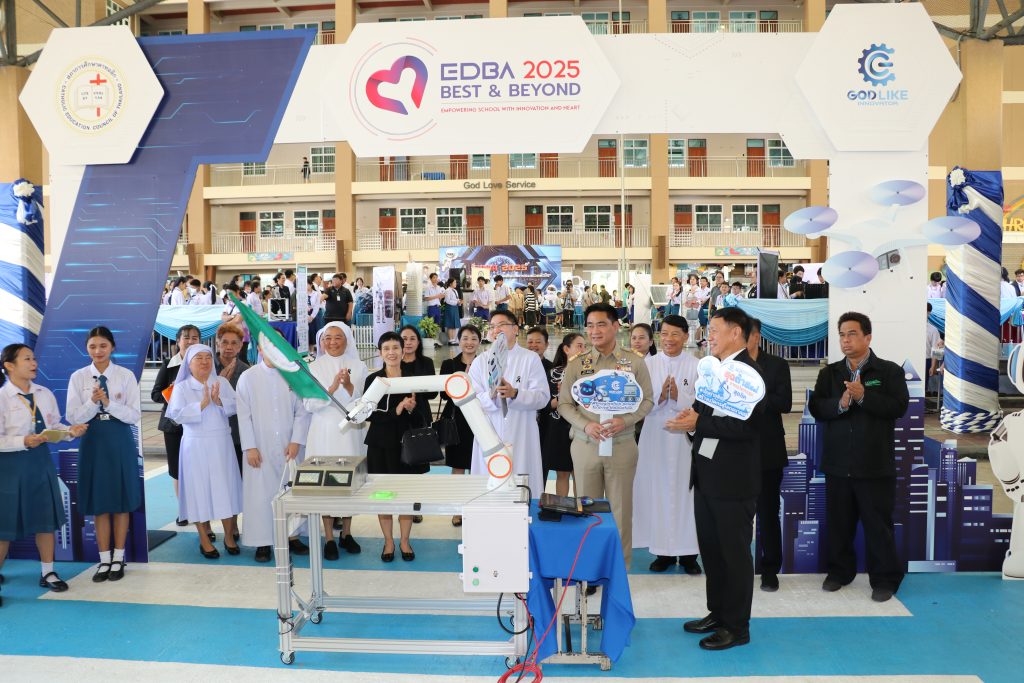
A teacher from the same school added that the collaborative spirit of the fair was an important learning experience.
“The work presented by many schools can be used to develop new innovations and best teaching practices for our teachers and institution,” the teacher told LiCAS News. “Notably, we also witnessed collaboration among three religions, Buddhism, Islam, and Christianity, which fostered interfaith learning and stronger relationships based on love and mutual respect.”
Strengthening Identity and Values
Another Catholic school administrator from Manda Pitak Girls School echoed the sentiment, emphasizing how the fair strengthened each school’s educational identity.
“Every school participating in the fair presented its own distinctive best practices and clearly expressed its unique mission,” the administrator said. “In this era of artificial intelligence, administrators are prioritizing high-quality education while forming students with strong Gospel values and ethical foundations, following the example of Jesus Christ.”
EDBA officials noted that the fair reflects the department’s long-term commitment to building a holistic innovation ecosystem within Catholic education, one that integrates technological advancement with Christian formation, promotes sustainability and social responsibility, and provides collaborative platforms that nurture emerging talents while shaping a technology-driven society rooted in compassion and service.









