
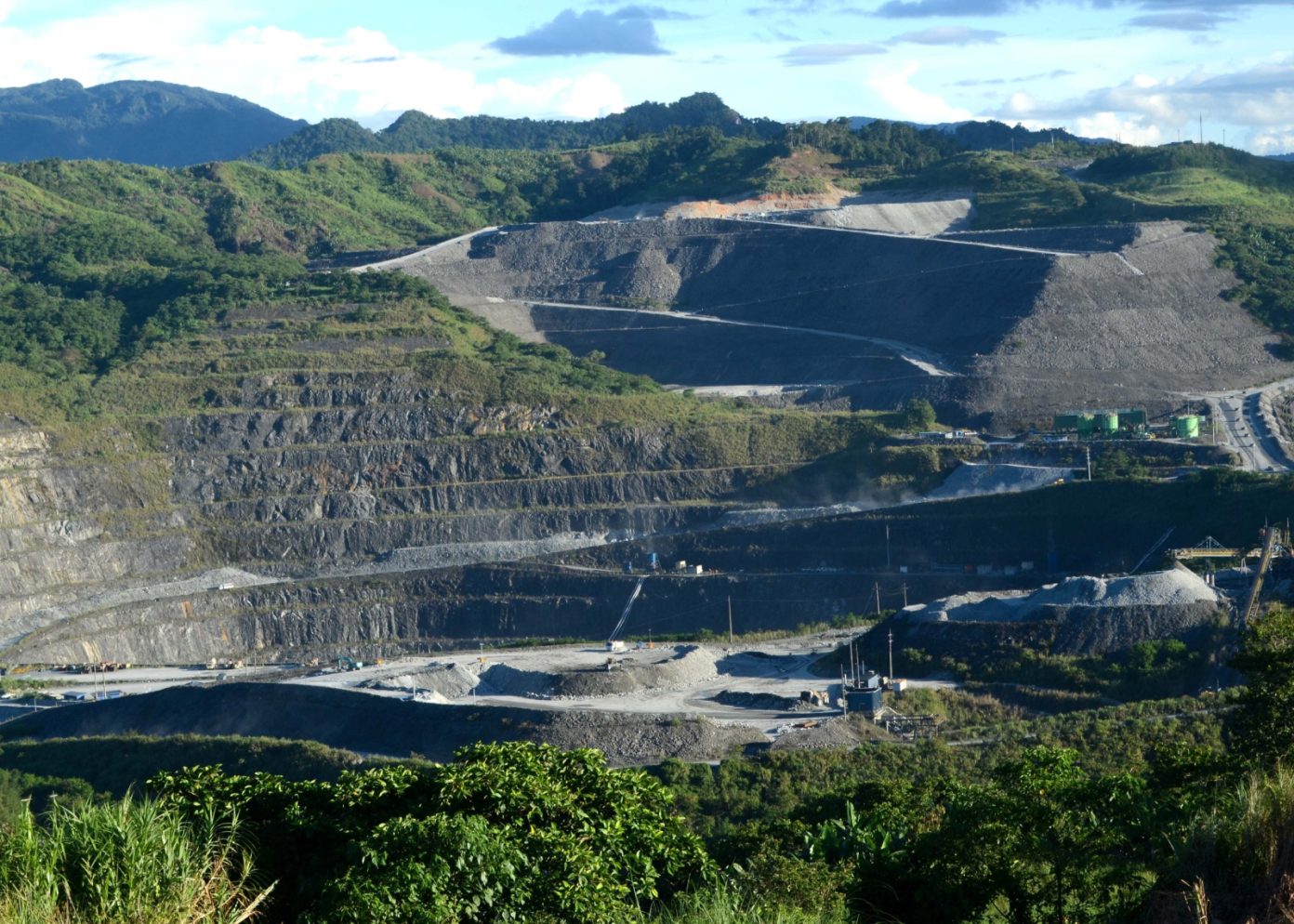
The Catholic Church in the northern Philippine province of Nueva Vizcaya has sought the Supreme Court’s intervention to nullify the renewal of the mining contract granted to OceanaGold Philippines Inc.
It argued that the extension violated constitutional limits and bypassed mandatory public consultations and environmental safeguards.
The Diocese of Bayombong, together with affected communities in Nueva Vizcaya province, elevated to the high court a Petition for Certiorari challenging the renewal of the Financial or Technical Assistance Agreement (FTAA).
They said it was issued without prior consultation with local government units and communities and without adequate environmental impact assessments.
“We now seek the Supreme Court to review whether the Bayombong Regional Trial Court erred in ruling that the people’s right to prior public consultations does not apply to the renewal of FTAAs, and that renewal is a mere continuation of the FTAA,” said Bishop Elmer Mangalinao of Bayombong, who led the petitioners in filing the case.
“We reiterate that the OGPI FTAA renewal is illegal for failing to consult communities and local authorities whose concerns over the risks we face for the next 25 years of destructive mining were overrode,” he added.
The petition, filed on Dec. 19, continues to challenge the exercise of executive prerogatives, citing Sections 26 and 27 of the Local Government Code, which require the national government to conduct local consultations and secure prior consent for environmentally critical projects, including the renewal of mining agreements.
Petitioners said the Bayombong Regional Trial Court erred in treating the 2019 Addendum and Renewal Agreement as a mere continuation of the original 1994 FTAA, a position they said disregards constitutional safeguards governing mineral agreements.
The petition noted that the Constitution limits FTAAs to an initial term of 25 years, renewable only once for another 25 years, and requires a substantive review before any extension is granted.
“Our constitutional framers intentionally required a reckoning point in FTAAs at which the State and the affected communities could reconsider whether the extraction of mineral resources should continue under the laws, environmental conditions and community needs of that time,” said Atty. Ryan Roset, senior legal fellow of the Legal Rights and Natural Resources Center and one of the petitioners’ counsels.
“Consider, for instance, that we are now in an era of unprecedented climate crisis that the Didipio mine’s original designs could not have accounted for,” he added.
Roset said the renewal of mining agreements carries stricter legal and procedural requirements because of their environmental impact.
“Renewal covers activities under development and utilization periods of mining operations and thus entails more stringent requirements in view of their environmental impacts. Not only should there be prior consultation, but even more so prior approval,” he said.
If the petition is granted, the addendum and renewal agreement for FTAA No. 001 will be declared void for failure to comply with relevant laws and would compel the Office of the President to cancel the agreement.