Myanmar’s military deliberately targeted the Rohingya minority with extreme violence in an effort to destroy the group, Gambia told the International Court of Justice on Monday as hearings opened in a landmark genocide case.
“It is not about esoteric issues of international law. It is about real people, real stories, and a real group of human beings. The Rohingya of Myanmar. They have been targeted for destruction,” Gambia’s Justice Minister Dawda Jallow told the court.
The case, filed by The Gambia in 2019, accuses Myanmar of violating the 1948 Genocide Convention during a 2017 military crackdown in Rakhine State that forced hundreds of thousands of Rohingya Muslims to flee their homes.
Jallow said the Rohingya were subjected to “the most horrific violence and destruction one could imagine.”
Paul Reichler, a lawyer representing The Gambia, cited witness accounts describing gang rapes, sexual mutilation, and infants being burned alive.
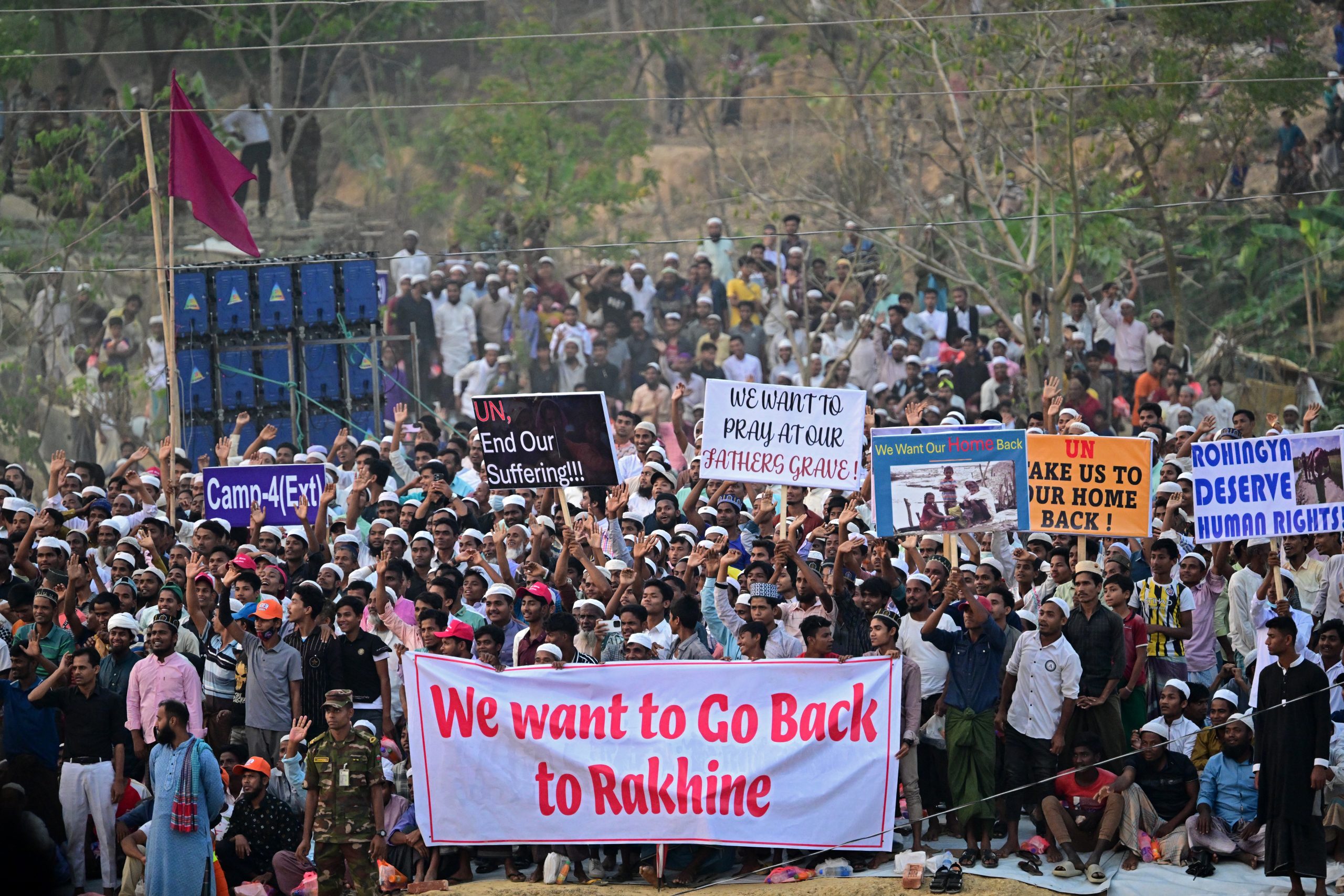
An estimated 750,000 Rohingya fled to neighboring Bangladesh during the 2017 violence. Today, about 1.17 million Rohingya live in overcrowded refugee camps spanning roughly 8,000 acres in Cox’s Bazar.
From the camps, Janifa Begum, a 37-year-old mother of two, told Agence France-Presse: “I want to see whether the suffering we endured is reflected during the hearing.”
“We want justice and peace,” she said.
The hearings mark the first genocide case fully heard by the ICJ in more than a decade. Legal observers say the proceedings could influence how the court approaches similar cases, including South Africa’s complaint against Israel over its military campaign in Gaza.
Myanmar has consistently denied the genocide allegations, saying the 2017 operations by its armed forces, known as the Tatmadaw, were a legitimate response to attacks by Rohingya insurgents that killed a dozen security personnel.
The violence followed assaults by the Arakan Rohingya Salvation Army on military and police posts.
In 2019, then-civilian leader Aung San Suu Kyi personally appeared before the court at the Peace Palace to defend Myanmar, dismissing The Gambia’s case as a “misleading and incomplete factual picture” of what she described as an “internal armed conflict.”
Suu Kyi will not attend the current hearings. She has been detained since the military seized power in a February 1, 2021, coup, on charges rights groups say were politically motivated.
In 2020, the ICJ ordered Myanmar to take “all measures within its power” to prevent acts prohibited under the Genocide Convention, including “killing members of the group” and “deliberately inflicting on the group conditions of life calculated to bring about its physical destruction in whole or in part.”
The United States formally declared in 2022 that Myanmar’s actions against the Rohingya constituted genocide, three years after a UN fact-finding mission concluded that the military had acted with “genocidal intent.”
Hearings are scheduled to conclude on January 29. A final ruling could take months or years. While the ICJ has no enforcement power, a decision in favor of The Gambia would increase diplomatic and political pressure on Myanmar.
“We did not bring this case lightly,” Jallow said. “We brought this case after reviewing credible reports of the most brutal and vicious violations imaginable inflicted upon a vulnerable group that had been dehumanised and persecuted for many years.”
Outside the court, Tun Khin, president of the Burmese Rohingya Organisation UK, told AFP: “We have been waiting for justice for many years.”
“What’s happening to the Rohingya is genocide, intentionally destroying our community. And we want to get justice. And when justice is done, we want to go back to our homeland with all our rights. And we want compensation,” he said.
Separate cases related to alleged crimes against the Rohingya are also underway at the International Criminal Court and in Argentina under the principle of universal jurisdiction.