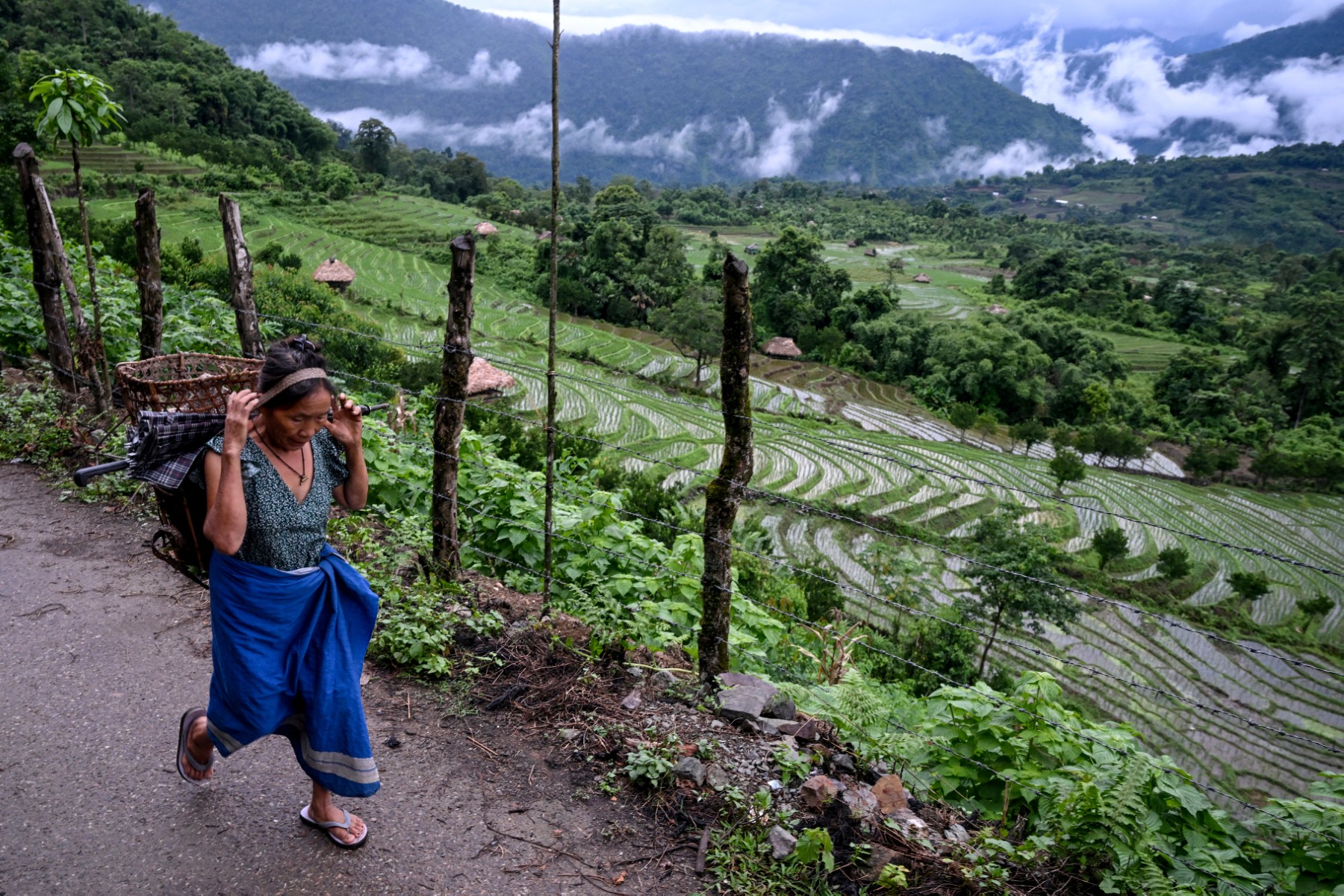
Indigenous Adi communities in northeastern India are facing arrests, criminal cases, and increased paramilitary deployment as they resist surveys for a massive dam project on the Siang River in Arunachal Pradesh.
The proposed Siang Upper Multipurpose Project (SUMP) is planned to generate between 11,000 and 12,500 megawatts. It could displace about 150,000 people, including Indigenous Adi communities, according to the International Indigenous Peoples Movement for Self-Determination and Liberation (IPMSDL).
The project has also taken on strategic importance for India as New Delhi responds to China’s hydropower development on the Yarlung Tsangpo in Tibet. The river enters India as the Siang before flowing into the Brahmaputra system.
IPMSDL said communities in the Siang River valley have blocked efforts to conduct a pre-feasibility report for more than a year and opposed what they described as the forcible conduct of surveys for the project.
Protests intensified on Oct. 1 as the government deployed large numbers of police and paramilitary personnel in the area, the group said.
Villagers clashed with paramilitary forces in Geku on Sept. 28. On Oct. 4, protesters in Uggeng village were allegedly subjected to a lathi charge by police and paramilitary personnel.
News and broadcasts from the protest sites have reportedly been blocked since Oct. 5.
The Adi Students’ Union earlier held a 12-hour bandh, or shutdown, against the paramilitary deployment.
Authorities in Upper Siang district also ordered the preventive detention of Omak Paron, Oson Paron, Adum Tayom and Okut Paloh under the Arunachal Pradesh Unlawful Activities (Prevention) Act of 2014.
IPMSDL said the continuing arrests and criminal cases had raised questions over how meaningful dialogue could take place while people opposing the project were being detained.
In September, India’s Central Bureau of Investigation filed a case against lawyer Bhanu Tatak, alleging that she received more than 1.76 million rupees for research projects between 2022 and 2025 without prior permission.
Tatak has opposed SUMP, served as legal counsel for protesters described by IPMSDL as wrongfully arrested, and called for the withdrawal of military and police forces from the Siang valley.
IPMSDL said the case against Tatak showed what it described as the intimidation and criminalization of lawyers and supporters of the anti-dam campaign.
Arunachal Pradesh’s chief minister has said about 75% to 80% of people support the project.
Farmers’ groups, however, have accused the government of coercing villagers into signing memorandums of understanding related to SUMP.
IPMSDL said the detentions, deployments and criminal cases had raised concerns over whether the Adi communities’ right to free, prior and informed consent was being respected.
“We strongly condemn the series of violent attacks against the residents of the Siang River valley,” said the IPMSDL.
“We call on the Government of India to respect the rights of the Indigenous Adi peoples to their land and waters, immediately end the crackdown and weaponization of law against their assertion of rights, and cancel the SUMP,” it added.
The group also called for the immediate and unconditional release of Omak Paron, Oson Paron, Adum Tayom and Okut Paloh.
SUMP is being advanced as both a hydropower and flood-control project and as part of India’s response to China’s dam construction upstream.
China has begun construction of a large hydropower project on the lower reaches of the Yarlung Tsangpo in Tibet, near the Arunachal Pradesh border.
India has said SUMP would help control seasonal flooding downstream and protect Indian territory from risks associated with upstream diversions.
Opponents of the project have warned that it could displace communities, damage ancestral lands and disrupt river systems and traditional livelihoods.
Adi communities resisting the project have continued to call for the protection of their ancestral lands and the Siang River.